If you’re wondering how we reached a cultural moment where right-wing activists are targeting books like The Hunger Games, To Kill a Mockingbird, and The Bluest Eye—alongside countless works by or about LGBTQ+ individuals—look no further than The Librarians, a new documentary produced by Sarah Jessica Parker about librarians fighting back against the surge in book bans.
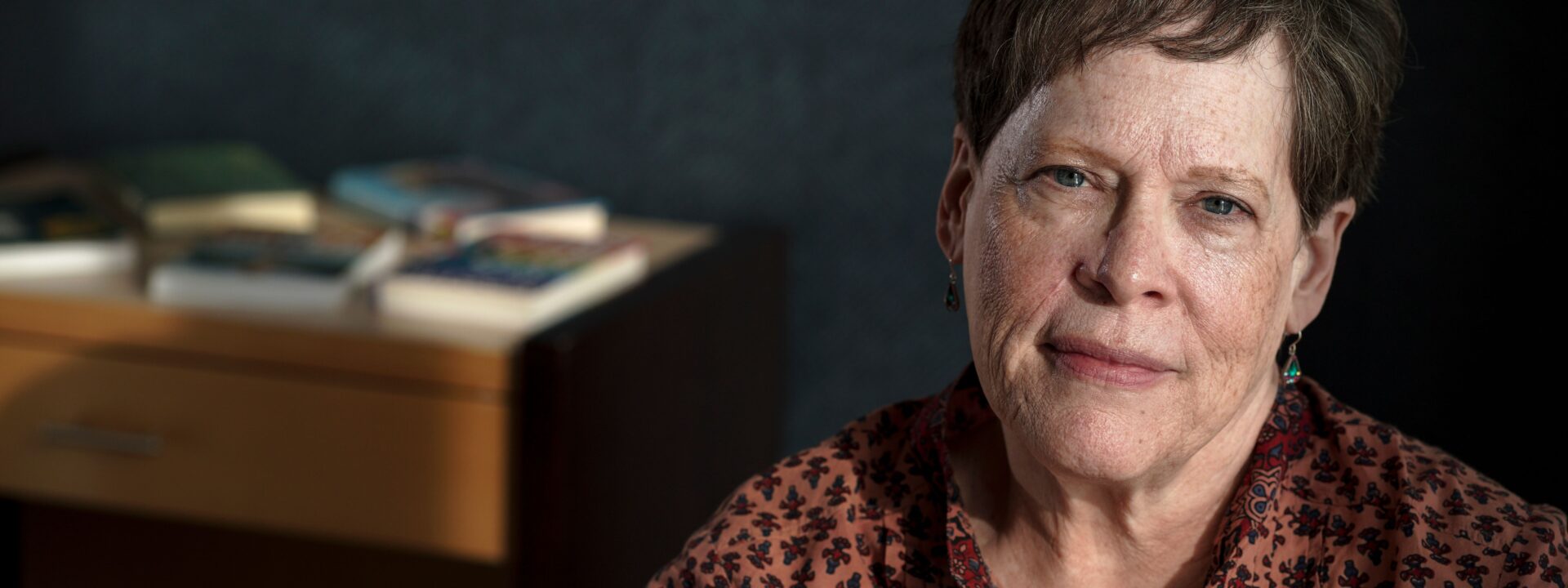
In Kim A. Snyder’s film, New Jersey librarian Martha Hickson stands out as a central figure defending children’s right to read amid growing conservative pressure. To mark the release of The Librarians this week, Hickson shared with Vogue ten books that have profoundly shaped her life. They range from nostalgic childhood favorites to beloved memoirs, including an insightful look at how librarians like her have come under fire simply for doing their jobs. See them all below.
Harriet the Spy by Louise Fitzhugh
Louise Fitzhugh’s 1964 story about 11-year-old New Yorker Harriet Welsch is a book I read again and again as a girl. Smart, funny, and fiercely independent, Harriet confidently marched to her own beat, giving me a fictional friend to admire. Over the years, book banners have tried to restrict access to Harriet the Spy, claiming it teaches children to lie, talk back, and curse. Labeling a character like Harriet as “inappropriate” tells young readers that they, too, are inappropriate. Instead, I listened to Harriet’s nanny, Ole Golly, who advised, “There are as many ways to live in this world as there are people in this world, and each one deserves a closer look.”
My Salinger Year by Joanna Rakoff
I first read J.D. Salinger’s frequently banned The Catcher in the Rye in seventh grade. Holden Caulfield’s voice hooked me, and I spent my adolescence becoming a J.D. Salinger completist. Joanna Rakoff’s memoir about her early twenties, working in the literary agency that represented Salinger, offers a behind-the-scenes glimpse into the publishing world he kept at arm’s length. Tasked with shielding Salinger from his incessant fan mail—a form of gatekeeping that ironically silenced readers—Rakoff grows to love both the reclusive writer and his wounded correspondents. Her memoir captures that transitional time, with one foot leaving adolescence and the other searching for solid ground in adulthood, when we begin trying on identities and careers. I loved this book and its forgiving look back at the challenge of finding one’s way.
All the Light We Cannot See by Anthony Doerr
As a librarian, I’m often asked, “What’s your favorite book?” For years I struggled to answer—there were just too many. Then came Anthony Doerr’s 2015 Pulitzer Prize-winning historical fiction about a French girl and a German boy caught in the violence of World War II Europe. As the novel unfolds, their separate stories converge in a dramatic struggle for survival. Compelling characters drive an intricate plot across war-torn settings to deliver a powerful message: “Open your eyes and see what you can with them before they close forever.” All the Light We Cannot See reminds us that, in a world where information is controlled, accessing ideas becomes an act of courage. I envy everyone who gets to read this book for the first time.
Fun Home by Alison Bechdel
In this memoir presented in comic-book form, Alison Bechdel repeatedly examines the question: What if? What if her father hadn’t been killed? What if he hadn’t had illicit affairs? What if he had been able to be open about his homosexuality? Raised in a small Pennsylvania town, Bechdel endured a strained relationship with her distant, closeted father, Bruce. When she was a college student…Alison writes a letter home and comes out as a lesbian. Her mother reveals that Bruce is also gay, leading Alison to reflect on her many past attempts to connect with him. Beginning in 2019, I twice defended Fun Home from being banned in my high school library over a three-year period. Those trying to ban the book labeled it “porn.” I call it the modern masterpiece that turned me into an intellectual freedom activist.
The Magnificent Ambersons by Booth Tarkington
Booth Tarkington’s 1919 Pulitzer Prize-winning novel sizzles with stylish prose, memorable characters, and a fast-paced plot that captures the decline of a stagnant family dynasty in the face of advancing automotive technology. More than a century after its publication, its themes remain relevant: class conflict, the allure of technology, the cost of progress, and the power of love to both blind and bind. While criticism of capitalism often triggers book bans—as seen with Octavia Butler’s Parable of the Sower and Barbara Ehrenreich’s Nickel and Dimed—this classic has so far escaped notice. The 1942 film adaptation by Orson Welles, however, is a famous example of studio censorship. RKO cut over 40 minutes of Welles’ footage and added a happy ending, resulting in what Welles called “the fruit of confused and often semi-hysterical committees.”
Bird by Bird by Anne Lamott
If you see Anne Lamott’s name on a book, read it. She is a thoughtful and hilarious writer. In Bird by Bird, she shares her writing strategies, spending much of the book addressing fear: fear of judgment, punishment, giving offense, or being “too much.” That’s a form of self-censorship made even more likely today, with book banners ready to target library shelves. Instead of giving in to anxiety, Lamott channels her inner critic to refine her craft and serve her readers: “When writers make us shake our heads with the exactness of their prose and their truths, and even make us laugh about ourselves or life, our buoyancy is restored. We are given a shot at dancing with, or at least clapping along with, the absurdity of life, instead of being squashed by it over and over again.”
Why Fish Don’t Exist by Lulu Miller
On the surface, Lulu Miller’s genre-defying book is a biography of David Starr Jordan, a 19th-century taxonomist and the founding president of Stanford University. But below the surface, there is much more: a murder mystery, a scientific twist, and an ongoing meditation on the meaning of life. Digging deeper is the point. Let go of certainty; question what you think you know. Later in the book, Miller explains what she calls the “dandelion principle,” a way of seeing nature by embracing complexity beyond comprehension: “To some people a dandelion might look like a weed, but to others that same plant can be so much more. To an herbalist, it’s a medicine … To a painter, it’s a pigment … To a butterfly, it’s sustenance.” The same complexity applies to the books that a narrow-minded segment of society wants to ban.
A Tree Grows in Brooklyn by Betty Smith
Betty Smith’s 1943 classic had been on my radar since childhood, when I caught glimpses of the 1945 film adaptation on TV’s Million Dollar Movie. I added the book to my mental “must-read” list, where it stayed for decades until the pandemic gave me the gift of time in 2021. Reading it nearly 80 years after its publication, I was struck by its enduring relevance. It tells the story of a young girl’s coming of age at the turn of the 20th century in a Brooklyn tenement neighborhood filled with Irish, Austrian, Italian, and other immigrant families.Jewish immigrants. Smith’s honest depiction of their hardships with poverty, alcoholism, violence, and unwanted pregnancy led to the book being banned many times over the years. This was likely due to—or perhaps because of—its focus on education as the key to the American Dream. As Smith writes, “Oh, magic hour, when a child first knows she can read printed words … From that time on, the world was hers for the reading.”
I’d Like to Apologize to Every Teacher I Ever Had by Tony Danza
$20 Bookshop
Actor Tony Danza’s memoir about his year teaching 10th grade English at Philadelphia’s Northeast High School captures the experience of every new teacher who has faced self-doubt, shed tears, and celebrated small victories. While guiding inner-city teens through often-banned classics like To Kill a Mockingbird and Of Mice and Men, Danza comes to understand the importance of representation. He proves to be a real softie, often on the verge of tears—whether from frustrating classroom mistakes, emotional moments with his students, or embarrassing scoldings from administrators. My own tears came at two words: “Our Atticus,” a tribute from Danza’s students on the last day of school. Teachers, both experienced and new, along with anyone curious about life inside a school, should accept Danza’s Apology.
They Came for the Schools by Mike Hixenbaugh
$18 Bookshop
To understand how America reached a point where librarians face arrest threats just for doing their jobs, read Mike Hixenbaugh’s frontline account of Southlake, Texas. Beginning in 2018, Christian Nationalists in this wealthy town launched a backlash against diversity, critical race theory, and anything they viewed as “woke” or “leftist.” Southlake’s conservative takeover became a model for the so-called “parents’ rights” movement, which has since spread nationwide, politicizing school boards to impose “traditional” Christian values in classrooms and libraries. It’s part Salem witch trials, part Civil War, and completely terrifying.
Frequently Asked Questions
Of course Here is a list of FAQs about Essential Reading 10 Books That Shaped Librarian Martha Hicksons World designed to sound like questions from a curious reader or fellow book lover
General Beginner Questions
1 Who is Martha Hickson
Martha Hickson is a celebrated school librarian author and advocate for intellectual freedom known for her work defending students right to read
2 What is this Essential Reading list
Its a personal curated list of 10 books that Martha Hickson has identified as profoundly influential on her personal worldview professional philosophy and advocacy work
3 Is this a list of the best books ever
No Its not a definitive greatest of all time list Its a deeply personal collection of books that specifically shaped her thinking and career path
4 Where can I find the full list
The list is often discussed in her interviews presentations and writings You can search for articles or podcasts featuring Martha Hickson to find the complete list
5 Are these all books about librarianship
Not at all The list includes a mix of fiction and nonfiction across various genres that informed her views on society censorship human nature and justice
Content Theme Questions
6 What kinds of themes do these books cover
Expect themes like intellectual freedom the power of stories social justice resilience in the face of censorship and the importance of diverse perspectives
7 Will I find any banned books on this list
Almost certainly As a leading fighter against book bans many of the books that shaped her are frequently challenged titles that deal with difficult but important topics
8 Can you give me an example of a book that might be on the list
While the full list is hers to share books like Fahrenheit 451 by Ray Bradbury or The Handmaids Tale by Margaret Atwood align closely with her public advocacy
9 Is this list good for book club recommendations
Absolutely These books are chosen for their power to provoke deep discussion and challenge assumptions making them excellent for thoughtful book clubs
Practical Advanced Questions