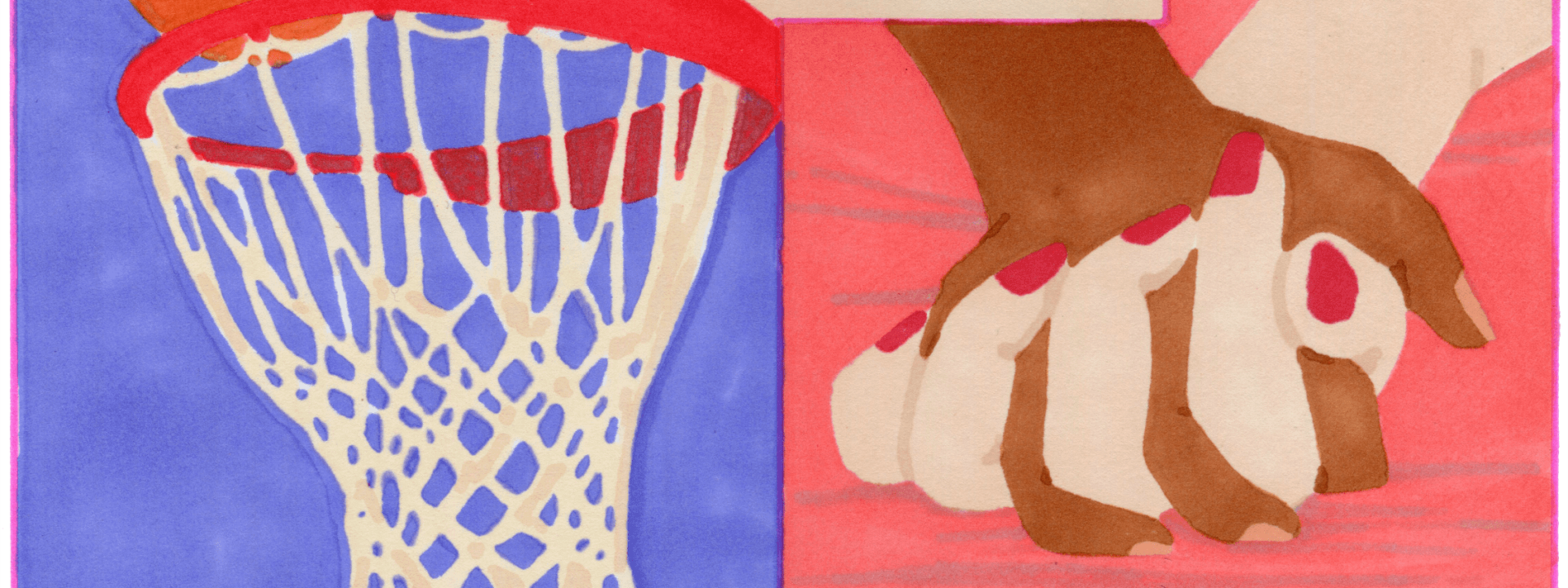
Love Stories is a series that explores love in every form. This year, Vogue teamed up with the publisher 831 Stories on a collection of essays and excerpts celebrating the art of romantic fiction. So pour some chilled red wine, slip into your silky pajamas, and read on.
The viral success of Heated Rivalry has shown the world something readers of Tessa Bailey, KD Casey, and Susan Elizabeth Phillips have known for years: sports and romance are a thrilling match. But why they work so well together is harder to explain.
In men’s hockey, the answer ironically lies in its culture of exclusion—like the NHL’s confusing 2023 controversy over rainbow tape. Despite the league’s attempts to keep queer culture out of its fandom, queer fans have carved out their own spaces. They gather at gay sports bars like Hi Tops, or write and read gay fan fiction and romance novels set in the NHL. Books like Heated Rivalry—part of Rachel Reid’s Game Changers series—show how writers and readers use fiction to express queer joy in a space that often rejects it. In the story, characters like Shane Hollander, Ilya Rozanov, and Scott Hunter must overcome internalized homophobia and secrecy to find catharsis and happiness.
The story is quite different in professional women’s sports. The WNBA is full of visible queer representation. Engaged couple Alyssa Thomas and DeWanna Bonner shared the court last season, while Paige Bueckers and Azzi Fudd essentially “hard-launched” their relationship on social media in a very Gen Z way. Players like Arike Ogunbowale and Brittney Sykes showcase masculine-of-center style, while DiJonai Carrington embodies high femme.
For newer fans like me, it’s easy to forget that this visibility was hard-won by queer players and fans. In 2002, fans staged a kiss-in at a New York Liberty game to assert their presence. Sue Bird has spoken about how, when she was drafted that same year, she was told she could only succeed by selling a “straight girl next door” image.
Professional women’s sports leagues still aren’t perfect, but players and fans have made enough progress that the sapphic WNBA romance novel I published last month, Rooting Interest, feels more like a reflection than pure fantasy.
When I started following the WNBA at the beginning of the 2024 season, it wasn’t phenom Caitlin Clark who drew me in, but Clark’s Indiana Fever teammate NaLyssa Smith. Smith and DiJonai Carrington were exes, and early that season, the Fever played several games against Carrington’s team, the Connecticut Sun. Their interactions, both on the court and on social media, were so charged that fans speculated they were rekindling their romance—and sure enough, they got back together a few weeks later.
As a romance reader, I knew that was exactly the kind of captivating lesbian drama I wanted to see on bookstore shelves. And while I loved the sapphic sports novels I did find, there were far fewer of them compared to the hundreds of M/M sports romances. Daydreaming during WNBA commercial breaks eventually gave me the idea for Rooting Interest.
In fiction, especially romance novels, writers can choose how much of the real world to reflect and how much to reimagine. The world of male professional sports makes a compelling setting for queer romances because it can transform homophobic or hetero-dominated spaces into ones that celebrate queer identity and joy. With female professional sports, romance books can embrace and reflect the queerness that’s already so visible.
Beyond all this, pro athletes and the protagonists…Most romance novels share a key trait: a bold desire to turn dreams into reality. Just as every competition produces a winner and a loser, every competitor must start with the confidence that they could be the one to triumph. Their training and effort are how they transform desire into action.
Romance protagonists embark on a similar journey; they must make themselves vulnerable and take a leap of faith to both give and receive love. In other words, whether in sports or romance novels, you have to risk losing for the chance at a great victory.
Frequently Asked Questions
Frequently Asked Questions About Writing a Queer Sports Romance
Beginner Definition Questions
1 What exactly is a queer sports romance
Its a romance novel where at least one of the main characters is LGBTQ and their identity relationships and the story are deeply intertwined with the world of professional collegiate or amateur sports
2 Do both main characters have to be athletes
Not necessarily Common pairings include athleteathlete athletecoach athletetrainer athletesports journalist or athletesomeone completely outside the sports world The key is that the sports setting significantly impacts their relationship
3 Im not queer or an athlete Can I still write this genre authentically
Yes but it requires dedicated research and sensitivity Read widely within the genre seek out ownvoices stories consult with sensitivity readers from the communities youre portraying and focus on universal emotions like ambition fear of failure and the desire for connection
Common Problems Challenges
4 How do I balance the sports action with the romance
Think of the sports season as your plots timeline Use games practices and competitions as natural settings for tension triumph and bonding The pressure of the sport should directly create or resolve romantic conflict
5 How do I handle the coming out storyline without making it the entire plot
Avoid treating it as the sole source of drama You can have characters who are already out set the story in a supportive environment or focus on the internal journey of selfacceptance rather than a big public reveal The conflict can come from other places like career pressures or team dynamics
6 How do I write realistic sports scenes if Im not a sports fan
Pick one or two sports youre willing to research deeply Watch games read player memoirs and interviews and learn the specific jargon training routines and culture You dont need playbyplay descriptions focus on the characters physical and emotional experience during the sport
7 What are some clichés to avoid
Stereotypes like the angsty gay figure skater or the hypermasculine closeted jock Also avoid using a queer relationship purely for shock value or having a characters career end tragically because they come out