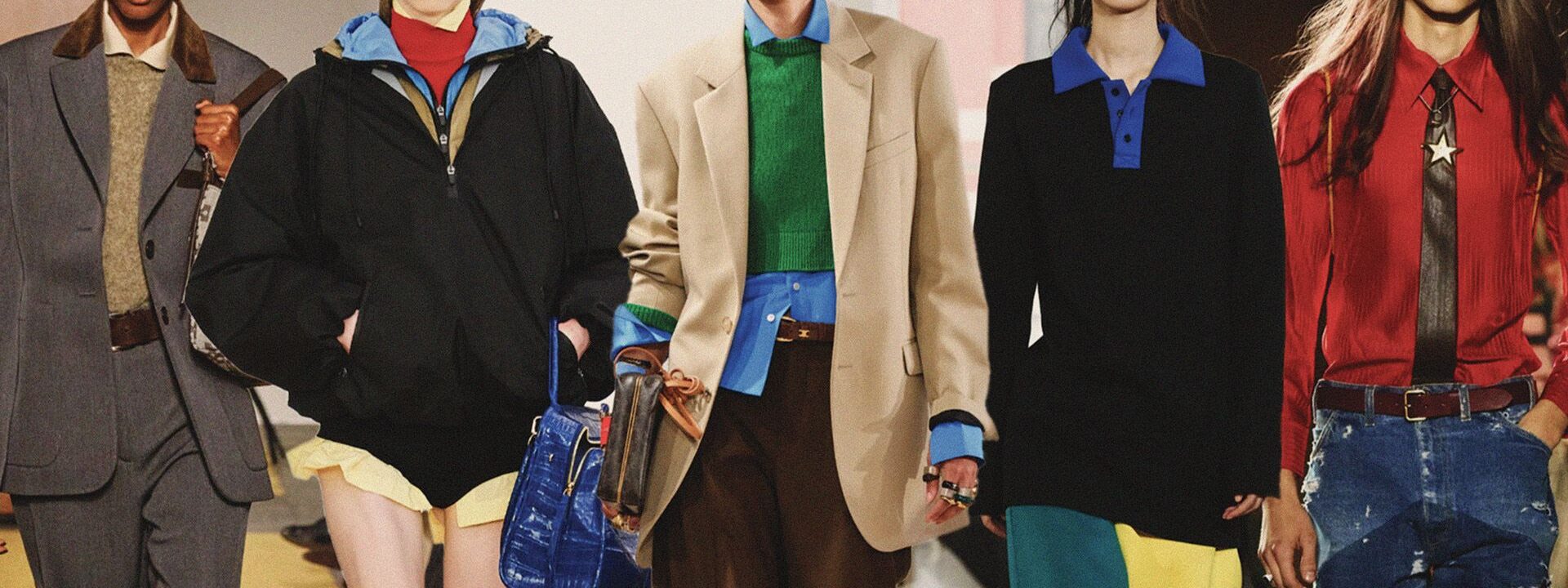
“You can layer and mix colors to create entirely new combinations, instead of being limited to just one choice,” a designer remarked during the fall 2026 shows in New York. “Each piece can function almost like an accessory,” added another, pointing to a rack of dresses, blouses, and jackets. Both were highlighting the versatile, mix-and-match potential of their designs—a curious notion, since clothing typically takes center stage over accessories. Yet this is all part of the new-wave prep revival. Call it the small-plates-ification of American sportswear.
Any New Yorker who dines out remembers the recent small-plates craze. Seemingly overnight, a wave of trendy spots embraced the tapas concept. Instead of focusing on a single main course, a tattooed server (likely in Williamsburg, asking, “Have you dined with us before?”) would recommend “three to five” dishes to share, adding, “We can check back later if you’re still hungry.” The ritual became more flexible and social. Now, our clothing is following suit.
When Michael Rider debuted his vision for Celine last July, many immediately noticed the bold styling. Rider infused the French house with his Ralph Lauren–inspired prep, layering necklaces over scarves over blazers over cardigans—which themselves were sometimes worn as scarves or necklaces. It was an inviting display for those who like to try a bit of everything. At Dries Van Noten, Julian Klausner pursued a similar approach, clashing prints in the brand’s signature vibrant chaos. Back in New York, the emerging label Lii was carving its own path. Zane Li, a 2026 LVMH Prize semifinalist, has spent recent seasons developing a futuristic take on layering, filling his collections with bold color-blocking and paper-doll silhouettes that play with perception.
The New York fall 2026 season continued in this spirit. Tory Burch shifted away from the eccentric runway pieces that fueled the “Toryssaince” to highlight the familiar, familial feel of prep. Corduroys (borrowed from her father), Peter Pan–collar blouses, and crewnecks offered a formula rather than a fixed answer. Eckhaus Latta presented its own cool interpretation—with them, a striped polo is never just a polo; it’s backless, too. This approach made brands that resisted this stylistic path feel static in comparison. The idea of a fixed, unchangeable silhouette suddenly seemed heavy and limiting.
Perhaps this small-plates trend reflects the fashion industry’s ongoing state of flux. Over the last two seasons, we’ve seen nearly two dozen designer debuts, many layering new ideas over their predecessors’, with more debuts upcoming in Milan and Paris. Plus, style conversations are more widespread than ever. No one wants to envy a friend’s dish while working through a solitary main course, especially when we have so many choices. Instead, a more casual ebb and flow—one that allows for a buildable, evolving style—is taking hold.
For the discerning luxury consumer, the appeal of a versatile merino wool long-sleeve—like a Swiss Army knife of wardrobe essentials—grows compared to a rigid statement jacket. Waiter, we’ll try the orange wine, please!
Frequently Asked Questions
Of course Here is a list of FAQs about the trend of ordering multiple small plates inspired by the analogy to American sportswear
FAQs on the Small Plates Trend in Dining
Beginner Questions
1 What does ordering three to five dishes per person actually mean
It means treating a restaurant menu like a collection of smaller shareable dishes instead of each person ordering one large individual entrée The goal is to sample a wider variety of flavors
2 Whats the benefit of eating this way instead of getting a main course
The main benefits are variety and social sharing You get to taste more of the menu it encourages conversation as you pass dishes and it often feels more flexible and interactive than a traditional meal
3 Isnt that going to be really expensive
It can be if youre not mindful However because small plates are often priced lower than large entrees you can control the total cost by setting a budget and counting dishes The cost is in the total number of items not the perperson entrée price
4 How do we actually order Does everyone pick one
Its best to order collaboratively as a table Start by picking a few dishes that appeal to everyone see how hungry you are and then add more as needed A good tip is to order 23 dishes at first then assess and order more
Advanced Practical Questions
5 How do you balance the meal with so many small plates
Think about creating a balanced spread just like youd build an outfit with layers Aim for a mix of a vegetable dish a protein a carbohydrate and something crunchy or fresh for texture contrast
6 Whats a common mistake people make when ordering small plates
The most common mistake is ordering all rich heavy dishes at once This can be overwhelming Space out richer items with lighter acidic or fresh dishes to keep your palate refreshed
7 Can you give an example of a wellrounded smallplates order for two people
For two people a great order might be a bright salad a crispy fried appetizer a vegetablefocused side a