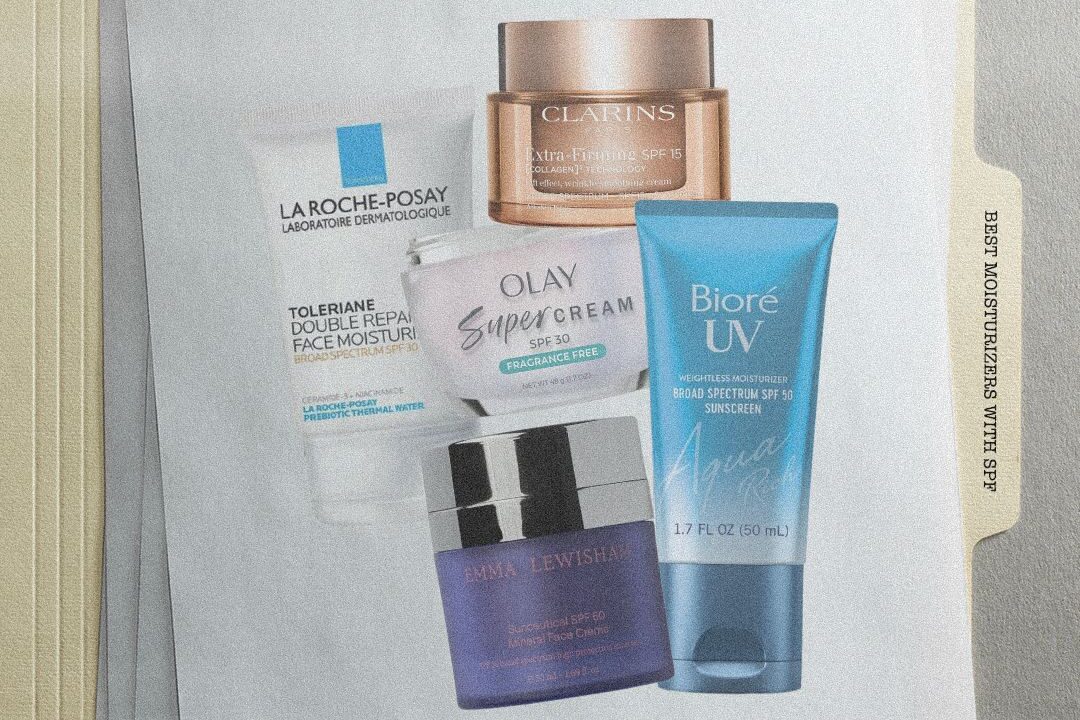
I know my friends and family are tired of me asking if they’ve put on sunscreen today. That energy is better spent encouraging them to use a good moisturizer with SPF, instead of trying to squeeze another step into an already well-planned skincare routine. As the old saying goes, “Work smarter, not harder.” So if your sunscreen isn’t also doing double duty as skincare, it might be time for an upgrade.
By combining the best of face creams with what sunscreens do best—protecting your skin from the sun—dermatologists say these multitaskers are very effective at blocking UV rays while nourishing your skin with ingredients like ceramides, hyaluronic acid, glycerin, and squalane. Plus, newer formulas often blend smoothly into a wide range of skin tones without leaving a white cast.
Vogue’s Favorite Moisturizers With SPF
Best With Mineral Protection
Emma Lewisham Sunceutical Mineral Face Cream SPF 50
$62 at BLUEMERCURY
Best Drugstore
Olay Super Cream
$35 at AMAZON
Best Japanese Moisturizer
Biore UV Aqua Rich Daily Hydrating Facial Moisturizer
$15 at AMAZON
Best Under Makeup
Clinique Moisture Surge Broad Spectrum SPF 28
$49 at AMAZON
Best for Dry Skin
Elemis Pro-Collagen Marine Cream SPF 30
$140 at AMAZON
Best for All Skin Types
La Roche-Posay Toleriane Double Repair Face Moisturizer UV SPF 30
$25 at AMAZON
Even though the terms are often used interchangeably, a moisturizer with SPF isn’t exactly the same as a hydrating sunscreen. According to board-certified dermatologist Dr. Michelle Green, “A hydrating sunscreen blocks UV rays while moisturizing the skin. A moisturizer with SPF mainly hydrates the skin, with sun protection as an added bonus.” That’s an important difference, especially since most people don’t apply enough product—or reapply often enough during the day—to get full sun protection.
Ahead, board-certified dermatologists answer your top questions about moisturizers with SPF, plus Vogue’s picks of the six best formulas to shop now.
In This Story
– What is moisturizer with SPF?
– How does moisturizer with SPF differ from traditional sunscreen?
– Is moisturizer with SPF as good as traditional sunscreen?
– Should you pair a moisturizer with SPF with a traditional sunscreen?
– What to look for in moisturizers with SPF
– How much moisturizer with SPF should you apply for adequate UV protection?
– How we tested
– Meet the experts
Best for All Skin Types: La Roche-Posay Toleriane Double Repair Face Moisturizer SPF 30
$25 at AMAZON
Why We Love It: Whether you love French pharmacy skincare or drugstore classics, you’re probably familiar with La Roche-Posay’s Double Repair Face Moisturizer. One of the brand’s best-sellers, this rich cream is packed with thermal spring water, ceramides, allantoin, and niacinamide to boost moisture, soothe, and even out skin tone. Dermatologist Dr. Mina Amin recommends it for dry, sensitive skin: “It blends easily, making it a great option for everyone, including people with beards.” It’s one of those products that’s almost impossible not to like. Plus, it’s oil-free and noncomedogenic—so it’s safe for acne-prone skin. Moisturize without worrying about breakouts!
Editor’s Experience: My favorite part of going to Europe, besides the pasta that doesn’t upset my stomach, is stocking up on French pharmacy brands like LRP. But thanks to the internet, I don’t have to be so dramatic—we have Toleriane at home. Safe for all skin types, this moisturizer blends into the skin smoothly and doesn’t leave any greasiness or white cast. —Iman Balagam, contributor
Love It
– Oil-free formula
– Absorbs easily into the skin
– Helps suppSupports the skin barrier
May not be hydrating enough for very dry skin types or dry climates
More to Know:
Key Ingredients: La Roche-Posay prebiotic thermal water, glycerin, ceramides, allantoin, niacinamide
Chemical or Physical: Chemical (Avobenzone 3%, Homosalate 5%, Octisalate 5%, Octocrylene 7%)
SPF Level: 30
Size: 3.38 fl. oz.
Best For: Sensitive skin, combination skin, acne-prone skin
Best with Mineral Protection: Emma Lewisham Sunceutical Mineral Face Cream SPF 50
Emma Lewisham
Sunceutical Mineral Face Cream SPF 50
$62 – BLUEMERCURY
Why We Love It: Founded in New Zealand, Emma Lewisham is known for combining luxury with thoughtful formulation. Although it’s marketed as a face cream, Green notes it’s best seen as a dedicated sunscreen with skin-care benefits. “In other countries, sunscreens are classified as medicines and must go through strict testing to prove they work,” she explains. “This SPF 50 face cream is TGA certified, meaning it has been clinically tested for broad-spectrum SPF 50 protection.” The mineral formula uses zinc oxide for UV defense, plus niacinamide and saccharide isomerate to help brighten and hydrate the skin.
Editor’s Experience: I love skin care from retailers like Credo because I trust their “clean” ingredient standards. The packaging is refillable, and the pump is convenient—no dipping fingers into a pot. It leaves a beautiful glow, and since it’s tinted, I never worry about a white cast. —I.B.
Love It: Clean ingredients, mineral-based formula, refillable packaging
Leave It: Finish may feel too shiny for some skin types
More to Know:
Key Ingredients: Niacinamide, saccharide isomerate
Chemical or Physical: Physical (20% zinc oxide)
SPF Level: 50
Best For: All skin types
Finish: Glow
Size: 50 ml
Best Japanese Moisturizer: Biore UV Aqua Rich Daily Hydrating Facial Moisturizer
Biore
UV Aqua Rich Daily Hydrating Facial Moisturizer
$15 – AMAZON
Why We Love It: According to Green, “This hydrating SPF 50 is excellent because it’s lightweight, so patients can reapply throughout the day without feeling greasy.” It’s a chemical SPF 50 with avobenzone, homosalate, octisalate, and octocrylene for broad-spectrum protection. It also contains hyaluronic acid to draw moisture into the skin and support lasting hydration. A best-seller in Japan, it’s known for its featherlight texture and invisible finish, making it great for daily wear with no white cast.
Editor’s Experience: Japan has hot, humid summers, so I trust Biore for that climate. The texture is incredibly lightweight and hydrating—it melts into the skin without stickiness or heaviness. I’m usually tanner in summer, so I’m careful about white casts, and this one has worked well for me so far. —I.B.
Love It: No white cast, suitable for sensitive skin, works well as a makeup primer
Leave It: May not be nourishing enough for very dry skin types
More to Know:
Key Ingredients: Hyaluronic acid, glycerin
Chemical or Physical: Chemical (Avobenzone 3%, Homosalate 10%, Octisalate 5%, Octocrylene 5%)
SPF Level: 50
Best For: Mature skin, fine lines, wrinkles, dry skin, normal-to-oily skin types
Finish: Radiant
Size: 50 ml
Best Under Makeup: Clinique Moisture Surge Broad Spectrum SPF 28
Clinique
Moisture Surge Broad Spectrum SPF 28
$49 – AMAZON | $49 – NORDSTROM
Why We Love It: Clinique’s Moisture Surge is a dream lightweight moisturizer. With a soft, cloud-like texture, it blends seamlessly into the skin, easing concerns like dryness.The brand’s aloe bioferment—a blend of lactobacillus, activated aloe water, and organic aloe extract powder, plus hyaluronic acid and provitamin D—helps reduce dullness. “This moisturizer with SPF is also fragrance-free, which makes it a great choice for sensitive skin,” says Amin. “I’d recommend using it with a separate sunscreen that’s SPF 30 or higher for extra protection.”
Editor’s Experience: If you want glowy skin, this fragrance-free moisturizer feels like a cloud—light and not heavy on the skin after you apply it. It goes on sheer, and I love putting makeup over it. However, I should mention that the scent is a bit strong for something labeled fragrance-free. —I.B.
Love It
Leave It
Lightweight with a dewy finish
SPF below 30 doesn’t offer strong UV protection
Good for sensitive skin
More to Know:
Key Ingredients: Aloe Bioferment + HA Complex, hyaluronic acid, provitamin D, glycerin
Chemical or Physical: Chemical (Avobenzone 3.0%, homosalate 7.0%, octinoxate 7.0%, octisalate 4.5%)
SPF Level: 28
Best For: All skin types, dullness, under makeup
Finish: Glowy
Size: 1.7 fl. oz.
Best for Dry Skin: Elemis Pro-Collagen Marine Cream SPF 30
Save to wishlist
Elemis
Pro-Collagen Marine Cream SPF 30
$140 AMAZON
$140 NORDSTROM
Why We Love It: Elemis focuses on collagen to treat the skin—meaning it aims to boost your skin’s collagen production for a more youthful, glowing look. This moisturizer helps smooth wrinkles, with firming and toning benefits from botanicals like chlorella and ginkgo biloba. It’s great for anti-aging routines, and the brand’s studies show a visible reduction in fine lines and wrinkles in as little as 14 days with regular use. The formula comes in four sizes, from 15 ml to 100 ml, so you can try it or buy a larger size if it’s already a staple.
Editor’s Experience: As someone with oily skin, I love water creams because they’re not too heavy and don’t clog my pores. This one is super lightweight and not sticky at all. I own it in different sizes—one for my carry-on and one for my checked bag. —I.B.
Love It
Leave It
Gel-cream texture that melts into the skin
Contains fragrance, which may not suit sensitive skin
Helps reduce the look of fine lines and wrinkles
More to Know:
Key Ingredients: Padina pavonica, ginkgo biloba, chlorella, carrot root extract
Chemical or Physical: Chemical (Avobenzone 1.0%, octinoxate 1.0%, octocrylene 0.5%)
SPF Level: 30
Best For: Mature skin, fine lines, wrinkles, dry skin
Finish: Satin
Size: 1.69 fl. oz.
Best Drugstore: Olay Super Cream
Save to wishlist
Olay
Super Cream
$35 AMAZON
Why We Love It: This Olay cream is a five-in-one formula that hydrates, smooths, brightens, firms, and provides SPF protection in one step. Green notes that it combines hyaluronic acid, niacinamide, vitamin C, collagen peptides, vitamin E, and alpha hydroxy acid to moisturize and improve skin texture over time. For sun protection, it uses chemical UV filters like avobenzone, homosalate, octisalate, and octocrylene, which absorb UV rays and turn them into heat. It also works well as a makeup primer, making your routine even simpler.
Editor’s Experience: Before Super Cream, I never really thought about Olay—mostly because I prefer indie brands as part of my personal style. But once I tried it, I was completely won over. The brand has been around for decades for a reason. As someone who’s pretty lazy, it’s one of the easiest ways to simplify my routine, especially when I’m traveling and don’t have the time or space for many products. —I.B.
Love It
Leave It
Deeply hydrating and helpsRefines skin texture
Contains added fragrance
Absorbs quickly into skin
More to Know:
Key Ingredients: Niacinamide, vitamin C, collagen peptide
Type: Chemical (Avobenzone 3%, homosalate 9%, octisalate 4.5%, and octocrylene 6%)
SPF Level: 30
Best For: Dry and combination skin types
Finish: Soft matte
Size: 1.7 oz.
Everything You Need to Know
What is a moisturizer with SPF?
It’s pretty simple: “A moisturizer with SPF is a product that hydrates your skin and also includes UV filters to protect it from the sun,” says New York-based double-board-certified dermatologist Carolyn Stull, MD.
How does moisturizer with SPF differ from traditional sunscreen?
According to New York-based board-certified dermatologist Lauren Penzi, MD, “Unlike regular sunscreen, these products have extra hydrating ingredients like emollients that soften skin (e.g., ceramides), humectants that lock in moisture (e.g., hyaluronic acid, glycerin), and/or occlusives that prevent water loss (e.g., dimethicone).”
Is moisturizer with SPF as good as traditional sunscreen?
Yes and no. Penzi says moisturizers with SPF are more “elegant” than regular sunscreens—they absorb better into the skin and don’t leave a greasy feel. But that doesn’t mean you should ditch your standalone sunscreen entirely.
“Both come in different SPF levels, but moisturizers with SPF usually have lower levels,” she explains. “They can be just as good as traditional sunscreen if the SPF type and levels are the same. The difference is that people often don’t apply enough moisturizer with SPF or reapply it as often as they should with sunscreen.”
In short, if you apply a moisturizer with SPF (generally about two finger-lengths’ worth, or the amount that fills a shot glass for your face), you’re covered. For extra protection, consider adding another SPF product—like a facial mist, powder, or tinted sunscreen.
Should you pair a moisturizer with SPF with a traditional sunscreen?
“If your moisturizer has SPF 30 or higher, you technically don’t need a separate sunscreen,” says Amin. “If you choose a moisturizer with sunscreen, look for SPF 30 or higher, and make sure to apply a generous, even layer—typically two finger-lengths long—to your entire face and neck.”
What to Look for in Moisturizers With SPF
SPF Level: “I recommend choosing a product with SPF 30 or higher, which blocks 97% of UVB rays,” says Stull. Penzi suggests a minimum SPF of 40 but notes that “higher SPF offers only a small increase in UVB protection.” The key takeaway is that reapplying every two hours is more important than using a higher SPF just once.
Broad-Spectrum Protection: Penzi advises looking for coverage against both UVA and UVB rays. “UVA rays penetrate deeper into the skin and cause premature aging, like wrinkles, fine lines, and age spots. UVB rays don’t penetrate as deep, but they’re the main cause of sunburn and skin cancer, including basal cell carcinoma, squamous cell carcinoma, and melanoma. (The PA+ system refers to UVA coverage.)”
Chemical vs. Mineral: “Mineral filters like zinc oxide or titanium dioxide work by reflecting and scattering UV rays, rather than absorbing them,” says Stull, while chemical filters absorb UV rays. She prefers mineral filters for people with sensitive skin, as they’re generally less irritating and less likely to cause allergies.
Key Ingredients: Both Stull and Penzi agree that humectants likeHyaluronic acid and glycerin are great ingredients to look for because they draw water and moisture into the skin. Additionally, Penzi would include ceramides to “protect the skin from environmental stressors,” squalene to prevent water loss and “neutralize free radicals that can damage skin cells and contribute to premature aging,” and niacinamide to “strengthen the skin barrier, improve elasticity, and reduce the appearance of fine lines.”
How much moisturizer with SPF should you apply for adequate UV protection?
To apply moisturizer with SPF, Stull recommends massaging it into clean, slightly damp skin in the morning. For proper sun protection, use at least a quarter-size amount, or about two finger lengths’ worth.
Meet the Experts
Mina Amin, MD, is a Los Angeles–based dermatologist at California Dermatology Specialists.
Lauren Penzi, MD, is a New York–based board-certified dermatologist specializing in medical and cosmetic dermatology.
Carolyn Stull, MD, is a double-board-certified dermatologist and Mohs surgeon at MDCS Dermatology in New York.
Michele Green, MD, is a New York–based board-certified dermatologist specializing in cosmetic treatments.
Frequently Asked Questions
Here is a list of FAQs about moisturizers with SPF covering beginner and advanced topics
Beginner Questions
1 What exactly is a moisturizer with SPF
Its a 2in1 product It hydrates your skin like a regular lotion but also contains sunscreen ingredients to protect your skin from the suns UV rays
2 Can I use a moisturizer with SPF instead of sunscreen
Yes if you apply enough of it You need to use about a nickelsized amount for your face to get the SPF protection listed on the bottle If you use a thin layer you wont get full protection
3 Do I still need a separate sunscreen if I use this moisturizer
Not necessarily for daily incidental sun exposure But if youre going to the beach hiking or spending hours outside you should use a dedicated waterresistant sunscreen for stronger protection
4 What do the numbers like SPF 30 or SPF 50 mean
SPF stands for Sun Protection Factor SPF 30 blocks about 97 of UVB rays and SPF 50 blocks about 98 Dermatologists usually recommend SPF 30 or higher for daily use
5 Whats the difference between chemical and mineral SPF in moisturizers
Chemical SPF Absorbs UV rays and turns them into heat Its usually clear and lightweight
Mineral SPF Sits on top of your skin and reflects UV rays Its better for sensitive skin but can leave a white cast
Advanced Questions
6 Can I mix my regular moisturizer with my sunscreen to make my own SPF moisturizer
No dont do this Mixing them can dilute the sunscreen making it less effective You also wont know the final SPF level Its better to buy a product thats already formulated
7 Does the order of application matter if I use a separate moisturizer and SPF
Yes The general rule is to apply your regular moisturizer first let it absorb for a few minutes and then apply your sunscreen on top If you reverse it