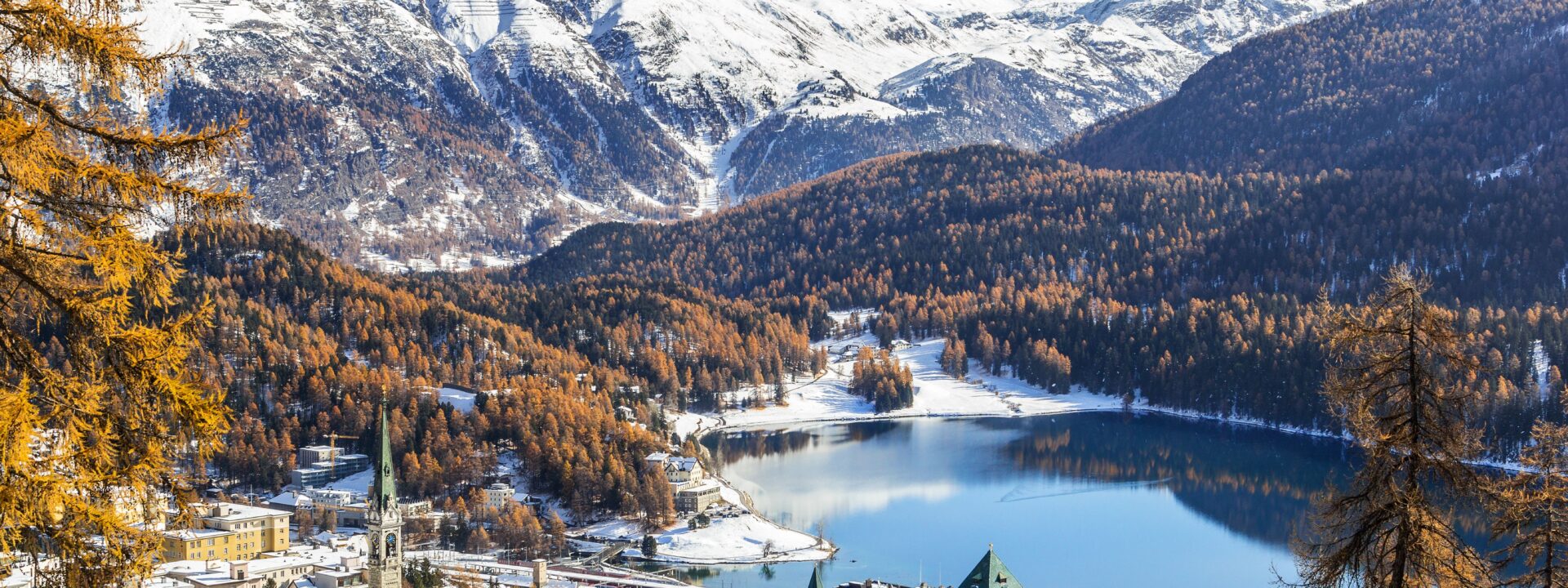
Nestled in Switzerland’s Engadin Valley, the hilltop village of St. Moritz stands as one of Europe’s most exclusive ski resorts. Here, timeless elegance and understated discretion are the hallmarks, hidden behind the doors of iconic Art Nouveau hotels and traditional fondue spots. It’s a place where women in understated luxury labels like Loro Piana and Attersee far outnumber those covered in logos—the latter would feel more at home in Courchevel, while lively party crowds should look to Zermatt or Verbier. St. Moritz remains the domain of aristocracy and discreet jetsetters, those nostalgic for the classic glamour of skiing’s golden age, which somehow still endures here.
This nostalgic appeal is deeply rooted in history, worn like a badge of honor. St. Moritz has been a winter sports haven since 1864, considered the birthplace of Alpine winter tourism. It has hosted the Winter Olympics twice and is home to the legendary Cresta Run, the world’s only natural ice bobsleigh track, and an outdoor Olympic ice rink. Each winter, a stylish crowd descends for a packed calendar of iconic events, from the Snow Polo World Cup to races on the Cresta Run and an international horse race on snow.
The blend of winter sports and art is one of St. Moritz’s most distinctive qualities. While it has long attracted artistic figures like Bruno Bischofberger and Gunter Sachs, the town is experiencing a renaissance. Hauser & Wirth opened a gallery here in 2018, the traveling art fair Nomad Circle is staging its second season, and a wave of international chefs, designers, and architects are contributing to new developments. With such a rich cultural calendar, it’s no wonder St. Moritz continues to captivate both sports enthusiasts and culture seekers.
Below, a guide to St. Moritz.
Where to Stay
Badrutt’s Palace
Badrutt’s Palace—often called simply “the palace” by locals—is the polestar of St. Moritz. With 13 diverse dining options, the Palace Wellness Spa offering Biologique Recherche treatments, and exclusive VIP shopping experiences on Via Serlas, it is a destination in itself. After seven years of planning, the new Serlas Wing now offers 25 rooms and suites designed by B&B Italia and Loro Piana Interiors, along with a discreet underground tunnel leading to the town square and the historic Chesa Veglia, home to four distinct restaurants. Outdoors, the property has also added an ATP-certified tennis court and one of Europe’s highest-altitude padel courts.
Your royal treatment begins at the train station, where a greeter in the hotel’s iconic red uniform awaits on the platform to whisk you away in a vintage Rolls-Royce (available upon request). Arriving at Badrutt’s Palace feels like a scene from a Hollywood film: you step out of the car and gaze up at the neo-Gothic castle with its towering turrets before being escorted into the marble-clad lobby, which flows into the legendary Grand Hall—known as St. Moritz’s living room. If you arrive during cocktail hour, consider yourself lucky. The palace comes alive with the sound of the lobby piano, the scent of tobacco from the bustling bar, and a nostalgic atmosphere where the staff somehow remembers every guest’s name.It feels like stepping into another world when the staff knows your name—it’s easy to see why icons like Alfred Hitchcock, Charlie Chaplin, and Coco Chanel have stayed here.
Suvretta House
Suvretta House stands in a class of its own. It’s the only ski-in, ski-out hotel in St. Moritz, giving guests the feeling of belonging to an exclusive club. True to its name, which means “house above the woods,” it’s a majestic retreat set within a quiet natural park on the edge of town. Beyond the tranquility, the perks are plentiful: the hotel has its own private ski lift right next to the building, providing direct slope access and leading to two mountain restaurants, Trutz and Chasellas. If you’d like to visit town, Suvretta’s charming vintage Ford bus offers complimentary hourly shuttles to and from the village.
You’ll have no shortage of choices here—whether it’s the Full English Afternoon Tea in the lobby or on the terrace, a classic fondue at Suvretta Stube, an aperitif at Anton’s Bar, or dressing up for an unforgettable caviar spaghettini at the Grand Restaurant. Even children are well catered to, with their own Teddy Club restaurant where they can dine with new friends under careful supervision. This winter, Suvretta House is opening a new three-floor spa complete with a 25-meter pool, a yoga studio, a partnership with the exclusive Pilates studio The Beat, a wellness garden, a full-service hair and nail salon, and a special area just for kids.
Kulm Hotel
Since opening in 1856 as St. Moritz’s first hotel, Kulm Hotel has been at the center of the winter season’s most prestigious events, thanks especially to its deep connection with the Cresta Run, built on its grounds in 1891. The hotel remains home to the St. Moritz Cresta Club and Tobogganing Club—a history echoed in the Sunny Bar, where vintage photos and trophies line the walls. Kulm retains its prime location in the heart of town and boasts standout restaurants like Amaru, which brings Peruvian flavors to the Alps in a space designed by Luke Edward Hall, and Bob Restaurant, located at the entrance to the legendary Olympia Bob Run. The hotel also features a spacious spa with sweeping lake views.
For winter 2025, Kulm introduced the Kulm Alpine Sports Lounge & Boutique—a fresh take on the traditional ski room, offering pre-ski rituals, top-tier equipment, and personalized ski concierge services. Designed by Foster + Partners, this lounge marks the beginning of a new chapter for the hotel, blending alpine performance with innovative design.
Just down the road lies the Kulm Country Club, which first opened in 1905 as a gathering spot by a natural ice rink and later served as a base for the Winter Olympics. After a CHF 12 million renovation led by architect Lord Norman Foster, it reopened in 2017, blending original Art Nouveau details with Swiss tradition. The two-story space includes a wood-paneled restaurant with a sunny terrace overlooking the rink, plus a lounge and bar on the ground floor displaying regional photographs, bobsleds, and other memorabilia. Guests at Kulm Hotel also receive a complimentary ski and mountain pass, covering 350 kilometers of slopes across Corviglia, Corvatsch, and Diavolezza-Lagalb, as well as night skiing and the “Glüna Plaina” full moon experience.
Hotel Grace La Margna
With 74 rooms situated conveniently above the St. Moritz train station, Grace La Margna offers a stylish, modern alternative to the classic grand hotels the destination is known for.The hotel blends contemporary minimalist design with its Art Nouveau heritage. Clean lines, muted colors, and mid-century modern elements are found throughout, while original decorative moldings, marble fireplaces, and heritage-protected bay windows in the La Margna Wing preserve its historic charm. The use of local wood, warm tones, and festive plaids creates a cozy chalet feel rather than stark modernism. This atmosphere extends to the dining and living spaces, especially the N/5 bar, where master mixologist Mirco Giumelli crafts unique cocktails with unexpected pairings. The spa offers a holistic wellness experience, featuring “emotional showers” that combine light, mist, and water pressure for healing, followed by a 20-minute treatment on the Klaf sunlit meadow lounger.
The Carlton Hotel
Perched discreetly on a hill overlooking Lake St. Moritz, The Carlton Hotel is an intimate retreat with just 60 luxurious alpine-inspired rooms, making it the smallest five-star hotel in the area. A fairytale ambiance begins at arrival, where guests are served fondue in gondolas at the hill’s edge overlooking the lake. A sleigh rests on wood chips inside the entrance. The interior continues this enchanting feel with warm, professional yet relaxed hospitality, complementing the grand but intimate vibe, particularly in the living room-style Carlton Bar and Bel Etage. The hotel also features the Grand Restaurant and the two-Michelin-starred Da Vittorio, recently refreshed, along with a spa.
Grand Hotel Des Bains Kempinski
As the oldest and largest five-star hotel in St. Moritz, Grand Hotel Des Bains Kempinski offers a fuss-free, reliable luxury experience with comfortable rooms in a prime location for skiers. Situated in St. Moritz Bad, it’s a 20-minute walk or five-minute drive from the town center and conveniently located at the foot of the Signalbahn cable car, providing direct slope access. Après-ski, guests can unwind at the spa, which includes Lifecube Cryotherapy to reduce post-skiing inflammation. Dining options range from the Michelin-starred Ca d’Oro to the casual Italian enoteca, Ristorante Da Adriano, and a lively lobby bar with live music.
Chesa Marchetta
Opening this season in Sils Maria, just 15 minutes from St. Moritz, Chesa Marchetta has been reimagined by Iwan and Manuela Wirth of Hauser & Wirth after a four-year renovation led by architect Luis Laplace. This 16th-century guesthouse retains its rich cultural history—once a draw for writers like Nietzsche, Proust, and Faulkner, and later a favorite of artists such as Gerhard Richter and Jean-Michel Basquiat. Inspired by their first date at the restaurant in the 1990s, the Wirths transformed it into a 13-room hotel with a 46-seat restaurant highlighting Engadin and Northern Italian producers, plus a separate three-bedroom house for rent.
Where to Eat and Play
On the Slopes
Some of the most atmospheric dining happens on the slopes. Trutz, located at the top of the Survetta lift (easily accessible for non-skiers), is a St. Moritz staple known for its friendly vibe and casual homestyle cooking, from simple pastas to traditional Grisons dishes like rösti. The sundeck offers panoramic views of the lake.Staz and the nearby Paradiso are both popular spots for lunch on the slopes. At Paradiso, you can choose the upper music deck for food, drinks, and dancing to a daily DJ, or book a table at the lower deck’s Mountain Club. There, sheepskins cover blue-checkered banquettes, and the menu—featuring black truffle fondue, caviar, and lobster lunches—sets a more formal tone. For a more low-key but equally atmospheric on-piste lunch, try the locally loved Chasellas and Salastrains, also located in the Corviglia ski area.
In Town
If you’re looking for a relaxed meal or a smooth start to your day, the new Café Belmont offers sandwiches, freshly baked cakes and brioche, plus coffee and wine. There’s also the cozy Pavarotti Wine Bar, where a lively, family-friendly vibe pairs with homestyle Italian dishes—perfect for lingering with friends. Other local favorites include Dal Mulin, a casual Alpine-inspired restaurant in the town center, and the traditional Swiss Restaurant Engiadina, famous for cheese fondues, raclettes, and rösti.
Chesa Veglia, a former farmhouse built in 1658, houses Pizzeria Heuboden—an authentic pizzeria and one of St. Moritz’s most renowned hideaways—alongside the upscale Swiss restaurant Patrizier Stuben, the intimate three-table Carigiet Fondue Stubli, and an in-house bar ideal for a drink while waiting for a table.
If you’re craving a break from regional classics, La Coupole – Matsuhisa—founded by Nobu’s Nobuyuki Matsuhisa in what was once Europe’s first indoor tennis hall—serves signature Japanese-Peruvian fare with transporting flavors and service. Equally transportive is the new Peruvian restaurant Amaru, opened this season under chef Claudia Canessa. Its menu focuses on shared street-food dishes, all served in a space whimsically designed by British artist Luke Edward Hall in the spirit of St. Moritz.
The Kulm Pizzeria is a local favorite with a new state-of-the-art show kitchen, offering classic Italian dishes in an upscale chalet setting. Around the corner at the Sir Norman Foster–designed Kulm Country Club, Michelin-starred chef Mauro Colagreco presents a relaxed, elegant family-style menu using high-quality ingredients cooked over fire—embers, grill, or charcoal. The inviting living-room atmosphere also makes it a great spot for a pre-dinner drink.
Visit Badrutt’s legendary Renaissance Bar and cigar lounge, known as Mario’s Bar, for timeless elegance, an extensive whisky selection, and some of the world’s finest cigars. And if you’ve made it this far, your night will likely end at the pricey (but worth it) Dracula Club—as the best nights in St. Moritz often do.
Art and Shopping
Luxury shoppers will find plenty to explore, with brands like Gucci, Prada, and Louis Vuitton alongside high-end sportswear labels such as Moncler, Bogner, and Fusalp lining the town center. The Italian multi-brand shop Modes (and MiniModes for children) offers a well-curated mix of well-known brands and cult designers, with exclusive seasonal items at its St. Moritz outpost.
Cult-favorite cashmere brand Extreme Cashmere has opened its first flagship store on Via Somplaz, playfully concealing washing machines behind sliding doors to encourage customers to drop off items for responsible cleaning throughout the week. Nearby, the heritage shop Cashmere House Lamm—a St. Moritz staple since 1935—sells an array of cashmere goods.Discover a selection of traditional knitwear made from premium Italian and Scottish cashmere. For more festive styles and sought-after St. Moritz souvenirs, visit Ender Sport. As the town’s premier ski shop since 1931, it also boasts one of the finest winter boot collections in the Engadin Valley.
Since opening in 2018, Hauser & Wirth’s gallery has attracted significant attention from visiting art enthusiasts, especially after Vito Schnabel’s gallery debuted in 2015 within the former space of renowned art dealer Bruno Bischofberger. Perched on the scenic slopes of St. Moritz-Dorf, the Segantini Museum provides a breathtaking setting to admire the radiant Alpine scenes of Giovanni Segantini, the Italian painter celebrated for his symbolic portrayals of life in the mountains. The Cresta & Bob Museum is another worthwhile stop, offering an engaging exploration of the history, culture, and excitement behind the region’s famous ice runs.
A half-hour drive from St. Moritz leads to Muzeum Susch, a remarkable contemporary art venue nestled in a quiet Engadin village. Housed in a beautifully transformed former monastery, it focuses primarily on works by women artists. Continue a bit farther to reach the Not Vital Foundation Park, an extraordinary open-air landscape filled with sculptures and site-specific installations by Swiss artist Not Vital, all framed by sweeping mountain vistas.
While St. Moritz has always been a hub of art and culture, recent openings and events have reaffirmed its place on the global stage, highlighting a cultural revival. Among them is Nomad Circle, a traveling fair for contemporary art and collectible design, which returns to St. Moritz with both new and returning exhibitors. Yet nothing captures the essence of St. Moritz quite like the International Concours of Elegance, or The I.C.E.—a classic car show held on ice that beautifully blends the town’s timeless elegance with the enchantment of its frozen lake.
Frequently Asked Questions
Of course Here is a list of FAQs about St Moritz designed to sound like questions from real travelers planning their trip
Planning General Info
Q Why is St Moritz so famous
A Its a legendary Swiss resort known as the birthplace of Alpine winter tourism Its famous for its champagne climate glamorous clientele worldclass skiing and hosting two Winter Olympics
Q When is the best time to visit
A For skiingsnow December to early April For hiking lakes and summer sports June to September For glamour and events February
Q Is St Moritz only for the superrich
A While its a luxury destination its accessible to many You can find a range of accommodations and dining options The natural beauty and public activities like hiking or windowshopping are free for everyone to enjoy
Q How do I get there
A The closest major airport is Zurich From there a scenic 3hour train ride on the Glacier Express route brings you directly to St Moritz station Having a car is optional
Where to Stay
Q Whats the difference between St Moritz Dorf and St Moritz Bad
A Dorf is on the hill closer to the ski lifts luxury shopping and has most of the iconic palaces Bad is by the lake slightly quieter and historically known for its spa facilities
Q Should I stay in a classic palace hotel
A If your budget allows its a quintessential experience for history service and atmosphere For more modern or budgetconscious options look for design hotels or guesthouses in neighboring villages like Celerina
Q Are there good familyfriendly hotels
A Yes many hotels offer family rooms kids clubs and special programs Look for resorts in areas like Suvretta which are slightly removed from the main bustle and often have skiinskiout access
Where to Dine Drink