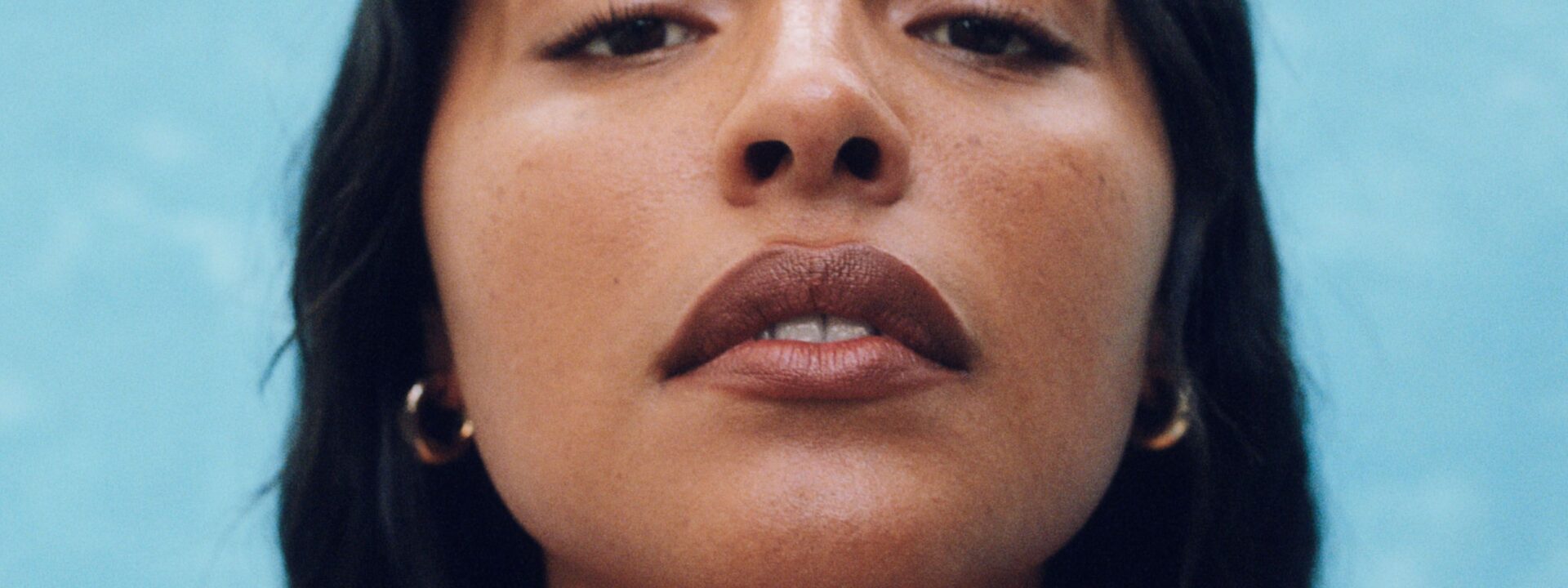
When celebrity makeup artist Fara Homidi started her beauty brand in 2023, she focused on true makeup enthusiasts. “I wanted to make a brand that people can nerd out on,” she says. Her customers are drawn to recreate the looks she’s designed for stars like Sabrina Carpenter and Kendall Jenner, or for fashion houses like Loewe and Miu Miu—think bronzed skin with a bold red lip or sky-blue eyeliner paired with matching shadow.
True to this vision, Fara Homidi Beauty specializes in color cosmetics, offering just six products for face, lips, and eyes. With prices reflecting its luxury status—from $78 for a bronzer to $46 for a plumping lip oil and $98 for an eyeshadow compact—the brand takes a “slow beauty” approach in a fast-paced, trend-driven industry. Homidi aims to build a luxury brand with the dedicated following of a favorite fashion designer. “Fashion houses set a luxury standard for ready-to-wear—every detail is refined, working with the best suppliers and artisans. But with cosmetics, it often feels commercialized,” she notes. “If you love Phoebe Philo and follow everything she does, I wanted my brand to evoke that same feeling.”
While exact figures aren’t shared, the brand reports a 500% growth in net sales since June 2025. “These numbers are the blueprint for our entry into Australia and New Zealand,” says Homidi. Already available at Sephora, Selfridges, Goop, Violet Grey, Moda Operandi, and Dover Street Parfums Market in Paris, the brand is now expanding to Australia and New Zealand through Mecca, Australia’s largest beauty retailer.
This move follows a second round of undisclosed investment from private equity firm Sandbridge Capital, which first partnered with the brand in February 2025 to help build its team and plan expansion into the UK, Australia, and New Zealand. The new funding will support further research and development as the brand explores categories beyond color cosmetics.
“It’s been an ambitious year of growth. We returned to Sandbridge with strong numbers and a clear plan for regional expansion and new product launches,” says Homidi, who serves as CEO. “I’ve avoided setting rigid numeric targets. Building a global brand is my top priority, followed by sustained growth that allows us to maintain our high standards.”
The beauty markets in Australia and New Zealand are becoming increasingly competitive, with both large and small brands seeking new opportunities. In February, Hailey Bieber’s Rhode launched at Mecca, and last month, Amazon Australia announced it would carry over 60 K-beauty brands, including Cosrx, Mediheal, and Dr.Melaxin. Makeup artist-founded brands have seen varied success: Pat McGrath Labs filed for bankruptcy earlier this year (McGrath is now creative director of La Beauté Louis Vuitton), while Charlotte Tilbury has been a standout for parent company Puig, reaching €845 million in sales in 2025.
“Fara Homidi belongs to a more selective group of artist-led brands that are building with discipline from the start. What stands out is the combination of a tightly curated product range, a strong creative identity, and early institutional backing that enables thoughtful scaling,” says Anna Sweeting, founder of The Equity Studio. “Artist-led brands begin with a genuine advantage, rooted in product authenticity and community.”
The trend is shifting away from rapid, broad product expansion toward precision—fewer SKUs, greater intention.Homidi is aiming for stronger margins. As the New York-based brand prepares to enter a new region with fresh capital, founder Fara Homidi plans to stand out by focusing her product assortment on luxury and sustainability. In a crowded market, can she succeed?
Understanding Australia
Beauty brands are looking for growth beyond the Americas, Asia, and Europe. Australia’s beauty and personal care market is projected to reach $10.25 billion by 2028, with color cosmetics expected to grow 19.08% to $1.81 billion in the same period, according to Euromonitor. Mecca is the leading beauty retailer in the region, with over 100 stores across Australia and New Zealand carrying international brands like Charlotte Tilbury, Morphe, Tom Ford, and Victoria Beckham Beauty.
Homidi has been waiting for the right moment to enter Australia and New Zealand—a combined market of over 33.7 million people that requires careful consideration, such as understanding its reversed seasons and U.S. cultural influence.
The founder has been in talks with Mecca for several years, and her previous retail launches have prepared her for this step. “I didn’t want to take on more than I could handle. Being slow and steady has worked in our favor,” says Homidi. “I don’t want to oversaturate any single market. It’s important to be represented by a retailer that’s strategic about who tells your story. Mecca felt like a partner invested in more than just a trend.”
This launch with Mecca is Homidi’s largest physical retail rollout to date. The retailer has invested significant time into the brand launch, hosting two weeks of events including workshops, talks, and tutorials with the founder.
Interest in Homidi’s brand emerged early in Australia and New Zealand, partly due to the founder’s makeup artist portfolio, which includes work with Loewe, Miu Miu, Paloma Elsesser, and Bella Hadid. Another reason is that the brand’s visual identity resonates with many in the region’s warm climate—its eggshell blue packaging resembles the sea, and campaigns often feature beaches and the ocean.
“They consume beauty differently there. Because of the climate, they want breathable, no-fuss products—and my products are finger-friendly, easy to apply, and understand,” Homidi explains. In February, the brand launched its eye category, which has since become its most successful launch, performing 30% better than the Bronzer Collection released last June.
The Luxury Beauty Gap
In pursuing luxury, Homidi has focused on details, from makeup pigmentation to product weight. Her refillable compacts, starting at £74, are made from recyclable metal and a bioplastic containing 42% responsibly sourced tree material. They have a substantial feel, weighing just under a small paperweight.
When designing the products, Homidi drew inspiration from the streamlined curves and lacquered metal of a Porsche. At the same time, she wanted the compacts to feel luxurious but not so precious that customers would hesitate to use them.
The product formulation was equally important. Homidi began by cold-calling manufacturers and labs to explore costs and learn how to start a beauty brand, also seeking advice from industry contacts. “I worked with labs that had a great reputation and were willing to take a chance on me because of my name in the artistry world and their belief in the brand’s future,” she says. The products are all vegan, made in Italy and Japan, and free from silicones and talc.
Creating a clean beauty brand that was easy to use but still reflected her artistry was a top priority for Homidi—she is often asked by beauty enthusiasts how to achieve the looks she creates.Her editorial work inspires her makeup looks. “I try to use both perspectives—as an artist and a consumer—whenever I create something. I ask myself: Does this appeal to an everyday consumer? Does it speak to an artist? How can I make it user-friendly?” she says.
Fara Homidi’s largest market, across both wholesale and direct-to-consumer sales, is the US. The UK is currently its second-largest market, followed by the EU and the rest of the world. Through Mecca, the brand will be available in 50 stores across Australia and New Zealand, and it expects the region to become one of its top-performing markets.
The brand’s customer base is mature, with millennials and baby boomers making up the largest share. “That makes sense to me. They see our products as an investment. We do have younger customers, but the older crowd understands us a bit more,” says Homidi.
Looking ahead, Homidi aims to stay steady by serving the brand’s current markets while still dreaming of further expansion. The Middle East is at the top of her list, as the brand has already caught the attention of tourists shopping overseas. “They’ve heard of us and are excited to purchase our products while on vacation or when visiting our space—especially because the name itself makes them stop and take notice,” says Homidi, who was born in Afghanistan and moved to California at age one.
As the business grows, Homidi is careful to balance building the brand with her work as a makeup artist in the fashion industry. “[Working as a makeup artist] is my home base, and I always want to keep that strong,” she says. “Besides, any skill can get rusty if you don’t keep honing it. You need to stay exposed to fresh ideas behind the scenes—ideas that often become mainstream almost two years later.”
Frequently Asked Questions
Of course Here is a list of FAQs about Fara Homidi and her global beauty brand designed to sound like questions from real people
Beginner General Questions
Who is Fara Homidi
Fara Homidi is a celebrity makeup artist entrepreneur and the founder of the Fara Homidi Beauty brand Shes known for her work with top models and celebrities and for creating a line focused on highperformance multiuse products
What is the Fara Homidi Beauty brand
Its a cosmetics and skincare brand built on the principle of less is more The products are designed to be versatile easy to use and deliver professionalquality results for everyday people
What makes her brand different from others like Fenty or Rare Beauty
While all are successful celebrity brands Fara Homidi Beauty is distinct for its strong emphasis on multiuse products and a curated streamlined approach It focuses on a minimalist capsule collection rather than a vast array of colors and trends
Where can I buy Fara Homidi Beauty products
The products are primarily sold through her official website This directtoconsumer model helps maintain quality control and a close connection with customers
Advanced BusinessOriented Questions
How did she fund and start her beauty empire
Fara bootstrapped the initial launch using her personal savings and revenue from her makeup artistry career This allowed her to retain full creative control The brands growth has been fueled by strategic reinvestment of profits and avoiding outside investors initially
What is her key strategy for worldwide expansion
Her strategy is multipronged
1 DigitalFirst Presence Leveraging social media for tutorials and authentic customer testimonials
2 Influencer Pro Artist Seeding Getting products into the hands of working makeup artists and microinfluencers who genuinely use and recommend them
3 Global Shipping Offering international shipping from her website to build a direct global customer base before securing physical retail partnerships
4 ProductLed Growth Focusing on a few hero products that generate wordofmouth buzz and define the brands reputation for quality