Images today move through the world faster than ever. They are created, shared, and absorbed in a constant stream, where being seen happens instantly but fades just as quickly. In this environment, making the work is no longer the only challenge. What happens after a project is finished—how it’s presented, where it’s shown, and how it continues to matter over time—has become just as complicated.
For many photographers and organizations, this stage still lacks support. The systems that once helped build visibility, like editorial platforms and institutions, have changed, leaving artists to navigate a scattered landscape on their own. Questions about strategy, context, and long-term growth are no longer secondary. They are essential to a project’s life.
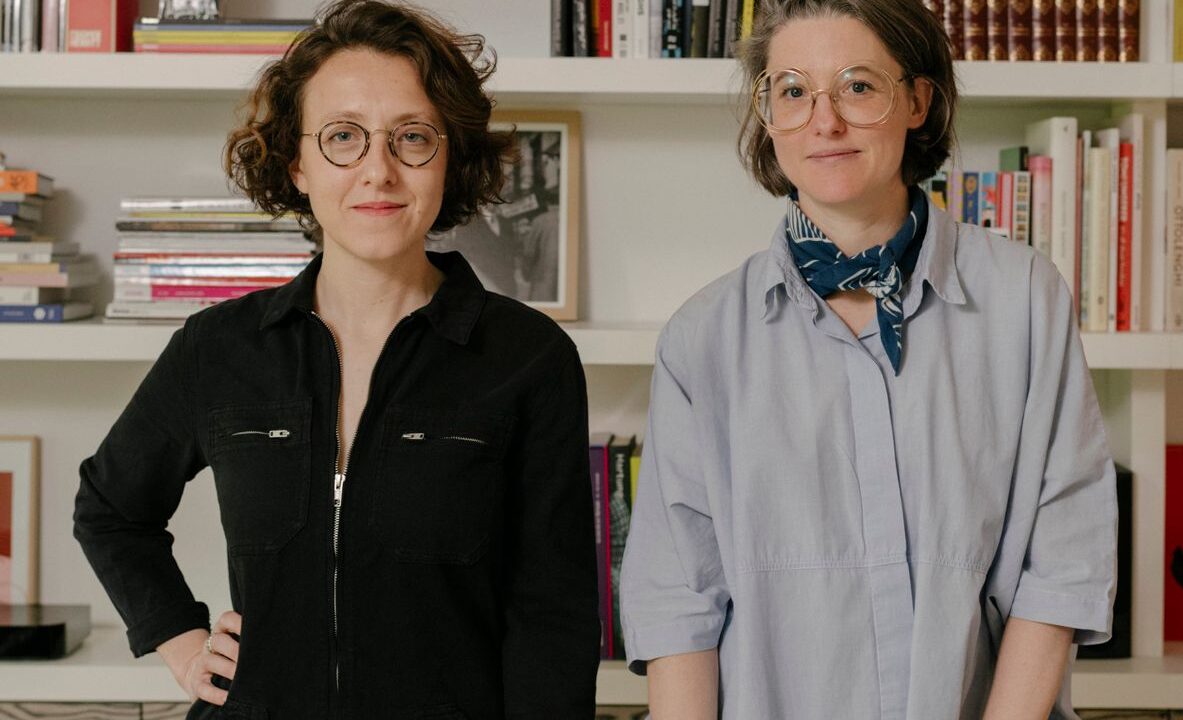
This is where Signals comes in. Founded by Myrtille Beauvert and Elsa Seignol, the initiative combines years of experience in communications, curation, and publishing to offer a more thoughtful way of helping photographic work exist in the world. Working with both artists and organizations, Signals focuses not just on visibility, but on building paths that let projects unfold, connect, and last.
What started as an ongoing exchange of ideas, conversations, and shared questions has turned into a structured response to a growing need in the field. In this conversation, Beauvert and Seignol reflect on what’s shaping photography today, why it’s important to think beyond just making work, and what it means to support an image over time.
We spoke with Myrtille Beauvert and Elsa Seignol about the origins of Signals, the need for a more thoughtful approach to visibility, and how photographic work can be supported beyond the moment it’s created.
‘Pulse’ Exhibition curated by Elsa Seignol – Destiny Mata : Transmitter Gallery NYC 2025
Signals grew out of conversations, friendships, and long-term collaborations. How did the idea first take shape, and when did you feel it needed to become something more structured?
Signals works with photographers and organizations on strategic guidance, from communications and project development to career direction and reaching new audiences.
It really grew out of long conversations we had about photography, and questions we kept hearing from photographers and organizations about how to position work, build visibility, and think beyond a single moment. At some point, we realized these weren’t isolated questions, but recurring ones that needed a more consistent answer.
We’ve both been working in photography for many years, just in slightly different areas—Myrtille in publicity and communications, and Elsa in curatorial and publishing. When Elsa moved to New York in 2022, where Myrtille had been living since 2011, we started crossing paths more often and quickly saw how well our perspectives complemented each other.
Signals is our way of answering these questions in a more structured and intentional way.
In recent years, there has been a strong focus on making work and gaining visibility. Yet much less is said about what happens after a project is created. What are you observing in the current photography landscape that made Signals feel necessary?
Visibility is more important than ever, but it has also become more complex, for photographers and organizations alike. There are more platforms, opportunities, and ways for work to circulate, but also more competition, faster timelines, and less clarity on how to navigate it all. At the same time, the structures that used to help build visibility—media, publishers, institutions—have changed a lot, which means people are often left to figure it out more on their own.
We’re trying to bring a more thoughtful, long-term approach to building visibility, so projects don’t just exist, but are shared in ways that allow them to resonate and grow.
Bienal fotografia do Porto, 2025
You describe working on positioning, development, and long-term strategy. These are areas that many artists are often leftNavigating alone can be tough. Where do you see the biggest gaps today between creating a project and letting it fully exist in the world?
Often, not enough time is spent after a project is finished thinking about what it’s really trying to do, where it belongs, and what kind of conversation it wants to join. This reflection helps define how, when, and where to share the work. Timing and alignment are key: how a book, an exhibition, or editorial moments can support each other, or how a project can be grounded in a context that gives it meaning. Communication matters too—it’s not just about producing strong work, but about framing it so it connects with people.
Strategy can sometimes feel at odds with artistic integrity. How do you approach positioning and visibility in a way that stays true to the work, rather than reshaping it to meet expectations?
We don’t see strategy as changing the work, but as translating it. It should help artists and organizations clearly express their vision and mission, ensuring their projects are presented faithfully. We encourage them to think carefully about context, collaborators, and how to present their work. The most visible platforms aren’t always the best fit for a project. In that sense, strategy becomes a way to protect the work’s integrity.
Nona Faustine exhibition at CPW
Ryan Rusiecki
I find it powerful that your workshops focus on “the life of a project beyond production.” How do you define that life? What stages are often overlooked?
What we often notice is that a lot of energy goes into producing projects, but much less into what happens next. When we talk about “the life beyond production,” we mean everything that happens once a project is finished. Before sharing it publicly, there are important but often overlooked practical steps: clarifying what the project is really about (its subject, concept, and underlying story), identifying the right opportunities, and shaping a realistic path for how it can unfold over time.
That after-production phase can feel overwhelming for photographers to handle on their own. But it’s also what allows beautiful things to happen. We’ve seen photographers suddenly find themselves visiting places they never imagined, meeting communities around the world, or receiving messages from people they never expected their work to reach.
We’re living in a time where images circulate faster than ever, yet it’s increasingly hard for work to leave a lasting impression. How do you think about circulation today? What does meaningful visibility look like to you?
Meaningful visibility comes from looking at the work as a whole: how it’s framed, the context, and how it circulates over time.
How it’s presented is more important than ever. We often see projects connect more strongly through thoughtfully designed forms, whether that’s traveling exhibitions, installations, books, activations, or public programs.
One of the main challenges remains distribution and reach. Through many conversations across the photography community, we keep hearing a desire for broader forms of circulation and connection: how work can travel beyond dominant Western networks, and how new spaces for exchange can emerge through gatherings, collaborations, or shared projects. There’s an incredible amount of work being produced in other regions that doesn’t always get the same exposure, and that creates opportunities for new dialogues, perspectives, and ways of working together.
Exhibition curated by Elsa Seignol
‘Bodega Boys’ Mahka Eslami: Photoville NYC, 2025
You also mention working with existing bodies of work and archives. What does it mean today to reactivate images? And how can context transform the meaning of a project over time?
Honestly, it’s amazing how many great bodies of work are resurfacing today. There’s a whole new generation of curators, publishers, and spaces looking at archives in fresh ways and bringing forgottenBring overlooked images back into the conversation. We’ve seen this clearly in recent projects, like Nona Faustine’s series Young Mothers, shown for the first time as part of CPW’s retrospective of her work. It added a new layer of understanding to her archive.
Context can completely change how a project is understood over time. Through exhibitions, publications, festivals, or educational programs, the same work can reach new audiences and take on different meaning across generations. And today, we have more tools than ever—both digital and physical—to make these images accessible.
Signals also works with institutions and organizations at key moments in their development. What are the most common challenges you face on that side, and how can outside guidance shift the direction of a project or program?
It probably won’t surprise you, but one of the biggest challenges is often time—and of course, resources. Many organizations are already running at full capacity, which makes it hard to pause and think strategically, especially around anniversaries, new phases, or projects that need a different kind of visibility. With our experience in communications, curation, and publishing, we can see how these pieces fit together in ways that aren’t always obvious from a single role or department. What we enjoy most is stepping into those moments, exchanging ideas with incredibly talented people, understanding how they work, and connecting them with like-minded collaborators or new contexts for their projects.
There can also be gaps in international networks, or in how to expand a project through new formats. We often see strong potential for dialogue between organizations that isn’t fully realized. We believe in community, and we enjoy bringing people together around key moments throughout the year to share ideas, references, and work. During one of our gatherings at Paris Photo, for example, a conversation between organizations turned into the start of a collaboration. We have a feeling many more inspiring things will come from that kind of connection.
Your work moves between Europe and the United States. What differences do you notice in how photography is supported, presented, and circulated in these contexts?
One of the main differences is in funding structures. In Europe, there is strong public support for photography, while in the U.S. it relies much more on private funding. That changes how projects are developed and sustained.
This also affects the broader ecosystem. Europe tends to have a denser network of festivals, venues, and thematic programming, with a media landscape that still plays an important role in giving visibility to projects. The landscape is more spread out in the U.S., with a stronger focus on museum-led initiatives and, outside major cities, community-based work. That requires different communication strategies.
Zines Collection: Revers editions
Through your programs, you also create space for guidance and exchange. What do photographers most often need at that stage? And what tends to surprise them during the process?
We try to give photographers a broader sense of what their work can do. Many are focused on a single goal or a few well-known platforms, without always seeing how much further a project can reach. Often, it’s about opening up other paths—sometimes unexpected ones—that can actually serve the work better.
Reading about Signals, there’s a strong sense of care—not just for the images, but for the people behind them. How important is that dimension in the way you work?
Having both worked independently for over 15 years, we’ve been able to choose collaborators not only for the strength of their work, but for who they are as people. That human side is central to how we work. We’re drawn to projects that expand our understanding of the world, and we care just as much about the relationships around the work as the work itself.
Looking ahead, what kind of impact do you hope S…Signals can influence how photographic work is supported and experienced. We hope it helps build more international connections and exchanges among photographers, organizations, and audiences. More broadly, we want meaningful work to reach unexpected places and new viewers. By giving photographers tools to share their work thoughtfully over time, we want their projects to be discovered and remain accessible long after they’re first released.
Frequently Asked Questions
Here is a list of FAQs about Signals a consultancy rethinking how photographic work exists in the world
General Basics
Q What exactly is Signals
A Signals is a consultancy We help photographers agencies and brands move beyond just selling or buying individual images We focus on how photography can work as a longterm asset a system or a story rather than just a oneoff product
Q Why does photographic work need to be rethought
A The old model is broken Images are treated like disposable commodities We believe photography has more valueas ongoing narratives data and cultural capitaland we help clients unlock that potential
Q Who is Signals for
A Three main groups 1 Photographers who want to build sustainable careers 2 Creative agencies and art buyers who need smarter more strategic visual solutions 3 Brands and companies that want to use photography as a core business asset not just decoration
Q Are you a photo agency or a stock library
A No We are a consultancy We dont represent photographers in the traditional sense and we dont sell licenses to a library of images We advise on strategy systems and new ways of working
For Photographers
Q How can Signals help me as a photographer
A We help you move from being a hired gun to a strategic partner This includes building recurring revenue models creating intellectual property that you retain and framing your work as a longterm service not just a transaction
Q Do I need to be a famous photographer to work with you
A Not at all We work with photographers at all stages who are frustrated with the current system and want to think differently about their business and value
Q Whats a practical example of rethinking my work
A Instead of shooting a onetime campaign for a hotel you might design a visual identity system for them You shoot the launch then train their staff to shoot daily content and you get a retainer to curate and edit their ongoing feed You create the system not just the photos
For Brands Agencies