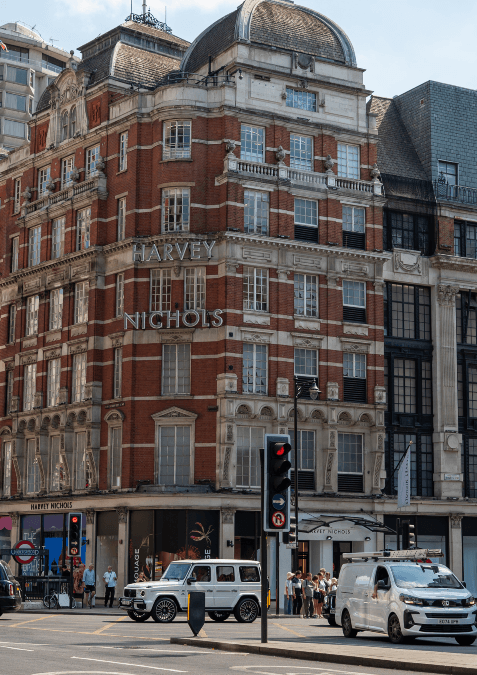
UK-based retail group Frasers Group, which owns Flannels, The Webster, and Sports Direct, has bought the struggling British department store Harvey Nichols for an undisclosed amount, the company announced today. The deal includes Harvey Nichols’ six stores — the newly refurbished Knightsbridge London flagship, plus locations in Manchester, Birmingham, Bristol, Leeds, and Edinburgh — along with its online business, existing stock, and more than 1,000 employees, Frasers confirmed.
In July this year, Harvey Nichols, which hasn’t turned a profit since 2019, asked potential investors to submit bids between £50 and £60 million to support its recovery plan. Interested parties included Frasers, Next, and Modella Capital (which owns Hobbycraft and TGJones, formerly WHSmith). But Frasers Group, which has been on a buying spree over the past year, has now sealed the deal.
“Harvey Nichols is an iconic British institution with significant potential, but it’s clear that meaningful change is needed,” said Michael Murray, CEO of Frasers Group. “The turnaround will require tough choices, and we’re prepared to make them, even if that means a smaller business in the short term, to create a stronger and more sustainable Harvey Nichols for the long term.”
Harvey Nichols’ owner, Sir Dickson Poon, bought the retailer from Burton Group in 1991. But its current image is a far cry from its glory days in the ’90s, when it was linked to the glamorous sitcom Absolutely Fabulous and was a favorite spot for Princess Diana, Kate Moss, and Marc Jacobs.
On August 7, Harvey Nichols filed an annual report showing a post-tax loss of £177.6 million for the year ending March 29, 2025. Its previous report in March 2024 showed a loss of £12.9 million after tax, following a £4 million loss the year before, in the wake of Covid and the end of VAT-free shopping for tourists.
In June, after stepping down as a director of Harvey Nichols, Poon brought in FTI Consulting to find a buyer for the store, whether through new investment or a full sale.
Harvey Nichols appointed Julia Goddard as CEO earlier this year to guide the retailer through the necessary turnaround. “Today marks an important milestone for Harvey Nichols and provides a strong platform for the next phase of the business’s evolution under Frasers Group’s ownership,” Goddard said. “Over the past year, we’ve made significant progress in repositioning this iconic business, investing in our flagship store, broadening our customer offering, and strengthening the brand’s identity. I look forward to working closely with Frasers Group to build on the momentum we’ve already started, driving sustainable growth through greater operational efficiency, better infrastructure, and continued investment in customer experiences to ensure Harvey Nichols remains a distinct and relevant luxury destination for both our customers and brands.”
Goddard also thanked her teams for the “commitment and resilience” they’ve shown during this uncertain period, which she believes have laid the groundwork for the retailer’s next chapter.
Frasers has a track record of buying struggling retailers and brands. In December 2023, the group purchased the struggling e-tailer Matches for £52 million, with plans to return it to growth. But after less than three months, Frasers announced that Matches would go into administration, saying it had “become clear that too much change would be required to restructure it.” Over 270 Matches employees were made redundant the next day.
Read More: Frasers Group plots Matches relaunch
Plans are in place to revive the luxury retailer, which stocked more than 540 brands at the time of its collapse last year. By Kirsty McGregor
Experts at the time suggested that Frasers had underestimated the scale of the turnaround needed. The retailer kept the Matches IP before selling it to newly formed luxury group Hulcan, which has yet to announce its plans for the Matches brand.
With that cautionary tale in mind, brands sold at Harvey Nichols will be watching closely.Reports suggested that some parties were against a Frasers buyout. However, the retail store said in a memo that it was “obliged to allow Frasers Group to participate in the process alongside the other interested parties.”
Before the bid was accepted, Mike Ashley, founder and chair of Frasers Group, told the Financial Times that reviving the London retail favorite would be a major challenge. He hinted that he wasn’t fully committed to winning the bid. “I don’t think I’ll be writing a huge cheque, because you’ve got to think about the future losses,” Ashley said. “If it was a little bit tough before, it is in a death spiral now.”
Frasers confirmed that all Harvey Nichols stores acquired by the group will keep trading until further notice, and the group will continue to support the operations of the Dublin Harvey Nichols store. International franchise agreements are also part of the deal, and those franchise stores will keep operating as usual under their existing licensing arrangements.
The Harvey Nichols acquisition follows a wave of bids and purchases by Frasers Group. On June 10, the company offered €1.98 billion to fully buy out Hugo Boss, though the brand urged shareholders to reject the offer, calling it “financially inadequate.” The group also increased its stake in Burberry to 4.2%. Most recently, Frasers made a bid for Worship Street Estate—a set of buildings between Shoreditch’s tech district and the City of London—estimated at £75 million.
Flannels, which is arguably the most similar business to Harvey Nichols in the Frasers portfolio, saw growth in fiscal 2026. Whether Harvey Nichols can do the same will be the key question for Frasers investors.
Frequently Asked Questions
Here is a list of FAQs about Frasers Group acquiring Harvey Nichols written in a natural tone with clear direct answers
General Questions
Q Is it true that Frasers Group has bought Harvey Nichols
A Yes its true Frasers Group has acquired the luxury department store chain Harvey Nichols
Q When did this acquisition happen
A The deal was announced in early April 2025 and is expected to be completed by the end of May 2025
Q Who did they buy it from
A They bought it from the Hong Kongbased Dickson Group which had owned the majority stake in Harvey Nichols since 1991
Q How much did Frasers Group pay for Harvey Nichols
A The financial terms of the deal were not officially disclosed but reports suggest the price was around 100 million
Q Will the Harvey Nichols name change
A No the Harvey Nichols brand name will stay the same It is a highly recognizable luxury name and Frasers Group intends to keep it
The Future Strategy
Q Why is Frasers Group buying Harvey Nichols
A Frasers Group is on a mission to become a major player in the luxury retail market Buying Harvey Nichols gives them a premium established brand to sit alongside their other upscale chain Flannels
Q What does this mean for the existing Harvey Nichols stores
A The existing stores are expected to remain open Frasers Group usually looks to expand and improve stores rather than close profitable ones
Q Will I see Sports Direct products inside Harvey Nichols
A Very unlikely Frasers Group is very good at keeping its brands distinct Harvey Nichols will continue to sell highend designer fashion and beauty not sportswear
Q Is this part of a bigger plan for Frasers Group
A Yes This is part of their elevation strategy They are building a premium ecosystem that includes brands like Flannels and by owning a heritage department store they gain more power when negotiating with luxury brands
Q Will this affect the loyalty programs