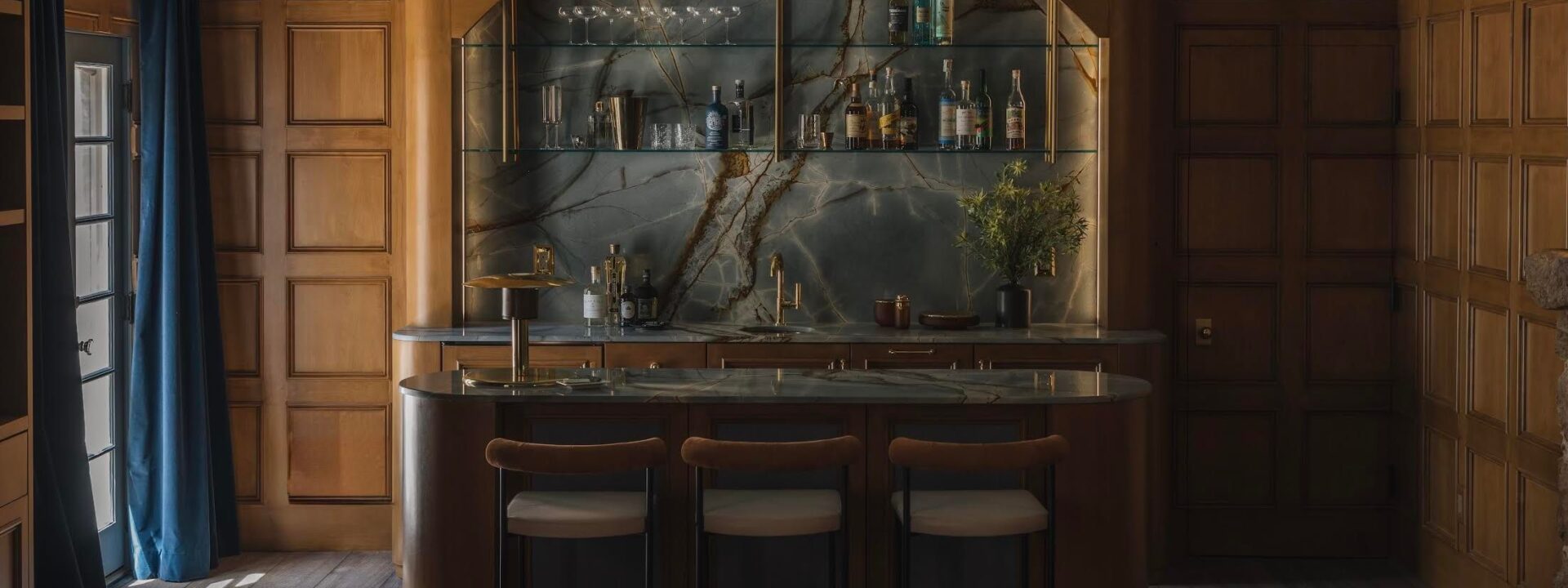
The world of interior design has seen a bold shift in recent years. Rooms have moved toward a layered, textural feel, marking a clear departure from the Scandinavian minimalism that defined much of the last decade. This change is evident not just in the popularity of forest-green paint or pattern-filled bedrooms, but also in architectural details and structural elements, signaling a renewed desire for permanence and character. It’s no surprise, then, that wood-paneled walls are poised for a comeback.
Once a hallmark of 1970s interiors—think wood-clad basements and recreation centers—paneling was often removed in favor of brighter, more modern wall treatments. Now, designers report a surge in requests to incorporate wood paneling into homes or to preserve existing paneled spaces.
“We’re seeing a broader cultural shift toward interiors that feel grounded and lasting,” says Leann Conquer of the San Francisco design firm Chroma. “Paneling brings architecture and narrative back at a time when people are craving substance.” This trend is partly a return to nostalgia, but it’s also a reaction against fleeting micro-trends and the fast-paced, algorithm-driven cycle of design. “I think there is a conscious move away from disposable trends,” adds Tiffany Howell of Los Angeles-based Night Palm.
Madelynn Hudson from M.H. Interiors agrees: “I think we’re seeing a return to architectural detail in general. After a decade of minimal, white-box spaces, people are craving warmth, craftsmanship, and character. Wood paneling provides all of that. It adds an instant sense of permanence and history, even in newer builds.”
There are countless ways to introduce the dimension and warmth of paneled walls, whether through flat panels, raised profiles, beadboard, or tongue-and-groove. But the key lies in the material. “Wood introduces an immediate depth—a richness of tone, texture, and shadow that feels elevated,” says Howell. “What makes it timeless is its inherent integrity. The way wood ages gracefully and never feels tied to a particular moment.”
Conquer adds that proportion is also crucial. “When the detailing is subtle and the geometry is right, paneling becomes architectural rather than merely decorative. When the detailing is more intricate, it should be intentional and ornamental, yet deliberate.” Beyond anchoring a space, Hudson notes that paneled walls are also “extremely cozy.”
So, how do you bring this storied detail into contemporary homes without it feeling like a throwback? “When the profiles are clean and the wood is treated with respect to its natural tone, paneling feels classic,” says Hudson. “It becomes a backdrop, not a stage set. The rooms that feel dated are usually the ones where the paneling is overworked or overly stylized.”
“The wood itself also matters—honest materials, visible grain, and finishes that age well tend to transcend any one decade,” Conquer adds. “Paneling will naturally reference history, and that’s the point. It’s interpreted, it evolves, and it becomes a marker of its moment, ready to be re-referenced in the future.” Howell agrees, emphasizing that nuance is everything. “Color, finish, and scale determine the emotional temperature of a paneled wall. Darker stains create a moody, enveloping environment, making a room feel richer and more contemplative. With paler tones like oak, bleached, or soft cream, the panels act more as sculptural surfaces than mood setters.”
Another key is reinterpreting paneling for today through new approaches. “We’re seeing paneling loosen up. Rather than rigid historical references, clients are open to abstraction—playing with unexpected proportions, a”Symmetry, or extending panels beyond traditional heights,” adds Conquer.
For those not ready to fully commit, there’s another way to achieve the wood-paneled effect. “I often turn to materials that create depth through texture rather than structure,” Howell shares. “One of my favorite alternatives is a textured fabric wallpaper in deep earthy tones like chocolate brown or deep olive. These colors mimic the warmth of wood while adding dimension.”
Hudson suggests using paint and finish treatments as a lower-commitment alternative. “Limewashed or clay-finished walls can mimic the depth and movement of paneling without the physical build-out. I also love using fabric-wrapped panels or upholstered walls in bedrooms and sitting rooms. They offer warmth and dimension while still giving the effect of a paneled envelope,” she adds.
At a time when homes are expected to serve so many purposes, the return of wood-paneled walls isn’t just a throwback trend, but a return to materials and details that carry memory and meaning. “It’s less about one ‘right’ look and more about tuning the paneling to how you want the room to feel emotionally,” says Conquer.
Frequently Asked Questions
FAQs The Comeback of WoodPaneled Walls
Q Wait wood paneling is back I thought it was a dated 70s thing
A Absolutely Its back but in a fresh way Modern wood paneling focuses on lighter stains natural wood tones clean lines and thoughtful placementfar from the dark floortoceiling look of the past
Q What are the main benefits of adding wood paneling today
A Modern wood paneling adds instant warmth texture and character to a room Its great for sound dampening can hide wall imperfections and serves as a beautiful natural focal point that feels both cozy and stylish
Q What are some modern styles or examples
A Think shiplap boardandbatten wainscoting or floortoceiling panels in light oak whitewash or walnut Its often used on a single accent wall or in minimalist designs
Q Isnt it expensive and hard to install
A It can range from DIYfriendly to professionalgrade Options like peelandstick planks or thin plywood strips are affordable and manageable for beginners Solid wood custom millwork is more expensive and typically requires a skilled installer
Q What rooms work best for wood paneling
A Its very versatile It creates a cozy vibe in living rooms and bedrooms adds warmth to home offices and can look stunning in dining rooms Even bathrooms and kitchens can work with properly sealed moistureresistant wood
Q What are common mistakes or problems to avoid
A The biggest mistake is making a room feel dark or closedin Avoid overly dark stains in small rooms Also ensure the style matches your homes architecture and dont skimp on prep workuneven walls will show through
Q How do I maintain and clean woodpaneled walls
A Its easy Regularly dust with a soft cloth or microfiber duster For cleaning use a slightly damp cloth with a mild woodsafe cleaner or diluted vinegar solution Avoid harsh chemicals and excessive water Reseal or reoil as needed based on the finish