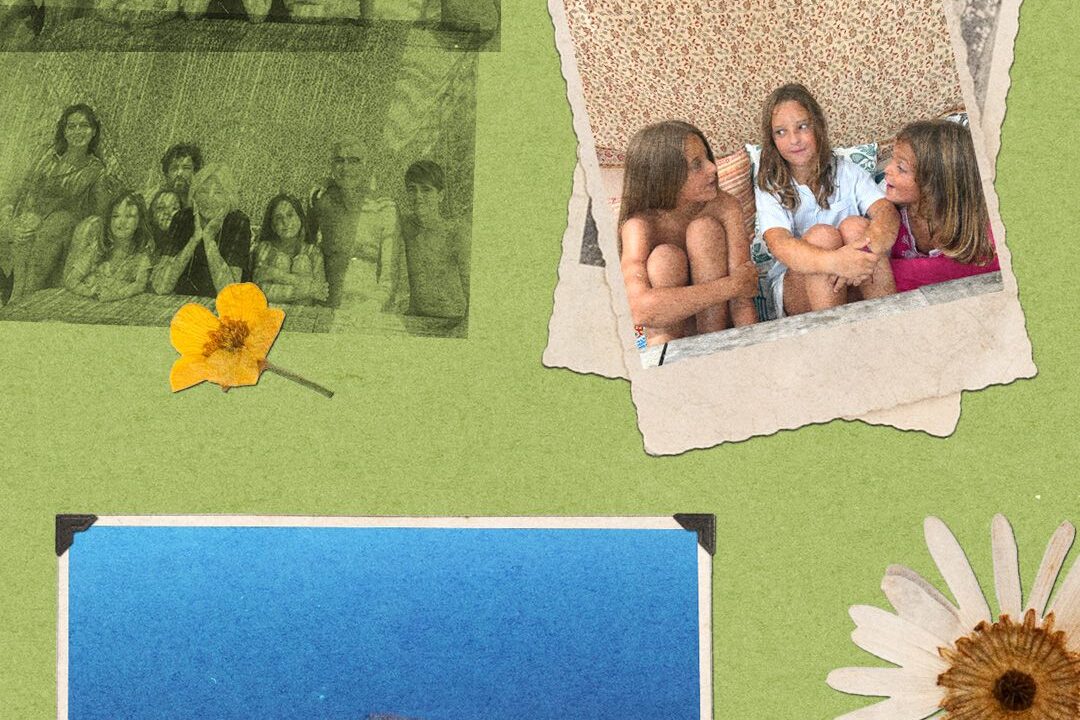
“Anyone who has once known this land can never be quite free from the nostalgia for it,” D.H. Lawrence said about Sicily. That’s even truer for the Aeolian Islands, and especially for the island of Alicudi—a Mediterranean gem that has been a refuge for my family for 34 years. The island is too steep for cars or roads, so hundreds of steps have been carved up to the top of an old, extinct volcano.
My mother and I half-jokingly called the family house in Alicudi our “room of one’s own.” Whenever she was working on a book—often ones set on the island or tied to its history—she would come here. And when I visited her, it became that for me too. But sometimes, to have a room of your own, you have to work extra hard. Getting there meant flying to Palermo, taking a boat to the island, loading your things onto a donkey, and climbing 450 steps. (Everything has to be carried up by donkeys: groceries, suitcases, water, sometimes even furniture, slowly hauled along the same ancient paths.) Both of my parents are writers, but this was my mother’s space. It was where she could go to be alone with her thoughts and her work. By the time you reach the top, you’ve shed—or sweated out—months of city life. The creative reward, after all that effort, always felt deeply earned.
The house came into our family thanks to my mother’s wildly adventurous brother, who fixed up a ruin on the island in the late 1980s. We’ve been going there since 1992. I clearly remember lying on a limestone bench overlooking the sea, listening to “Rhythm Is a Dancer” on a Walkman, completely bored by the lack of activity or social life. And yet, even as a young girl, I knew I should be grateful for that boredom and stillness, which forced me to create worlds out of rocks, sun, and sea—worlds that have stayed with me in much of my work and memory.
Later in life, when my family moved to America and summer visits became harder to arrange, a longing for that ancient silence bonded me to my mother. My brother and I had complicated teenage years—shaped by gangs, drugs, and the pull of all the wrong paths—but knowing the island would be there waiting for us was a comfort. Even later, when I began sharing my life with the screenwriter who is the father of my children, and quiet and solitude had to be constantly negotiated, the house in Alicudi became an answer. The sun-warmed bedrooms, the smell of jasmine rising at night, the salty breeze moving through the open shutters—it was a place that existed outside the compromises that come with marriage.
There’s a certain feeling you get when you step off the boat in Alicudi, one that many people talk about: an encounter with a silence that feels absolute and disarming. It’s a kind of muffled absence, a deep breath that greets you as soon as you arrive. I have loved and longed so passionately on this island, where—like in many volcanic places—emotions multiply a hundredfold. Sometimes I would arrive like a shipwrecked girl at the start or end of turbulent relationships. Climbing the staircase, I would cross the threshold of my mother’s bedroom, decorated with a mural of Stromboli’s volcano that my uncle painted, and collapse onto her bed. I often developed a fever or some sudden physical ailment as soon as I arrived—the release of stress I had built up out in the world. On that bed, my mother would stroke my hair and hands.
In the outside world, my mother’s capacity for empathy was difficult, but on the island, depth was allowed. She had been through a lot as a young woman and struggled to show empathy for other people’s pain. Often, she thought I made a big fuss over things and had simple solutions for everything. If I had a problem with my period, she’d suggest a hysterectomy. If a boyfriend was in the hospital…Because he got mugged, I thought I’d just make some pasta to cheer him up when he got back. But on the island, our differences faded away. It was easier for her to show her love in a place that also felt emotionally nourishing for her. Over time, I started to crave the island because it was where she could be at her most generous.
And so, during the summer months, we’d spend hours in silence—her on the bed, me at the desk next to her, looking out at the sea, writing and reading. In the late afternoon, when the heat eased up, my mother would fry eggplants and add the salty ricotta she knew I loved, sometimes with capers that tasted like the sea. I made sure she ate some greens and put together elaborate salads. She would lie naked on the outdoor sunbed, reading on her Kindle, surrounded by lush succulents like they were protecting her. At night, we’d eat candlelit dinners on the porch, with the breeze carrying sounds from the port below, and fall asleep early. In a family where men’s voices and needs often filled the room, the house became an unspoken agreement between the women—a kind of sanctuary. And once I had children, my son and daughter started to love the place too. One day, I found my daughter in bed with my mother—both on their laptops, each in their own world, focused—and I felt like the heart of my own relationship with my mother had been passed on.
Things with my father could also get rocky, and again, it was thanks to Alicudi that we found our rhythm. This was the one place where he, an adventurous Sagittarius, would also slip into a gentler, more feminine side. Less competitive, more open. He would spend long hours quietly painting on the porch or stretch out in the hammock in the late afternoon, playing old romantic Italian songs from the ’60s as the light faded. Last summer, he brought out a folding chair, and his three granddaughters and I circled him with an electric shaver. We decided his thinning hair needed some shape and structure, and he sat there in the sun, laughing, as his granddaughters styled him. It was the first time in my life I had seen him so open like that. Vulnerable but sweet.
My mother always said that when she died, she wanted to be buried in the island’s cemetery overlooking the sea. And some part of me felt, when I visited last summer, that I was starting to prepare for that eventual loss. I believed, without ever being told, that the house would remain as a kind of female legacy carved into that barren rock.
Of course, I knew that one day the stairs would become too much. But when my parents sold the house, it caught me off guard. They had visited a place in Greece—breezy, flat—and decided to sell in order to start something new. A perfectly understandable choice, but one I wish I had been part of, even just in the telling. I didn’t hear the final decision from my mother but from a friend. My reaction was close to disbelief. How could they make such a decision without consulting us? Hadn’t my mother felt what I had felt all those years? Wasn’t it important to say goodbye together? She reminded me of the years I didn’t visit. It didn’t matter that those were also years when my children were very young, when I was navigating my marriage or recovering from knee surgeries. But I could never imagine a life without that climb. The idea that they didn’t think it would matter to me was what hurt the most.
My parents admitted that selling without a collective goodbye had been insensitive. They said we would go back one last time together with the kids. During that time, friends sent me listings they had seen online. The house was already on the market. Within weeks, it was gone. I won’t get to say goodbye.
The loss isn’t the house itself, but the people we were when we were there. I was on a train when I found out about the sale, and my heart skipped a beat. It wasn’t the first time my parents had acted impulsively, but this time I felt it in a new way. Something inside me shifted, almost imperceptibly but irreversibly. The past did.It didn’t disappear, but it became harder to live in. It lost a kind of innocence. And once that shift happens, you can’t really go back to the way things were before. You have to start over from a slightly different place.
Of course, I don’t blame my parents for wanting a new home that fit them better. But the sudden loss of our house made me think about making sure—for my own kids—that every turning point gets a moment of mourning and ritual, so everyone’s feelings are acknowledged. I now see that this can be a gift. It’s not the inheritance I expected, but it might be the one I pass on—the need to say things out loud before they’re gone.
Hand Me Downs is a series, with a new essay appearing each day through Mother’s Day, celebrating the gifts—both tangible and intangible—that our mothers give us.
Frequently Asked Questions
Here is a list of FAQs based on the theme When a beloved home was sold something was lostbut something was also gained
BeginnerLevel Questions
1 What does something was lost mean in this context
It means you lose the physical memories the comfort of routine and the emotional safety of a place you loved You might miss the creaky stairs the garden you planted or the neighborhood you knew
2 What is the something gained from selling a beloved home
You often gain financial freedom a fresh start less maintenance stress or the ability to move closer to family You may also gain a new perspective on what home really means
3 Is it normal to feel sad after selling a house you loved
Absolutely Its a form of grief Youre saying goodbye to a chapter of your life Even if the sale was a good decision sadness is a natural and healthy reaction
4 Can you give a simple example of loss and gain
Loss Leaving the backyard where your kids learned to ride a bike
Gain Moving into a smaller singlestory home that is easier to manage as you get older giving you more time and energy for hobbies
5 How long does it take to feel better after selling a family home
Theres no set timeline Some people feel relief immediately while others feel a pang of loss for months or even years It often helps to focus on creating new traditions in your new space
Advanced Deeper Questions
6 How do you separate the house from the home emotionally
This is the hardest part A house is a physical structure a home is the feeling of belonging The gain comes when you realize you can rebuild that feeling anywhere The memories live in you not the drywall
7 What if the financial gain feels hollow or doesnt outweigh the emotional loss
This is very common Money cant replace memories The key is to use that gain intentionallyto fund a new dream secure your future or create new experiences The gain isnt just money its the opportunity the money provides
8 What is the hidden gain most people dont expect