My favorite vintage finds are the ones with a story. Like the Zac Posen dress I bought at last year’s Vogue Vintage Market, worn by Laura Love to her prom in the late 2000s, when Posen was still an emerging designer. Or the copper belt my grandmother wore to her wedding brunch in 1953, cinched over a white lace dress, just as was stylish then. Then there’s the 1980s Bill Blass gown I thrifted, which I later learned had graced the steps of the Met Gala on Pat Buckley back in 1995, when she was hosting. These are the pieces that stay with me, and they’re why Natalie Bloomingdale and I are relaunching The SIL on March 3. Short for Stuff I Love, The SIL is a vintage site that celebrates the women and the stories behind their iconic wardrobes.
We’re in an exciting moment for vintage. The resale market isn’t just growing—it’s changing how we shop. According to McKinsey’s latest State of Fashion report, secondhand and resale are expected to grow two to three times faster than the overall global apparel market in the coming years.
The internet has also made it easier than ever to hunt down coveted pieces. We can search for archival Prada or a ’90s Helmut Lang blazer from our phones at midnight. But as the market has expanded, something subtle has shifted. Descriptions have gotten shorter. A dress is reduced to a SKU. A coat is just a thumbnail, stripped of any unique history. The charm of online vintage shopping has faded. That’s where we come in.
Natalie first launched The SIL in 2017 as a destination for rare, independently sourced pieces. More recently, she built a loyal following selling vintage furs on Instagram—one-of-a-kind items that would appear, sell quickly, and move on to their next life. Her audience loved that rhythm of discovery; to date, she’s rehomed over 3,000 coats and counting.
With The SIL’s relaunch, we’re working together to bring character back to vintage shopping. We’re opening the closets of some of today’s most stylish women, letting customers shop directly from their personal collections. Structured as a series of online trunk shows, each Closet Feature will run for a set time before rotating to the next. Our focus is on the pieces they love (but are ready to let go of) and passing their memories along to the next owner.
Each participant fills out a detailed questionnaire—part oral history, part memory exercise. We ask what was happening in their life when they wore the item, if anyone photographed them in it, and whether they remember the weather, the music, or the company. We interview, fact-check, and dive down rabbit holes. It’s detective work, but it’s also a lost art of storytelling.
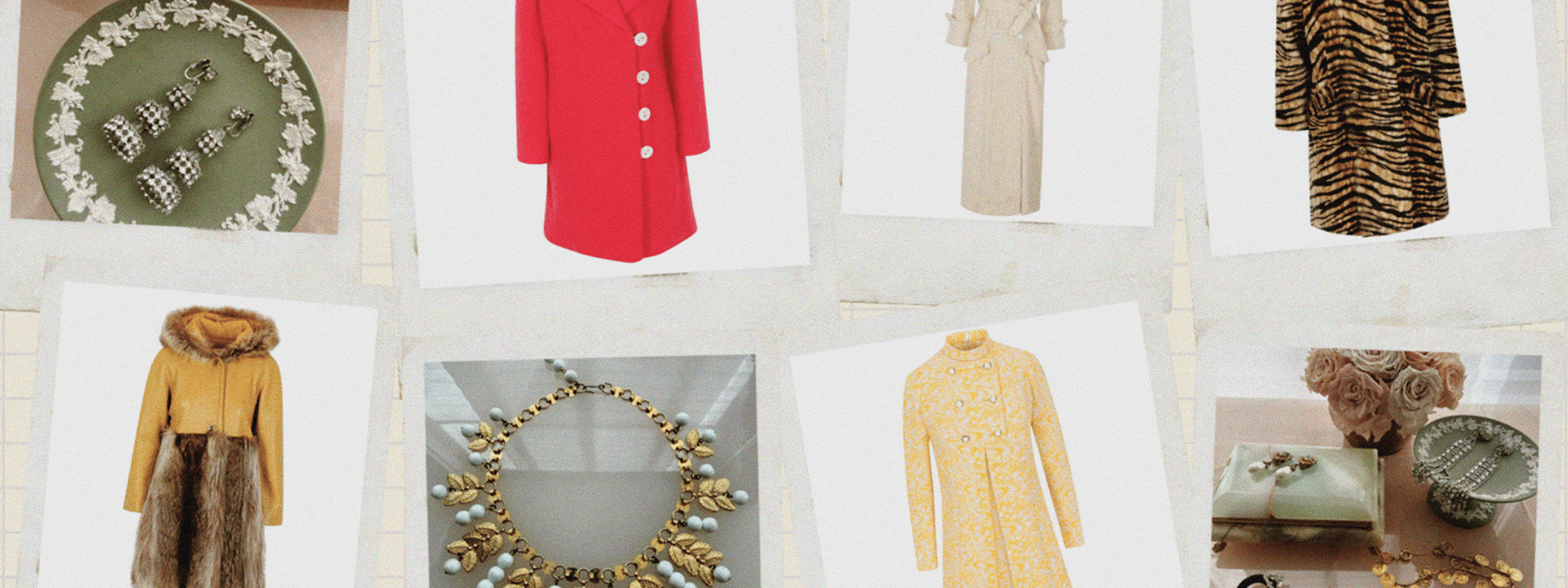
First up is Dee Ocleppo Hilfiger—founder of her namesake shoe line, creative director of Judith Leiber, and wife to Tommy. After moving from Connecticut to sunny Florida, she found she needed far less outerwear. She’s parting with a collection of coats, including a 1970s Sant’Angelo for Robert Sidney piece she remembers Bill Cunningham photographing her in at a fashion show, and a hot pink coat she wore to a Breast Cancer Research Foundation luncheon by the label T. Jones. What is T. Jones, you might ask?
As vintage enthusiasts, Natalie (who happens to be the granddaughter-in-law of legendary fashion lover Betsy Bloomingdale) and I (who once cataloged garments for the Costume Institute before becoming an editor here at Vogue) are researching, contextualizing, and annotating every piece for sale. We’reWe are gathering runway images, sourcing archival clippings, and revisiting contemporary coverage. For example, T. Jones was featured prominently in Vogue in the late 1960s and profiled in The New York Times in 1966 for its practical retail philosophy of no sales or markdowns. A pink coat transforms from a fun find into a small piece of fashion history.
Other upcoming closets on SIL showcase a cross-generational range of women whose wardrobes reflect their distinct and accomplished lives. Amy Fine Collins—the esteemed Vanity Fair editor and storyteller—will offer items including the Fendi aviators she wore while learning to drive on a racetrack, a chapter she wrote about in her 2004 memoir, The God of Driving. Natalie Steen, founder of the popular Instagram account The Nat Note, is contributing a Carolina Herrera jacket she rescued from her mother-in-law’s closet, which we traced back to Herrera’s Fall 1990 runway. Roya Shanks, a fashionable regular at Tribeca’s Odeon and this year’s Vogue Best Dressed honoree, is parting with pieces gifted to her by a devoted patron who recognized her love of fashion history. Meanwhile, designer and tastemaker Bunny Williams is contributing a jacket she wore to the Architectural Digest centennial celebration in 2020.
When it comes to the women of SIL, we aren’t looking for Instagram clout or algorithmic fame. We seek women with a point of view, whose lives are visible in their wardrobes. We find them the old-fashioned way: through relationships, contacts, conversations, and observation. I had always admired Dee’s style, and when Natalie and I called her with nothing but a concept, she immediately FaceTimed us from her closet to show the vintage pieces she could offer—but not before recommending other women for us to consider.
Natalie and I are constantly sending each other Instagram profiles at all hours (with notes like “She’d be perfect!” or “Do you know anyone who knows her??”), but it’s even more thrilling when women refer their friends to us. We’ve been truly humbled by the support and enthusiasm for what we’re doing. Additionally, each participant selects a charity to receive a portion of the proceeds from her sale, adding purpose to what might otherwise be a simple transaction.
Today, Dee’s closet will launch, with proceeds supporting Next for Autism. Even if you don’t shop, we hope SIL becomes a place of discovery—not only of the women behind each wardrobe but also of the labels that once shaped fashion’s popular culture and deserve to be remembered. While much of the resale market assigns value based on trends (like Tom Ford for Gucci or Carolyn Bessette–era Prada right now), we do it differently. At SIL, we take a more sentimental approach; here, every purchase is, in its own way, an inheritance.
Frequently Asked Questions
FAQs About Introducing The SIL
General Questions
What is Introducing The SIL
Introducing The SIL is a curated vintage destination where the primary focus is on the unique history and provenance of each piece we offer We believe the story behind an item is as valuable as the item itself
What makes you different from other vintage shops
Our core mission is to prioritize and document each pieces history We dont just sell vintage items we provide their background previous ownership context and the eras significance making every purchase a connection to the past
What kind of items do you sell
We specialize in a carefully selected range of vintage goods which may include clothing accessories home decor furniture and unique collectiblesall chosen for their quality character and traceable history
Shopping Authenticity
How do you verify the history of your pieces
We use a combination of methods expert authentication material and construction analysis provenance research and gathering stories from previous owners or estates whenever possible
Are all items in perfect condition
As genuine vintage pieces items show signs of their age and use which we consider part of their character We thoroughly inspect each piece and clearly note any flaws repairs or wear in the item description so you know exactly what youre getting
What is your return policy
Due to the oneofakind nature of vintage items all sales are final We provide detailed descriptions multiple photographs and measurements to ensure you are fully informed before purchasing Please reach out with any questions before buying
For Beginners
Im new to vintage shopping What should I look for
Start by considering what youre drawn toa specific era material or color Check measurements carefully as vintage sizing differs from modern sizing Dont hesitate to ask us about an items story it often adds a special layer of meaning to your purchase
Why is buying vintage considered beneficial
Buying vintage is a sustainable choice that reduces waste supports circular fashion and design and allows you to own a unique piece with history that no one else has Its a way to express personal style with items that have stood the test of time
How do I care for vintage items
Care instructions vary greatly by material and age We provide specific care