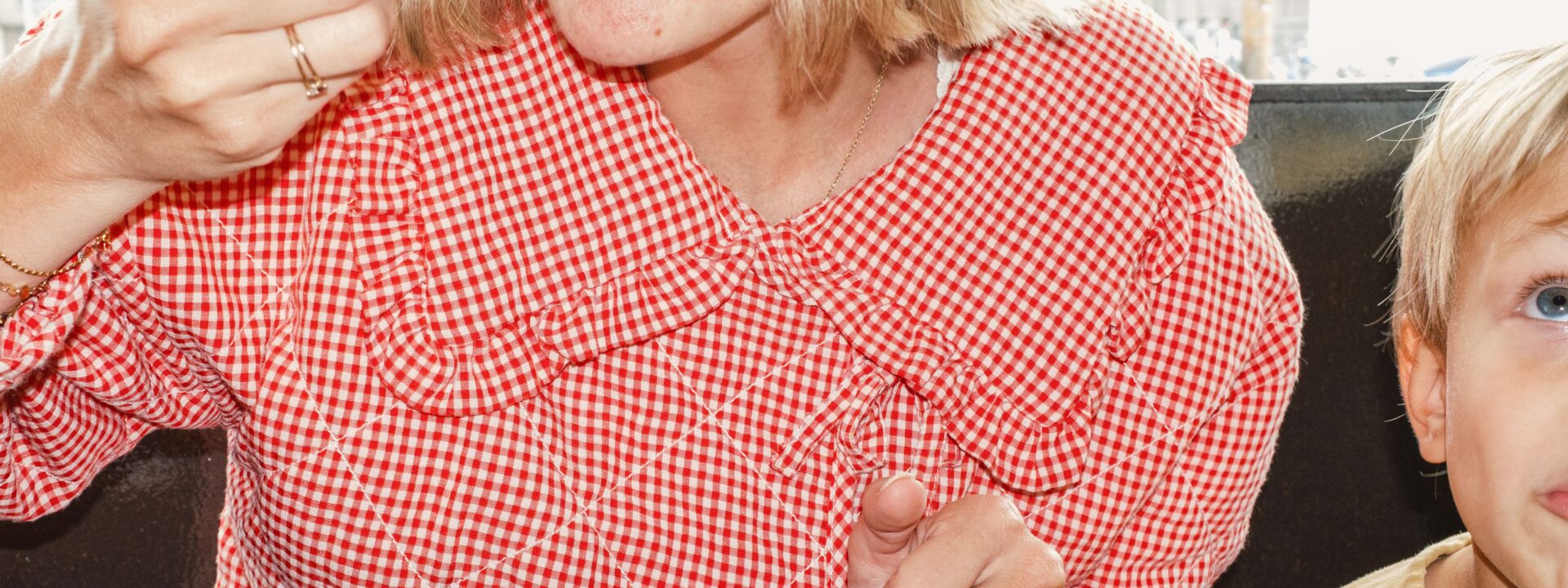
I stand at the stove next to my six-year-old son, who leans in close to the Mauviel pot. The copper could use a polish, but I don’t mind.
“Whisk,” I say, trying to sound urgent.
The small silicone whisk in his hand moves lazily through the custard.
“Whisk,” I repeat, gently cupping his knuckles to guide the motion. My tone softens. “We don’t want scrambled egg pudding.”
“We’re making chocolate pudding,” he says, eyes wide.
“I know. But if we don’t whisk, the eggs will cook—and guess what?”
He scrunches his nose. “Scrambled egg pudding!”
“Right.”
And with that, the lesson ends. As he whisks, I watch the custard’s surface for slow bubbles to form. The mixture of cocoa, eggs, and sweetened condensed milk sloshes near the rim, dripping down the tarnished side. A stovetop mess doesn’t bother me. Cooking with my son, I focus on what we’re making together, not the little mishaps along the way. Years in restaurant kitchens taught me that even big mistakes can usually be fixed. I once worked for a pastry chef who believed no custard was too precious to save—just blend it, strain it, move on. But making pudding with my son is precious, beyond measure, for both of us.
I’d like to think I’m past the idea of reparenting myself, but cooking with my kid shows me I’m doing just that—or at least affirming the adult I’ve become: a recovered perfectionist. I encourage him to flip through cookbooks, knowing that when we measure 28 grams of cornstarch, a cloud of it will dust the counter. Egg white will trail when he cracks an egg. Spoonfuls of sugar will miss the bowl. There will be unauthorized spatula licks.
Honestly, I welcome the chaos. Come on—it’s a Saturday afternoon, and we’re making “Creamy Dreamy Chocolate Pudding.” What’s at stake besides having fun and enjoying a treat… once it chills for “at least two hours or up to three days”?
Actually, everything. I know all too well how these moments of connection can go wrong and add up, shaping a person’s life in lasting ways.
I was raised by women who took such pride in their cooking that they were territorial about it. Food made by others was bland, unappetizing, suspicious in its carelessness. My grandmother went to culinary school in Chicago and sold homemade candies from her house. My mother inherited that kitchen confidence. Breakfast meant warm pear coffee cake or sugar-topped muffins filled with apricot jam.
With cookbooks on the shelves, cooking magazines in the mail, and Julia Child reruns playing loudly on TV, it’s no surprise I wanted to join in where the women in my family seemed most in control. I learned the twin powers of secrecy—my grandmother didn’t need a recipe for crepes—and perfection. There was a right way to dip a measuring cup into the flour. A right way, long before cookie scoops, to shape dough into a perfect round using only a knife and a teaspoon. And I saw what happened when things fell short: sheet pans of meringue cookies dumped in the trash, oven doors slammed, tearful cursing and self-blame echoing through the house.
If I hadn’t learned—long before my decades-long eating disorder began—that food was more than sustenance, that it was worthy of reverence, that it held sacred pleasures, I might not be in recovery today. As twisted as it became, food was pleasure. I took cookbooks to my room and copied recipes in careful print. A wave of nostalgia still washes over me when I remember cinnamon sugar oozing over pillowy fruit dumplings in my grandmother’s dining room.
That reverence led me to notice fine dining just as molecular gastronomy was taking off in Chicago. At the height of my self-starvation in college, when I lived on spinach salads and now-discontinued chocolate-banana protein bars, I was saving every dollar from my minimum-wage job to book a table for twelve at Alinea.After leaving in-patient treatment, I began staging for James Beard-recognized pastry chefs, months before I’d even manage a full course meal at Alinea. I was lucky. My mentors were exacting yet forgiving, humble in their mastery of things like semifreddo. We shared hearty family meals, snacked on cake scraps, and used beat-up tools that looked like they’d survived a war with the robocoupe. Even when you devote your life to it, cooking allowed for give and take.
Slowly, I started bringing this mindset into my life outside the kitchen. It’s no wonder that as my perfectionism faded, so did my disordered eating. All that control began to feel like a waste—of energy, time, and joy.
To make vanilla sugar, you bury a dried vanilla pod in a jar of sugar. Within days, the sugar becomes orchid-like, deeply fragrant, transformed. The change is irreversible. Perfectionism is similar. It takes root so easily in children and can take a lifetime to unlearn—really, you can only use up that vanilla sugar and start over. Thankfully, we are more changeable than sugar.
As my son’s whisking slows, I peer into the pot. Is the custard thickening? Is it starting to bubble?
“I’m done,” he says.
“Okay,” I reply. “I’ll take over.”
Showing him an easy, joyful relationship with food—teaching him respect without passing on perfectionism—is a work in progress. It means not just cooking together, but also delighting in a new grocery store, a new café, or an extraordinary meal. Two years ago, when he was four, my husband and I took him to a Michelin-starred restaurant in Brittany. We called it “a chef restaurant.” Perched on a feather-down cushion, he ate course after course, tasting seaweed butter, poached oysters, and passionfruit gelées.
Twice a month, I say goodnight to my son before his bedtime, make a cup of ginger tea, and log on to a Zoom meeting. There, I facilitate a peer support group for people recovering from eating disorders. I listen and nod, typing gentle reminders in the chat to avoid using numbers—we’re here to connect, not compare.
Most days, I’m amazed at how distant I feel from the thoughts and habits that once ruled my life. But what resonates with me now—what feels newly important—is what members share about their parents and their children. They recall their mothers scolding them at the table or in dressing rooms; they describe their kids asking why they skip breakfast or only drink Ensure on holidays.
We have a rule against naming specific foods—otherwise I might talk about the chocolate pudding. How there were moments while making it when I could have been controlling or fussy, echoes of my old perfectionism. How good it felt to let that go. And how happy my son was when, that evening, we peeled back the plastic from the ramekins, sprinkled the tops with fleur de sel, added a dollop of whipped cream, and dug in.
Frequently Asked Questions
Of course Here is a list of FAQs about the topic Cooking with my child became the cornerstone of my recovery from an eating disorder written in a natural conversational tone
Understanding the Concept
Q What do you mean by cornerstone of my recovery
A It means that the act of cooking with my child became the most important foundational practice that supported my healing It wasnt just one activity among many it fundamentally changed my relationship with food and my body
Q How can cooking with a kid help with something as serious as an eating disorder
A It shifts the focus from food as an object of fear control or calories to food as an experience of connection creativity and nourishment for someone you love It creates positive joyful memories around food that can slowly replace negative ones
Q Isnt it risky to involve a child in this Couldnt it pass on unhealthy habits
A This is a crucial concern The key is that the cooking is framed around fun learning and lovenot weight good vs bad foods or body talk The goal is to model a neutral curious and joyful approach to food which is actually a protective factor for the child
Getting Started Practical Tips
Q Im nervous to start Whats a simple first step
A Start with something that feels lowpressure and is more about the childs enjoyment than a meal Think washing berries tearing lettuce for a salad stirring muffin batter or decorating pizzas with premade dough
Q What if I make a mistake or get anxious during the activity
A Thats completely normal Be honest in an ageappropriate way Oops I spilled some flour Lets clean it up together or Im feeling a little unsure about this recipe should we taste it and see This models resilience and flexibility
Q Are there certain types of recipes that are better to start with
A Yes Focus on assembly or building recipes or simple baking These are handson have predictable outcomes and are often child favorites which boosts the positive association