A few years ago, luxury travelers might have visited Scandinavia to see the Northern Lights or the Fjords — a classic winter getaway with long, dark days and snow-covered mountains. Now, they’re going there for summer vacations, just to stay in a villa, ideally by a lake.
This isn’t the first time climate change has reshaped luxury travel, says Jenny Southan, founder and CEO of the strategic foresight agency Globetrender, and it won’t be the last. “The next Riviera might not be on the Mediterranean, but along the Baltic coast or the Norwegian Riviera, where milder summers, stunning scenery, and cleaner air are becoming more appealing,” she explains. “We’re moving from a ‘sun-seeking economy’ to a ‘comfort-seeking economy.’ More and more, luxury is defined by places where you can sleep well, walk outside at midday, and enjoy nature without worrying about extreme heat.”
This won’t surprise European travelers. In recent years, temperatures have been steadily rising, and the past few weeks have brought near-constant heatwaves with far-reaching effects — from melted train tracks to more people buying air conditioning units, and in some cases, deaths. As of now, the UK has issued an amber heat-health alert because temperatures are expected to top 86°F for ten days straight. In mainland Europe, the fastest-warming continent, temperatures have exceeded 104°F, and July has consistently been 50 to 59°F hotter than historical averages.
That doesn’t mean the end of European summers, just a shift, adds Southan. “Travelers are becoming thermal strategists. They’re choosing higher altitudes over lower latitudes, swapping city breaks for lakes, forests, and coastlines, and looking for destinations where the climate supports well-being instead of harming it,” she explains. “Rather than abandoning southern Europe, travelers will simply experience it differently — favoring spring, fall, and winter over the intense heat of August.” For many, this is already happening.
Diving trips are becoming more popular as healthy marine ecosystems grow rarer.
Photo: Tobias Friedrich for Pelorus
Across many destinations, shoulder seasons (the warming-up and cooling-down periods around peak travel times) will become the new high season. Africa is a great example, says Geordie Mackay-Lewis, co-founder and CEO of luxury travel company Pelorus. Tourists are becoming more open to shoulder seasons, when occasional rain offers a break from the heat. “A few years ago, this would have been a no-go, especially for American tourists,” he says. “Now, people realize there’s better availability, and the dramatic storms can be a nice contrast to the sun.”
Exactly how climate change will reshape travel is still unclear. As we hit climate tipping points, the effects will spiral and cascade. Places that were once desirable could become nearly unlivable, and places that were once hard to reach could become hotspots.
For brands, this means rethinking everything from their supply chains to where and when they set up, and how they outfit travelers. “Brands should think beyond linen in Positano and focus on elevated layering for Scandinavia, technical luxury for alpine escapes, and sophisticated outdoor lifestyles centered on hiking, sailing, and wild swimming,” says Southan. Forward-thinking brands are already working on new materials and designs that suit a wider range of climates, but there’s still a long way to go. “Beauty products will also become more climate-responsive. Items that protect against UV, wildfire smoke, dehydration, humidity, and pollution will become as important as traditional holiday beauty staples.”
So how are vacation hotspots changing today, and what does that say about the future of luxury?
The new bucket list
Climate change is leading some travelers to add new places to their wishlists, and others to rethink this mindset.altogether. “You’ve got the classic bucket list, like the Seven Wonders of the World, which has always driven mass tourism,” says Mackay-Lewis. “But now we’re guiding people to places they didn’t even know existed and showing them what else is out there. When you add scarcity into the mix, your bucket list changes. Maybe you’re a passionate diver and want to see underwater wonders before they disappear completely. Maybe there are species, wildlife corridors, or migrations you want to witness—some are being altered by climate change, and others are on the verge of stopping entirely.” This could include the monarch butterfly migration in North America, the great wildebeest migration in East Africa, or the salmon and river herring runs in the Pacific Northwest.
At Thanda Safari, the changing climate is disrupting wildlife viewing experiences.
In northern KwaZulu-Natal, South Africa, the climate crisis is already affecting wildlife and the luxury travel experiences built around it. Lorraine Doyle is the conservation and sustainability manager at Thanda Safari, a private game reserve. She says the seasons are becoming less distinct, with more unpredictable and extreme weather quickly becoming the norm. “Before, we had a hot, wet season and a cool, dry season. Now, our rainy season is shorter and starts later, and we’re starting to see rain in the winter months. We’re not necessarily getting more rain overall, but we’re seeing more flood-like events,” says Doyle. “With this very strong El Niño forecast for the next few years, it’s anyone’s guess how we’ll be affected, but it’s likely to bring drought to our part of the world.”
The changing climate has a ripple effect on tourists, who come expecting to see certain landscapes and wildlife. “These changes shift the ecosystem, affecting everything from insect life cycles to when trees bloom,” Doyle says. “Historically, the winter season from June to August has been drier. That’s the best time for wildlife viewing because the vegetation thins out and there’s no standing water, so animals are more visible and have to come to specific water sources to drink. This season, we’ve seen extremely heavy rainfall, so viewing is more complex and difficult. Plus, when that vegetation dries out, our fire risk will go up significantly.”
Many wildlife reserves sit on top of mineral-rich land. Without tourism, they face the threat of mining.
For wildlife reserves like Thanda, tourism is a form of conservation, whether tourists realize it or not. “In South Africa and elsewhere, we face a major threat from mining. There’s pressure on our land for minerals, and areas with wildlife that are currently protected often have large mineral deposits underneath,” says Doyle. “Tourism helps ensure that wildlife brings as much value to local communities as mining would. We need to conserve these green spaces for oxygen production—that’s the reality.”
“The idea of luxury is changing,” she continues. “It’s less about the thread count of your sheets and more about space, exclusivity, and supporting the continued survival of wildlife.”
Regeneration is the new relaxation
Climate-conscious travelers want to see regeneration just as much as they want to relax, says Southan. “The future of luxury travel isn’t about escaping nature—it’s about investing in it. The most desirable hotels of the next decade will be those that actively restore landscapes, revive biodiversity, and leave destinations stronger than they found them,” she explains. “Whether it’s rewilding projects, coral restoration, regenerative vineyards, or climate-resilient architecture, sustainability itself is becoming part of the travel experience.”
Consumer demand for these experiences is steadily growing. In 2016, travel booking site Booking.com surveyed tourists to understand theirTheir relationship with sustainability. Only 42% were concerned about traveling more sustainably. By 2025, 93% of respondents said they want to make more sustainable travel choices, and to some extent, they already have.
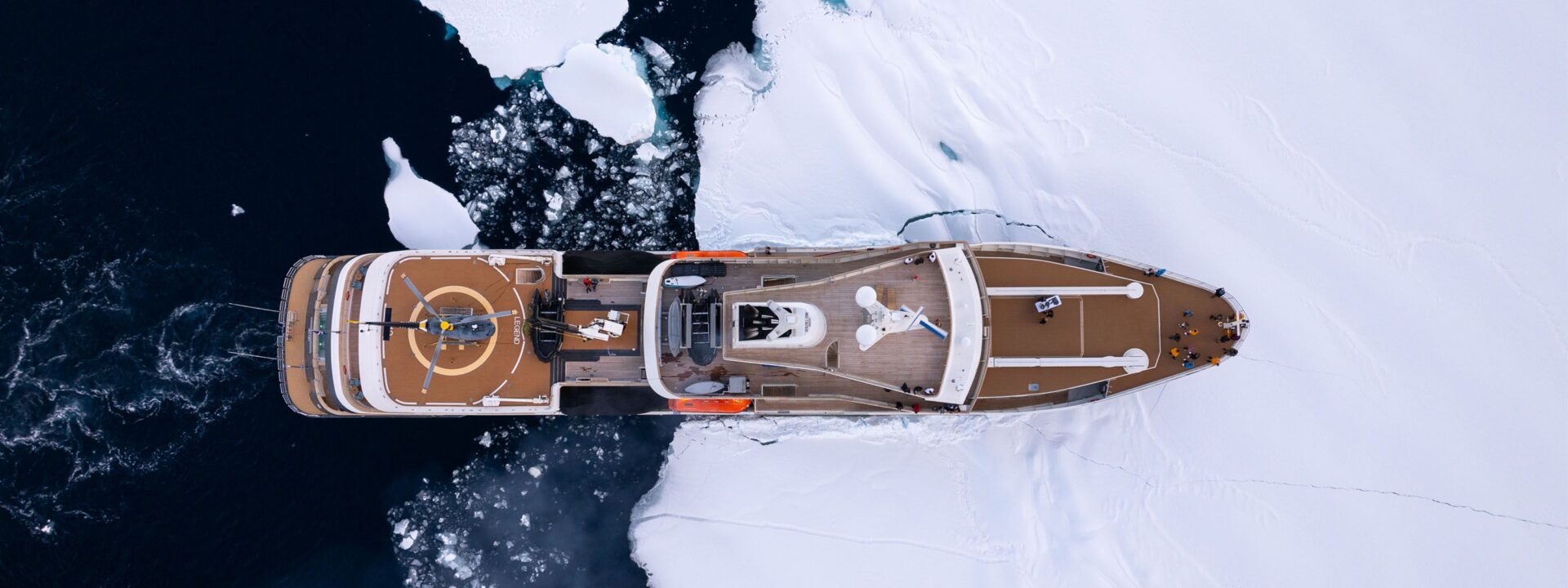
Pelorus has been exploring new territory, offering increasingly exclusive experiences focused on changing climates. When we spoke on Zoom last week, Mackay-Lewis had just returned from West Greenland, where he was checking out the possibility of setting up mobile camps for overnight stays. This wouldn’t have been possible before, but the weather from late spring to fall is becoming much milder due to climate change, and new areas are opening up as the ice melts. “When we started going to Greenland 15 years ago, these were places you could only visit by yacht. They were very remote, and certainly didn’t have hotels, lodges, or camps,” he says. “Now, there are two new international airports, and you can paddle a canoe surrounded by icebergs in a T-shirt.”
Last year, Pelorus took a small group of tourists and scientists with special permits and licenses to Antarctica to tag whales, which led to the first heart rate monitor being placed on a humpback whale.
Photos: Pelorus
Pelorus is a licensed operator in both Antarctica and the Arctic, where Mackay-Lewis says demand is growing. Last year, it brought a small group of tourists and scientists with special permits and licenses to Antarctica to tag whales. During the trip, they managed to attach the first heart rate monitor to a humpback whale. “That was one of the most rewarding experiences they could never normally have,” he says. The same goes for a recent trip to Svalbard, a Norwegian archipelago in the High Arctic. “They have a huge plastic problem, with trash coming from all over the world and washing up on their shores. Whenever we take people on a glacier hike or a beach hike to see walruses, we bring trash bags, and it turns into a competition to see who can pick up the most interesting piece of litter.”
Pelorus isn’t the only company offering experiences focused on regeneration and conservation. “Dive resorts are frantically offering marine biology experiences to plant corals,” notes Juliet Kinsman, a sustainable travel consultant and sustainability editor at Condé Nast Traveller. “It often feels a bit like rearranging deck chairs on the Titanic. The luxury end of the market has the money to adapt the fastest, but it also has the most to lose reputationally if it’s seen as shielding the wealthy from a crisis that everyone else has to live with.”
Mackay-Lewis admits that navigating the relationship between travel and conservation can be tricky. “A lot of people might argue that we shouldn’t be going to these places at all, but I think every time someone visits a remote area, they understand a little better what we’re fighting for, and they want to protect it. When you see those walruses, all you want to do is clean up their environment and make sure you leave it better than you found it.”
A Pelorus guest collecting plastic waste from a remote beach in Svalbard, a Norwegian archipelago in the High Arctic.
Photos: Pelorus
As luxury travel companies and tourists figure out their role in a changing world, Kinsman urges both to think not just about reducing harm, but about making a positive contribution. “Booking with properties and operators that work transparently and respectfully with local communities, so that employees can better access education and healthcare, is key,” she says. “The poster child for place-based economics is Fogo Island Inn in Canada, which turned Newfoundland into an appealing must-visit destination—an unlikely rocky Atlantic enclave of former fisherfolk.”
Beyond voluntary efforts, regulators are also stepping in. At COP30 in Brazil last year, the French government led the creation of the Global Solidarity Levies Task Force, which aims to charge luxury travelers a so-called solidarity levy that could fund climate adaptation and conservation.Pelorus has been doing something similar for a while, charging its clients a 1% fee and putting that money toward environmental protection. “If our clients can afford it and want to access environments that only we can offer, then we’re in a unique position to do this and make sure the money goes back into the environment,” says Mackay-Lewis. “The risk is that the funds aren’t managed properly and the plan backfires. But if it’s done well, it can have a big impact.”
Frequently Asked Questions
Here is a list of FAQs about how climate change will transform luxury travel written in a natural tone with clear direct answers
BeginnerLevel Questions
1 What does climate change have to do with luxury travel
Climate change is making some classic luxury destinations too hot unstable or damaged Its also pushing luxury travelers to expect more ecofriendly private and resilient experiences
2 Is ecoluxury just a marketing gimmick
Not anymore Real ecoluxury means using renewable energy sourcing local materials and protecting the environmentall while providing toptier service The best brands are now proving their sustainability with certifications not just green logos
3 Will luxury travel become more expensive because of climate change
Yes in many cases Insurance costs are rising for coastal resorts and sourcing sustainable fuel for private jets or yachts costs more However the value is shifting from more stuff to more unique lowimpact experiences
4 Are ski resorts really going to disappear
Loweraltitude resorts in Europe and North America are already struggling Luxury ski travel is moving to higher altitudes manmade snow or shifting to summer glacier skiing and alpine hiking instead
5 How is climate change affecting beach vacations
Rising sea levels are eroding famous beaches and warmer oceans are causing coral bleaching Luxury resorts are now building sea walls moving villas inland or focusing on blue carbon projects to protect their shorelines
IntermediateLevel Questions
6 Will private jets become a problem for luxury travelers
They already are The carbon footprint of a private jet is massive Many luxury travelers are now buying carbon offsets or using sustainable aviation fuel Some highend companies are even offering slow travel by private yacht or train as a status symbol
7 What is regenerative travel and how is it different from sustainable travel
Sustainable travel means do no harm Regenerative travel means leave it better than you found it For luxury this means staying at a resort that actively restores a coral reef plants forests or supports local communities not just reducing plastic