Images & Text by Lucia Jost
For four weeks, I traveled through South India, from Mumbai to Kerala, moving between cities, villages, and family homes. I was drawn to the spaces where young women live, grow, care for each other, and imagine their own futures. These photographs came from encounters with sisters, daughters, mothers, and friends — women whose lives are shaped by tradition, but also by a rapidly changing society.
Girl on her motorbike in the streets of Mumbai, Maharashtra.
Lucia Jost
In my photographic work, I am interested in the relationships that lie beneath the surface: the intimate bonds between women, the spaces they create for one another, and the quiet forms of solidarity that hold everyday life together. Across very different cultural and social realities, I found a familiar language of closeness. In kitchens, courtyards, bedrooms, and on the streets, women shared jokes, secrets, gestures of care, and moments of freedom. These women-only spaces became places where another kind of world could unfold.
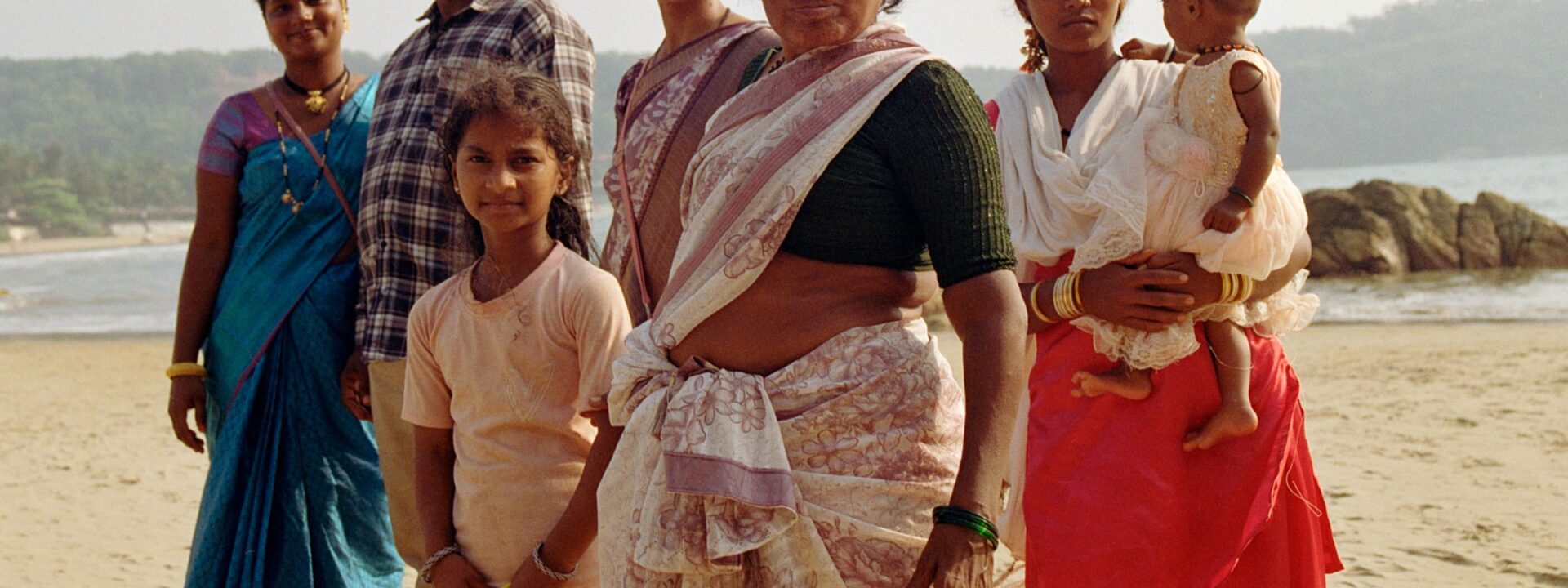
A family outing in Kannur: Paruta with her sister, daughter, and granddaughter. Kannur, Kerala.
Lucia Jost
The title Devi, Sanskrit for “Goddess,” refers to the divine feminine in Hinduism. For me, it also became a way of thinking about the women I met. Not as an idealized image of femininity, but as individuals carrying contradictions, expectations, and desires. They carry families, traditions, and care work, while at the same time negotiating education, independence, sexuality, and their place within a changing India.
The series moves between different generations and realities: between rural and urban life, between inherited traditions and new possibilities. Some of the young women I met are still hoping for access to education, greater independence, or basic infrastructure. Others are already moving confidently through modern cities, studying, working, and shaping lives increasingly separate from traditional expectations.
A Hindu pilgrimage group of women in Gokarna, Karnataka.
Lucia Jost
My photographs do not attempt to define what it means to be a woman in India. Instead, they look for the intimate moments in which individual lives become visible: a sister leaning against another, friends preparing for a celebration, a mother watching her daughters. Through these encounters, the personal becomes a portrait of a society in transition.
Young women in traditional saris on their way to their high school graduation ceremony. Chowdy, Goa.
Lucia Jost
The work continues my ongoing photographic exploration of female perspectives, intimacy, and the spaces women create between one another. Whether in Berlin or South India, I am interested in women not as isolated subjects, but as part of a network of relationships. These connections form an invisible architecture of care and belonging.
The Tungabhadra River in Hampi, Karnataka, is one of the oldest sacred Hindu sites in the region. This group of women traveled for more than 30 hours with their guru to bathe in the river.
Lucia Jost
Daughters of Devi is a love letter to the young women I encountered: to their humor, tenderness, strength, and resilience, and to the quiet worlds they build together. Across language and cultural difference, the photographs search for a universal experience of female connection — a bond that becomes visible whenever women are given the space to simply be with one another.
Three young women make TikTok videos on a beach in Mumbai, Maharashtra.
Lucia Jost
About the Artist
Lucia Jost is a Berlin-born and based portrait photographer working primarily with analogue photography. Her work combines documentary observation with staged composition to explore female perspectives, Berlin’s subcultures, and everyday intimacy. Central to her practice is the relationship between women and urban space. Her photography explores how the big city shapes the emotional reality of her generation. Sisterhood and community are recurring motifs throughout her work, which aims to be both poetic and political. Through her work, she gives visibility to these themes.ity to female identity and coming-of-age themes. www.luciajost.com
Frequently Asked Questions
Here is a list of frequently asked questions about the book Daughters of Devi Women in South India along with clear and concise answers
BeginnerLevel Questions
1 What is the book Daughters of Devi about
Its a deep dive into the everyday lives of women in South India It explores their roles in the family their work their religious practices and how they navigate social expectations
2 Who is Devi in the title
Devi is the Hindu goddess worshipped in many forms like Lakshmi Parvati and Durga The title suggests that South Indian women are seen as daughters of this goddess connecting their identity to feminine power and divinity
3 Is this a history book or a modern study
Its a bit of both It looks at how historical traditions and ancient texts have shaped the roles of women and then it connects those to the realities of their lives in the modern era
4 Which regions of South India does the book cover
It primarily focuses on the major cultural regions of South India including Tamil Nadu Karnataka Andhra Pradesh Telangana and Kerala
5 What are the main themes of the book
The key themes include family and kinship marriage and motherhood caste and class economic contribution religious devotion and the balance between tradition and modernity
IntermediateLevel Questions
6 How does the book address the role of caste in womens lives
The book explains that caste and gender are deeply connected It shows how a womans caste dictates what work she can do who she can marry and the social rules she must follow often leading to double discrimination
7 Does the book only talk about Hindu women
While the title and central concept are rooted in Hindu culture the book also examines the lives of women from Christian and Muslim communities in South India showing how they share some cultural norms while having their own distinct traditions
8 What are some specific examples of womens struggles mentioned in the book
The struggles include navigating patriarchal family structures facing restrictions on mobility and education dealing with the pressure of dowry and managing the double burden of paid work and unpaid domestic labor
9 How does the book portray the concept of Shakti
It presents Shakti as