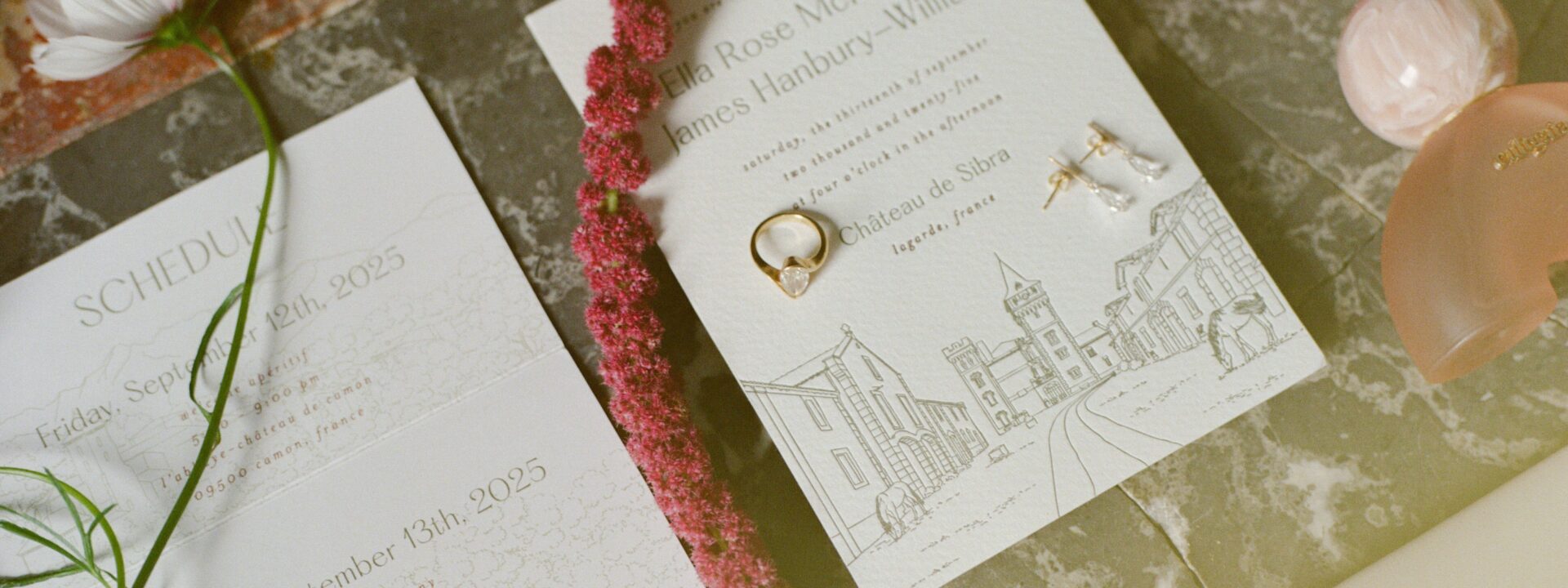
Wedding invitations do more than just ask guests to save the date—they introduce the style and feel of your celebration. “It’s often the first design piece your guests see, and it really sets the tone,” says wedding planner Alison Hotchkiss of Alison Events. “Subtly, your invitation can tell guests whether to expect a casual gathering, a formal black-tie event, or something in between.”
Picking your wedding invitations can be a fun creative task, but it helps to understand what goes into creating a full suite and how to get them to guests on time. Below, wedding invitation experts walk you through the steps to design your dream invites.
Choose Your Wedding Invitation Style
Start by defining the look you want for your invitation suite. “Your wedding is a reflection of your unique relationship,” says Anna Wibbelman, general manager of Minted Weddings. “Focus on what you both love and choose details that speak to you—even small touches like a playful shape, a favorite envelope color, or vintage stamps from a place you’ve traveled.”
If design isn’t your strength, you might need to explore a bit to find what you like. “If you don’t have a clear vision yet, look for inspiration outside of weddings to discover your graphic preferences,” suggests Hotchkiss. “Notice designs and printing details that catch your eye in restaurants, hotels, ads, and more. Do you prefer a modern, minimal look? Or are you drawn to bright colors, bold illustrations, and a more vibrant style? Gather inspiration in one place to create a living collage of your taste.”
Once you have a clearer design direction, you can share your ideas with a stationer. You might start with save-the-dates separately, but it’s useful to think about all your paper goods together. “Since save-the-dates often go out before every detail is final, many couples keep them simple or photo-focused,” says Minted concierge Micaela Ritschl. “That way, the design stays flexible and pairs easily with the final invitation suite later. Couples who set up a wedding website with their save-the-date can also update the site design with one click once they choose their invitations.”
“Whatever style you choose, consider carrying similar design elements into other guest communications,” advises Wibbelman. “You can extend a theme to a free wedding website, invitations, and day-of stationery—like programs, menus, and place cards—using color, illustrations, fonts, or even a monogram. For a personal touch, you could work with an artist to create a custom venue illustration or a signature crest that reflects your style.”
“That said, not everything has to match perfectly,” adds Ritschl. “Some couples carry their invitation style through to day-of stationery for a cohesive look, while others mix it up with signage, programs, and menus that feel more relaxed, playful, or on-trend.”
What to Include in a Wedding Invitation Suite
A typical invitation suite includes a few key pieces. “Invitations usually come with an RSVP card (for mail-back or online replies), a details or directions card, and a reception card if the location is different from the ceremony venue,” explains Ritschl. “Many couples also add a belly band to keep everything together.” Other popular extras include wax seals, jackets, vellum overlays, and envelopes.Envelope liners can add a special design detail. Of course, wedding invitations don’t have to be traditional at all. “Some couples completely rethink the standard wedding invitation—we’ve sent concrete boxes, screen-printed ikat fabric, etched wood, and gift boxes,” says Hotchkiss. “The possibilities are endless for taking your invitation suite to the next level.” She adds, “However you choose to enhance your invitation, it should feel true to you and your guests. Extravagance for its own sake isn’t the goal.”
Why Paper Choice Matters
Beyond wording and design, materials are key. “The most common paper question is about thickness,” notes Hotchkiss. “Thicker paper often feels more luxurious, but it can have printing limitations and usually costs more.” Papers vary in thickness, color, and finish. You might also consider letterpress printing, which creates a beautiful indented texture. Since letterpress typically costs more, keep your budget in mind if you love the style.
How to Mail Your Wedding Invitations
If your invitation has multiple pieces, you may need more than one stamp. “Postage is an important detail, especially with special finishes,” says Ritschl. “Elements like vellum wraps, wax seals, ribbons, magnets, or unusual envelopes can affect how they’re mailed. Some designs need extra care to travel safely. For example, bulky, rigid, or square envelopes often can’t go through USPS sorting machines and require a non-machinable surcharge. Many couples choose hand-canceling, where a postal worker stamps each envelope by hand to prevent machine damage. This is helpful for delicate invitations and usually involves an extra fee.”
To avoid mailing issues, take a completed invitation to the post office. “A clerk can weigh it, check the size, and tell you the exact postage needed to ensure your invitations arrive safely and on time. This small step can prevent returned mail, damage, or delays,” says Ritschl.
Understand the Wedding Invitation Timeline
As with other parts of wedding planning, there are etiquette guidelines for invitations. Unless your timeline is very short, send save-the-dates six to eight months before the wedding. For a destination wedding abroad, send them even earlier so guests can plan travel. Invitation suites go out closer to the date. “We recommend sending them three months in advance, with an RSVP deadline at least two months before the wedding so you can finalize numbers for vendors,” says Hotchkiss.
To meet this timeline, account for the design and assembly process. This includes selecting designs, proofing, finalizing details with your stationer, and printing. “The time needed depends on the complexity, but we recommend budgeting at least three to four weeks for production to avoid rush fees,” says Hotchkiss. Once they arrive, remember you’ll need to seal envelopes and apply stamps. Depending on your guest list, you may need to set aside an evening for this task.I’ll run an errand or two with your fiancé to get everything ready for the post office.
Frequently Asked Questions
FAQs Designing Wedding Invitations Selecting Your Stationery Suite
Getting Started Basics
Q What exactly is a stationery suite
A Its the complete set of coordinated paper items for your wedding which typically includes the main invitation details card RSVP card envelopes and often additional pieces like savethedates programs and menus
Q When should I start designing my wedding invitations
A Start looking at designs 912 months before your wedding Finalize and order your suite 68 months out to allow time for design printing assembly and mailing
Q What information is absolutely essential on the main invitation
A The essential details are the hosts names the couples names the date the time and the venue name and location
Design Style Choices
Q How do I choose a design style that fits our wedding
A Let your weddings overall vibe guide you A formal ballroom wedding might suit classic script and foilpressed cardstock while a rustic barn wedding could lean toward simpler fonts and natural paper textures Your invitation sets the first impression of the event
Q Whats the difference between flat printing letterpress and foil stamping
A Flat printing is crisp and costeffective Letterpress creates a beautiful tactile impression by pressing ink into thick paper Foil stamping uses a heated die to apply a shiny metallic or colored foil layer Letterpress and foil are premium artisan techniques
Q Should our invitation colors match our wedding colors exactly
A Not necessarily It should be complementary Often stationery uses a more subdued or neutral version of your wedding palette so the information is easy to read You can use brighter accent colors in the envelope liner or on other suite pieces
Logistics Practicalities
Q How many invitations should I order
A Order one invitation per household or couple Always order 1525 extra for keepsakes lastminute additions and to cover any printing errors or mistakes in addressing
Q Whats the purpose of an RSVP card and what should it include
A