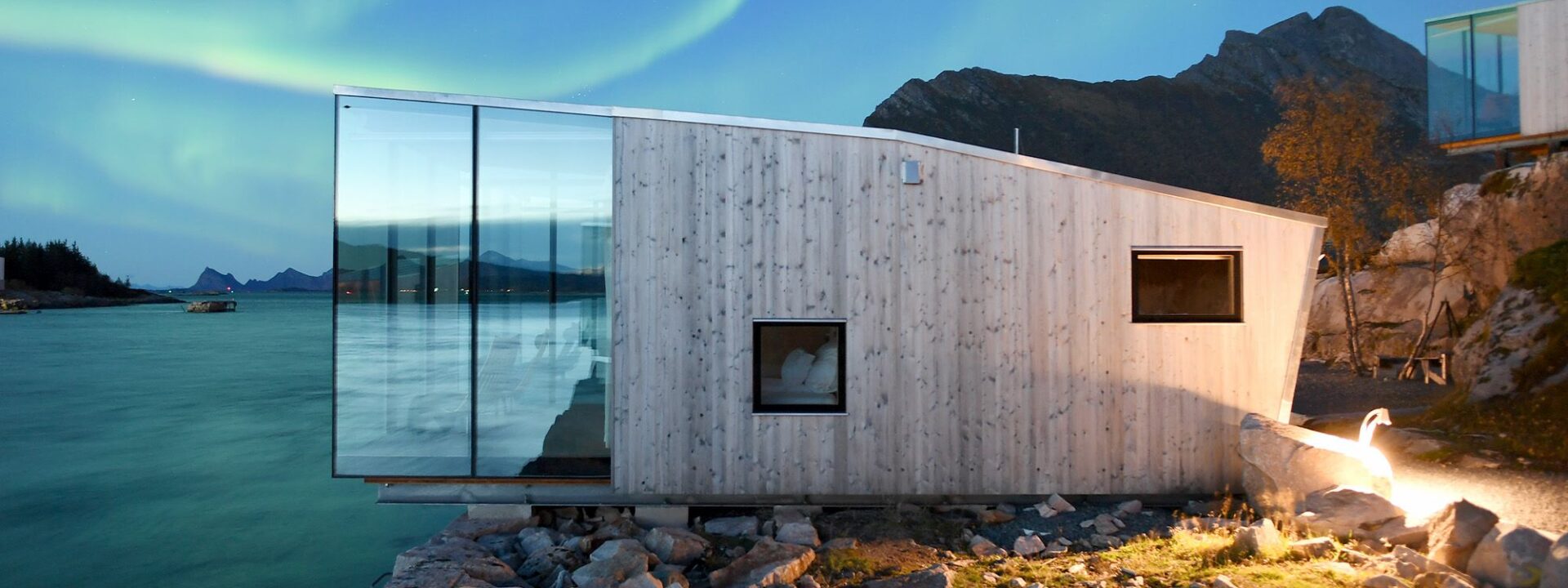
This winter, you can experience the Northern Lights without joining the crowds at the usual Nordic viewpoints. Instead, a collection of private islands and exclusive-use cabins along Norway’s coast offers the ultimate luxury: complete solitude. Imagine stylish cabins on rocky shores, remote Arctic outposts accessible only by boat, and private islands where your only neighbors are sea eagles and the occasional seal.
The timing is perfect. “This winter is already proving extraordinary,” says Torunn Tronsvang, founder of Up Norway, a company specializing in bespoke luxury Nordic travel. “We’ve seen the aurora visible as far south as the Oslo region—something that only happens during periods of high solar activity. As we approach the solar maximum, travelers can expect more frequent and intense displays.” She notes that demand for aurora getaways is rising, especially for remote islands and coastal hideaways with minimal light pollution for pristine views of the night sky.
With thousands of islands scattered along Norway’s dramatic coast—and crucially, within the aurora belt—now is the time to find your own private retreat. These elemental escapes invite you to heat up the sauna, take a bracing dip in the clear sea, forage for seaweed or oysters with a local guide, and then settle in for the main event: nature’s most spectacular light show, reserved just for you and your companions.
If you’re dreaming of the north, here are the remote coastal sanctuaries where the aurora dances for a select few.
Manshausen Island, Steigen Archipelago
Owned by polar explorer Børge Ousland, Manshausen is a compact 14-acre island set up for adventure high above the Arctic Circle. Once a busy trading post among the Steigen islets, it’s now a sleek retreat gazing across the Grøtøyleia strait. Ousland enlisted architect Snorre Stinessen to design the Sea Cabins and Towers—linear, glass-fronted structures that reach toward the water, each angled for perfect, in-bed views of the shifting light and weather. Adventures here include kayaking between skerries, sea-eagle safaris with the island’s expert, rewarding summit hikes, and evenings rotating between the sauna, hot tub, and glowing seawater pool.
The Main House remains the social heart, with a kitchen featuring local seafood, lamb, and reindeer, and a second-floor library overlooking the strait. In winter, Manshausen offers a special advantage for aurora viewing: the cabins’ floor-to-ceiling windows face the clearest northern sightline, so you can watch the colors spread across the sky without even getting up. Designed by someone who knows the polar night intimately, this place feels built for whatever spectacle the Arctic sky delivers.
Fordypningsrommet Fleinvær, Fleinvær Archipelago
Tucked among the skerries of Fleinvær, Fordypningsrommet is a retreat designed for clear thinking and creative exploration. Founded by composer Håvard Lund, the island features eco-friendly kebony-wood cabins on steel stilts, scattered like an experimental village. There’s a house for sleeping, another for cooking, one for bathing, one with an electric piano, plus a njalla—a slender, birdhouse-like tower inspired by Sámi storage huts. Spark your imagination in the sea-air studio, roam the rugged paths, fire up the wood-heated sauna, or prepare shared meals in the kitchen house, all set to a soundtrack of the surrounding sea.Eider ducks, otters, and the occasional fisherman’s boat drift by. There are no shops or cars, and very little to distract from the landscape—which is precisely the point. Weather sweeps in from every direction, islands appear and vanish on the pink-tinged horizon, and from September to April, your stay becomes a prime vantage point for watching the aurora. The elevated perch of the njalla serves as the island’s unofficial observatory, a cleverly constructed capsule where the northern sky commands all attention. Groups can book the entire village for a private Arctic retreat, or join the island’s temporary community of artists-in-residence as they develop their work against a backdrop of sea and silence.
Brakøya, Lofoten
Nestled in the mountain-edged Raftsundet strait, which connects the Vesterålen and Lofoten archipelagos, Brakøya redefines the private island retreat with an Arctic twist. Newly opened this February, this historic trading post now features a handful of suites and cabins—just enough for a close-knit group of skiers and aurora-chasers to settle in without another soul in sight. Days here shift between summit-to-sea ski touring, fjord kayaking beneath jagged peaks, and seaweed harvesting, followed by warming up in the suspended seaside sauna or a fjord-facing tub. Meals are a fireside affair, with visiting chefs cooking over a Tuscan grill in the semi-open kitchen—menus follow the seasons and are paired with excellent wines, all included.
Sustainability is woven into the design, from repurposed Norwegian maple and locally sourced spruce to solar power in summer and wood-fired heat in winter, giving Brakøya a rugged yet refined feel. With Lofoten’s sweeping fjords and minimal light pollution, the island also serves as a quietly spectacular place to witness the Arctic sky’s displays.
Lilløy Lindenberg, Midtøyni
On the wave-battered islet of Midtøyni, just off Norway’s west coast, Lilløy Lindenberg proves that going off-grid doesn’t mean going without—especially when the Northern Lights dip south. Check into one of the three rooms in the Main House or claim the standalone Boat House, and you’ll find an island that functions like a beautifully crafted toolkit for slow living: a herb-infused sauna built from shoreline stones, an outdoor pool for cold plunges, and a self-serve shop curated by chef Antje de Vries, stocked with natural wines and plant-based ingredients ready for your pan. Original timber has been meticulously restored, mattresses are stuffed with local seaweed, and the gardens—fed by compost and rainwater—supply most of what Antje cooks on the Aga stove and serves in the wood-paneled dining room.
Days drift between kayaking, foraging walks, seaweed hunts, and the island’s popular Kelp Club suppers, where locals and guests share stories over seasonal plates, all set against fjord-framed horizons that glow at night. In a year when the aurora has been appearing unusually far south, Lilløy’s 360-degree sea-to-sky horizons offer wide-open viewing territory.
Ytrí, Træna
The Træna archipelago rises from the sea in sharp, sculptural peaks 60 kilometers off Norway’s Helgeland coast. Sitting exactly on the Arctic Circle and named from the Old Norse for ‘the outer one,’ Ytrí is a new retreat made for edge-of-the-map escapism—positioned as Norway’s outermost place to stay. The design nods to Træna’s fishing-village heritage: low-slung structures built from weather-ready materials, carefully framed views that bring the horizon indoors, and a cluster of spaces—38 rooms and suites, a restaurant and bar serving traditional open sandwiches, a sauna, yoga and wellness area, and a boathouse—arranged like a contemporary coastal hamlet. How to make the most of the dwindling daylight? With hikes to ancient caves and boat trips between islands inhabited by fisherfolk for millennia.For over 9,000 years, people have enjoyed candlelit dinners here, feasting on seafood pulled from the waters just steps away from the hotel.
Ytrí’s ethos blends sustainability with deep local roots, partnering with island producers and weaving community traditions into every stay. Perched at the edge of the horizon—where the ocean stretches as far as the eye can see (the next landmass is Greenland)—the hotel’s Northern Lights lounge is poised to become a prime spot for winter aurora viewing. Opening in 2026, it’s the kind of place worth saving for later, ready to welcome you when the lights dance across the sky again.
Staurneset Guesthouse, Giske Island
Staurneset Guesthouse sits on a windswept corner of Giske Island, where the vast Norwegian Sea meets the windows. Originally the private cabin of 62°Nord founders Knut and Line Flakk—who, along with their daughters Maria Lilly and Erika June, now steward the heritage outdoor brand Devold of Norway and its fisherman-chic offshoot O.A.D.—the guesthouse rests on the island’s edge. It’s framed by pale beaches, tidal rock shelves, and the snow-dusted Sunnmøre Alps. Inside, the house is a lesson in Nordic coziness: three bedrooms draped in sheepskins, an open fireplace, exposed wood throughout, and a kitchen made for savoring local ingredients.
Reached by a series of bridges from the Art Nouveau port town of Ålesund, tiny Giske is also home to the Ocean Sound Recording Studio—where artists like A-ha and Swedish House Mafia have mixed and recorded albums—just a short walk from Staurneset. It’s easy to settle into the coastal rhythm here: scanning the shore for seals and seabirds, biking through farmland and forests, or curling up by the fire as the weather shifts. In winter, this open stretch of coast can offer surprisingly clear Northern Lights views, with the sea reflecting the sky’s shifting colors like a dark mirror.
Frequently Asked Questions
Of course Here is a list of helpful FAQs about seeing the Northern Lights from a private island retreat in Norway
Planning Concept
Q What exactly is a private island retreat in this context
A Its a small exclusive lodge or a collection of cabins located on its own island often with limited guest capacity Its not a large resort offering a secluded natureimmersive experience
Q Why choose a private island over a mainland town like Troms
A For maximum darkness and minimal light pollution Islands are far from city lights dramatically increasing your chances of seeing vivid auroras right from your doorstep without crowds or tour buses
Q Is this only for experienced travelers or luxury tourists
A Not necessarily While many are upscale options range from rustic selfcatering cabins to fullservice lodges The common thread is seclusion not just luxury
Practicalities Booking
Q When is the absolute best time to go
A The core season is from late September to late March when nights are longest and darkest The peak for clear skies is often January to March
Q How do I even get to a private island
A Youll typically fly into a regional airport then take a combination of ferries speedboats or small charter boats arranged by the retreat
Q Are these retreats open yearround
A Most operate primarily during the Northern Lights season Some may close for periods in late springsummer or offer different summer activities
Q How far in advance should I book
A As far as possibleideally 6 to 12 months ahead These places have very few rooms and are in high demand
The Northern Lights Experience
Q Is seeing the Lights guaranteed if I stay on a private island
A No The aurora is a natural phenomenon dependent on solar activity and clear weather The island removes the problem of light pollution but you still need clear skies and auroral activity
Q What do the retreats do to help us see the Lights
A Most offer aurora alerts have dedicated darkviewing areas provide expert guides and may