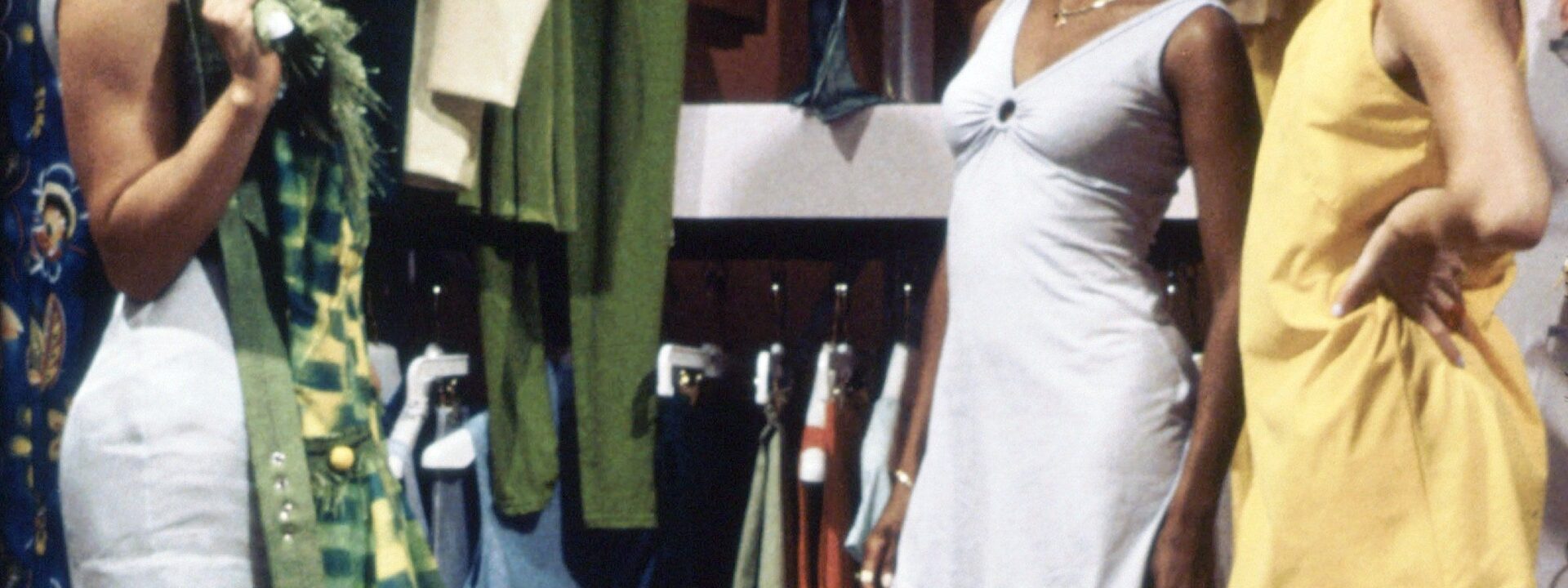
It seems obvious, but a well-organized closet can save you time and bring immense peace of mind. This isn’t an exaggeration: one study found that women living with cluttered homes had higher levels of the stress hormone cortisol. Controlling the chaos is easier said than done, especially in a small space or with a particularly unruly wardrobe. While it might be tempting to stash extra items in strange places—like the oven, à la Carrie Bradshaw—there are far better ways to maximize your closet space.
It starts with a game plan. According to Allison Finn of Reclaim Professional Organizing, there are three essential steps: “Edit your wardrobe, keep items you wear and feel good in, and use bins wherever possible. This ensures the space stays tidy.” Having a few handy tools at your disposal can also help make your closet visually sleek.
How to Organize Your Closet, According to Vogue:
– The Wood Hangers: Megachef 20-piece acacia wood hanger set, $45 at Nordstrom.
– The Clear Bins: Everything Organizer case of 4 divided bins, $112 at The Container Store.
– The Smart Storage: Yamazaki Home over-door rack, $40 at Nordstrom.
– The Under-Bed Catch-All: Ikea box with lid, $28 at Ikea.
– The Trinket Dish: Match pocket change tray, $265 at ABC Carpet & Home.
– The Knitwear Hanger: Zara vertical hanging organizer, $46 at Zara.
– The Rattan Box: Artifacts Trading Company rattan rectangular storage box, $152 at Nordstrom.
To make it easier, we’ve gathered tips from experts who specialize in transforming unwieldy wardrobes into Pinterest-worthy closets. Read on to learn how to organize a closet once and for all—with the help of a few handy pieces, of course.
Step One: The Edit
A true deep clean means paring down everything—from shoes and purses to scarves and necklaces—and being honest about what you actually need. “First, take everything out of the closet—yes, everything,” advises Los Angeles-based professional organizer Meaghan Kessman. “Then, edit everything. And be honest with yourself.” Make three piles: one for keeping, one for donating or selling, and one for unwearable or damaged items to throw away or recycle.
Tina Priestly, founder of the Virginia-based decluttering company Ready, Set, Refresh!, recommends using the “Five Outfit Rule” to make tough decisions: “If you can make a minimum of five different looks with a piece and will wear it, then keep it.” She also suggests reflecting on your actual use of each item: “Ask yourself if you’ve worn the item in the last 90 days or expect to wear it in the next 90. Except for seasonal items, if the answer is no, it’s time to let it go.”
For items you’re unsure about, organizing expert and author Shira Gill uses the “backwards hanger” trick: “Turn all hangers backwards at the start of the season. Anything still backwards at the end hasn’t been worn and needs to be seriously reconsidered—no extensions.”
Step Two: The System
There’s no one way to organize a closet—find the method that makes sense for you, and you’ll be more likely to stick to it.
By Type and Color
Arrange your “keep” pile into categories. Put boots with boots, sandals with sandals, button-up shirts with button-up shirts, and so on. This provides a satisfying dopamine hit and helps you gauge how much space you’ll need for each type of item. “It is much easier to find your favorite T-shirt if it is with all of your other T-shirts,” notes Courtney Cummings of The Stylish Organizer.
Gill recommends hanging items by category and then by color within each category. “Light to dark within each group makes gaps and redundancies visible immediately and creates a boutique-like effect that makes you actually want to open your closet.”She explains that you should try putting all patterns together at one end of the closet to minimize visual clutter. “Your eye needs somewhere to rest.”
Organize by Zone
Another approach is to organize by occasion and outfit groupings. “Items should be placed in zones for easy access,” recommends Finn. This method considers how you actually get dressed. “You have to take into account the way you function best,” says Cummings. For instance, if you always wear a camisole with a blazer, store those items together. If you always pair a dress with a hat, keep them together. “Everyone uses their space differently; it’s about finding what works best for you.”
Organize by Use
It’s also helpful to consider how often you wear items. “Things you use most often should be at eye level; less frequently used items can go on higher or lower shelves that are harder to reach,” advises Priestly. Gill offers a more specific guideline: place your most-worn 30% of clothing at eye level and within arm’s reach; everything else can be stored elsewhere. “Most people organize for looks instead of ease of use—and then wonder why they always reach for the same things,” she says.
Step 3: Putting It Into Practice
Hanging vs. Folding
A good rule for deciding what to hang versus fold is to consider which method will keep clothes looking their best. “Items that wrinkle easily should be hung,” advises Finn. “Sweaters should be folded so they don’t get stretched out. Items like bathing suits and winter accessories are best stored in bins on shelves.” To maximize hanging space, swap bulky hangers for slim, felt-covered ones. They won’t leave marks on clothes and help prevent items from slipping off.
Invest in Storage Solutions
Using matching bins for similar items and creating compartments in drawers with dividers can reduce visual clutter and create a cohesive look. Plus, “pretty bins and baskets can bring you extra happiness,” Cummings notes.
These classic organizers are functional, too. “Use your vertical space by investing in bins or baskets that can be stacked,” says Cummings. “I also always recommend a closet with adjustable elements, regardless of its size, so it can adapt to your needs and changing wardrobe.”
Use Every Inch of Space
For small closets, Cummings suggests focusing on space-saving solutions to optimize every inch. “In a small or odd-shaped closet, installing high shelves or adding hanging rods above other items for shoes, bags, or folded clothes can maximize vertical space,” she says. The same idea applies to the often-underused bottom of the closet. “I’ve used adjustable hanging bars for the lower half. This doubles storage capacity and lets you hang items like pants or tops on the bottom row,” explains Houston-based interior designer Lauren Ashley, adding that organizing a small closet can feel “like a game of Tetris.”
Don’t overlook less obvious areas, either: “Hang an over-the-door organizer to store shoes or accessories,” says Priestly. “All these tricks help create a functional, organized closet, even when space is limited.”
As for the one key tool you’ll need to l…How do you live with this day-to-day? Ashley suggests, “Keep a step ladder within reach of your closet to access those higher shelves.”
Yamazaki Home Over-Door Rack
$40 at NORDSTROM
Zara Vertical Hanging Organizer
$46 at ZARA
Step 4: The Extras
Store Seasonal Items
It may seem obvious, but tucking away items you’re not currently using can cut down on clutter. Under-bed storage bins and vacuum-sealed bags work wonders, as does designating space in another, less frequently used part of the home. “Store special occasion clothing and seasonal items in another closet, if possible,” Finn says.
Zara Foldable Storage Box with Lid
$56 at ZARA
Ikea Box with Lid
$28 at IKEA
Keep Accessories Tidy
Storing jewelry, hats, and other non-foldable or oddly shaped items often leads to jumbled piles at the back of a closet or drawer—but it doesn’t have to. Prevent necklace and bracelet tangles with velvet trays, and place rings in pretty dishes on your dresser. “If you have the drawer space, that’s a great way to keep things contained but accessible,” Cummings says.
Use your empty walls to hang scarves, belts, and even bags to keep each piece visible. For bulkier bags like totes, Gill recommends storing them carefully on a shelf rather than hanging them by the strap to maintain their shape. “Store them upright, using small bag inserts or tissue paper, lined up like books so you can see your whole collection at a glance.”
As for your daily essentials? Choose a beautiful tray, place it on your nightstand or vanity, and fill it with the items you use every day. “The watch you wear every day, the earrings you always reach for… this creates a home for your essentials and eliminates the morning scramble,” Gill continues. And if an organization piece can also add style, even better.
Loren Hope Silk Velvet Jewelry Tray
$198 at ABC CARPET & HOME
Cassigoli Ginestra Square Vide-Poche
$190 at ARTEMEST
Sophie Bille Brahe Velvet Trésor Jewelry Box
$255 at HARRODS
Match Pocket Change Tray
$265 at ABC CARPET & HOME
Pottery Barn Scallop Marble Tray
$35 at POTTERY BARN
Damson Madder Chubby Trinket Dish
$55 at REVOLVE
Jia Jia Onyx Trinket Box
$300 at NET-A-PORTER
Anastasio Home 512 Tray
$215 at LULU AND GEORGIA
Frequently Asked Questions
FAQs How to Organize Your Closet for a Calmer Mind
Q Why should I organize my closet if I just want to feel less stressed
A A cluttered closet creates visual noise and decision fatigue every morning Organizing it reduces chaos saves you time and creates a sense of order and control which directly lowers stress and promotes a calmer mindset
Q Im overwhelmed Where do I even start
A Start small Pick one shelf one drawer or one category Dont try to tackle the whole closet at once Completing one small section builds momentum and feels less daunting
Q Whats the most important first step
A The essential first step is to take everything out This forces you to see every item assess it and make intentional decisions instead of just shuffling things around in the clutter
Q How do I decide what to keep and what to get rid of
A Use a simple system like the Keep DonateSell Toss method For each item ask Do I love it Does it fit me well right now Have I worn it in the past year If the answer is no to all its time to let it go
Q What are some easy ways to organize what I keep
A Group like items together Put all pants in one section shirts in another and dresses together You can further organize by color or season This grouping method makes finding things effortless
Q I have limited space Any tips for small closets
A Absolutely Use vertical space with shelf dividers or stackable bins Slim nonslip hangers create more room Consider underbed storage for offseason items to free up prime closet real estate
Q Does organizing my closet really make that much of a difference for my mental state
A Yes A physical space often reflects your mental space An organized closet eliminates a daily source of frustration reduces morning anxiety and provides a small tangible win that can boost your overall sense of wellbeing
Q How can I maintain an organized closet without it getting messy again
A Adopt the