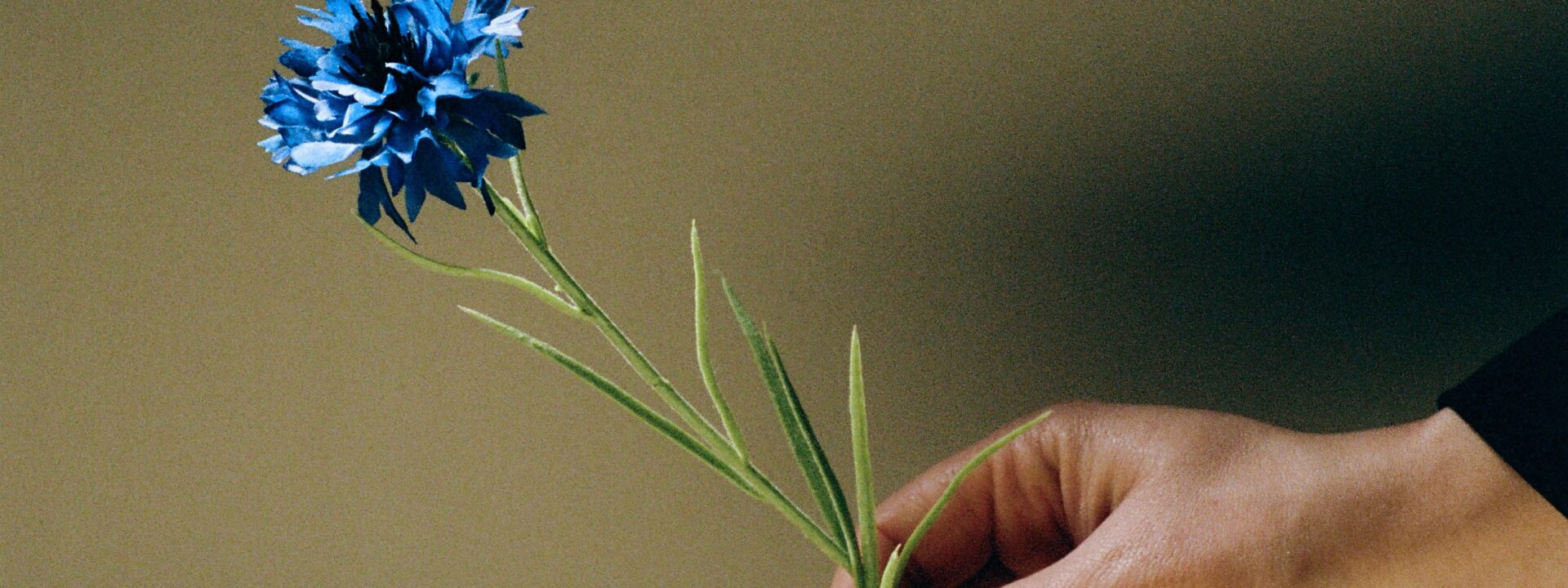
“Being Dutch, flowers are just part of how we live,” says Alexander Jordaan. But when he moved from Amsterdam to New York City, he faced a new reality: flowers were suddenly expensive, often imported, and frequently dying. On a trip back to the Netherlands, he noticed some silk flowers at a friend’s home, and they caught his interest. It seemed like the perfect solution. However, this beautiful silk arrangement wasn’t something you could just buy—it was the result of someone with good taste finding quality pieces and arranging them themselves. “It made me realize that this kind of product exists and the demand might be there, but the taste isn’t,” he says.
Jordaan, who has a background in fashion and brand work, started ordering different types of artificial flowers and trying to put them together on his own. He wasn’t happy with the overall quality of what he was working with, and he noticed a lack of brand recognition or loyalty in this space. So he began reaching out to Dutch people in the floral industry. Soon, he found suppliers in the Netherlands and Belgium who could help him create his own high-quality silk flowers, ready to be arranged in modern styles similar to what he’d look for in fresh bouquets. In June 2025, Jordaan’s silk floral brand, Apartment387, was born.
A faux flower arrangement by Apartment387.
Photo: Isabel Bronts & Maike Schwarz
For decades, artificial flowers have had a bad reputation. Walk through the aisles of any Michaels, and you’re hit with tulips with stiff stems, hydrangeas airbrushed in an awkward purple, and plastic greenery that could poke your skin. “This category clearly comes with baggage,” admits Jordaan, but perceptions seem to be changing, especially as designs and materials improve, and as consumers learn about the environmental and economic costs of fresh flowers.
“The faux floral customer has changed over time—they’re younger, embracing the biophilic design movement (using flowers and plants as key health and wellness features in homes and offices), and they recognize that faux flowers are more sustainable than fresh,” says Carolyn McDonough, co-CEO of Diane James Home. For nearly 30 years, Diane James Home has been a go-to for handmade faux flowers, offering artificial bouquets and plants.
Faux flowers by Diane James Home.
Photo: Zach Pontz
Over the last decade, artificial floral designs have become more realistic and luxurious. “The progress that’s been made, even in the eight years I’ve been designing, is incredible. Now you can buy flowers that have lifelike variegation and are ‘natural touch,’ so they feel like a real flower,” notes Valerie Perry Raskin, Diane James Homes’ lead designer. The key is embracing a flower’s imperfections. Make it look too perfect, and it immediately seems fake.
To achieve this look, makers like Apartment387 intentionally create flaws in their flowers. They add holes from insects or moss onto the stems. They bend stems and curve leaves, working with fresh florist consultants to capture a sense of movement and texture.
A faux flower arrangement by Apartment387.
Photo: Isabel Bronts & Maike Schwarz
A faux flower arrangement by Apartment387.
Photo: Isabel Bronts & Maike Schwarz
“The goal is for the arrangement to feel like a carefully composed botanical sculpture—organic, intentional, and highly elevated—rather than an overly ‘perfect’ replica,” says Kandice Hansen, the buying manager for home and beauty at Moda Operandi. When Hansen looks at artificial floral arrangements to sell on the website, she thinks of them more as decorative objects, like art, rather than temporary accents.
Many faux floral designers today look to fresh flowers to understand the balance of realism and beauty. “When we first started, there wasn’t much information out there on faux-floristry, so we actually looked at a lot of fresh floral references, and we also took classes and joined workshops that were all centered around fresh flowers in order to iKim Ng, founder of Two Whimsical Florists, says, “We want to improve our skills and kind of mimic that look.” Her studio creates custom wedding and event florals using only artificial stems. Now they also offer workshops, and sometimes people sign up without realizing they’ll be working with fake flowers. “We have to tell them, ‘actually, these are all artificial,’ and they’re always really surprised. I think people are definitely a lot more open now.”
Artificial stems are also gaining popularity among people who host often. Carlee Gettman, CEO and founder of Tblscape—a marketplace she compares to Rent the Runway for events and parties—says, “It really adds a different feel to the event, because it shows you can be sustainable and intentional without losing the beauty.” Gettman has noticed that once customers see the faux flowers in person and realize how realistic they look, they’re more open to using them at home and for events.
Florist Janneke Evans of Studio Webster, who also works as a floral consultant for Apartment387, says, “I think ‘fake’ turns people off—everyone wants real.” But what most people don’t realize is that many florists already use faux stems in their arrangements, especially in large-scale pieces and installations. Evans, who studied at McQueen’s Flower School, says faux florals were part of the curriculum. “Depending on your client and what they need—like if it’s outdoors or a really big project—you’ll mix in faux florals in places you can’t reach as a little trick, and save the areas you can touch for real flowers.” Higher-quality artificial options help these florists and their clients. But overcoming the long-standing stigma partly comes from educating customers, Evans says, and also just requires patience and time.
There’s no doubt that fresh florals will always have a certain luxury because they’re temporary. But those working with artificial options see them as complements, not competitors. McDonough says, “We always tell our customers that fresh and faux aren’t mutually exclusive. You can have fresh flowers on your dining table and faux on the sideboard.”
Even though a florist’s heart will always be with fresh flowers, Evans understands the appeal of the alternative. “I actually have one artificial arrangement in my home right now, and I love it. It’s everlasting beauty.” Seeing these arrangements in the homes of tastemakers and designers shows they’re no longer something to be embarrassed about. Jordaan says, “It feels like there’s this tailwind, and we might be at the right time where the product is actually getting good.”
Frequently Asked Questions
Here is a list of FAQs about whether faux flowers are no longer considered a fashion mistake written in a natural conversational tone
BeginnerLevel Questions
1 Wait are faux flowers actually in style now
Yes absolutely Highquality faux flowers are very trendy right now The key is the qualitymodern silk and latex flowers look incredibly realistic unlike the stiff plastic ones from decades ago
2 How can I tell if a faux flower looks cheap or realistic
Look at the petals and leaves Realistic ones have subtle color variations veining and slightly imperfect edges Cheap ones have uniform shiny plastic colors and feel hard Touch the petalsgood ones feel soft and almost waxy like real flowers
3 Whats the biggest benefit of using faux flowers over real ones
They last forever No watering no wilting no allergies and you can keep a specific arrangement exactly as you like it for years Theyre also great for dark rooms where real plants cant survive
4 Is it okay to mix faux flowers with real plants in a room
Yes thats a very popular trick Mixing a few highquality faux stems with real greenery makes the arrangement look fuller and more natural and its much harder to tell which is which
AdvancedLevel Questions
5 What makes modern faux flowers not look tacky anymore
The materials and manufacturing have completely changed Todays best faux flowers are made from latex silk or polyurethane and they are handpainted and heatmolded to mimic nature They also have naturallooking stems instead of bright green plastic tubes
6 How do you style faux flowers so they dont look like a mistake
Avoid the too perfect look Dont use a single perfectly round bunch Instead bend stems vary the height and let some droop naturally Use a vase that isnt too small and dont crowd the stemsgive them breathing room like a real bouquet
7 Are there specific flowers that are better to buy faux than others
Yes Flowers with many small intricate petals tend to look best faux because the detail hides the artificiality Simple