We all have clothes buried at the back of our closets that we no longer wear. But with so many gaps and limitations in the circular economy, it can be hard to know what to do with old clothes. Now, a new wave of fashion businesses is asking customers to hold onto them instead, redesigning them to extend their life and keep them out of otherwise flawed circular pathways. One such business is Phini, a London-based studio that offers bespoke redesign services for a luxury clientele. The company first launched as an app called Loom in February 2025, bringing together over 100 vetted designers to upcycle, embroider, dye, or tailor old garments. After struggling to price upcycling as affordably as planned, it relaunched as Phini in August, positioning itself as a luxury redesign studio instead. The large network of upcyclers was replaced with a tighter group of six designers specializing in bridal — partly because of the higher price point and sentimental value — but also open to everyday clothes. The items people bring to Phini tend to have a lot of life left in them. Technically, they could still be worn as they are, so this isn’t upcycling in the strict sense. But something holds their owners back: a lack of formal occasions, a hem that doesn’t sit quite right, a color they no longer gravitate toward. Some of Phini’s past projects include separating a wedding dress into a top and skirt, turning a pair of jeans into a bag, and dyeing or altering family heirlooms. Vogue Business put it to the test. Customers schedule an appointment — either virtual or in-person at the London studio — then share an initial brief with the team. Phini connects you with a specific designer, who can walk you through sketches, dye samples, and other options until you land on a redesign that feels right. It then sends a bespoke quote, along with regular updates via WhatsApp to keep customers in the loop, leaving room for iterations or tweaks if needed. The big reveal also happens in person, unless customers opt for a delivery service. “With Loom, the whole process was digital, but we found that customers wanted to meet the team in person and have a more personalized service,” says Phini founder Daisy Harvey. “Because everything is bespoke by nature, our designers also wanted an in-person touchpoint to get the measurements right and meet the customers.” I went back and forth over what to redesign, eventually landing on one of my favorite knit pieces: the Pendle jumper from Herd, made from British wool, traced from farm to finished product. It holds close sentimental value for me. When I was reporting our Made in the UK series last year, I visited the farm where the wool is sourced, alongside Herd owner Ruth Alice Rands. I sat in the farmer’s kitchen and had a wide-ranging chat about the state of British farming with him and his wife over a cup of tea. While we were on-site, one of the bluefaced Leicester sheep the wool is sourced from gave birth — the farmer named the lambs Bella and Vogue. The jumper is also impossibly soft and cozy, and I have to hold myself back from wearing it every day in the winter. Needless to say, I was hesitant to hand it over. But since I had a color analysis done for a story back in June, I’ve been slowly reshaping my wardrobe, and the warm-toned cream color wasn’t one I reached for anymore. It was time for a redesign. Even though I work in fashion and have strong opinions about what I do and don’t like, it was surprisingly hard to pin down a design when faced with endless possibilities. Like most consumers, I have a limited knowledge of the technical restrictions of working with different materials, or how certain chChanges would affect how a fabric hangs, and the designer’s input was needed to find a solution. This is why Phini often asks customers to share a Pinterest board or inspiration images. “The most important thing is understanding their style,” says Harvey. “We also have our own ideas and inspiration images, either from past work or things we’ve come across. A small number of people come to us knowing exactly what they want, but most are open to exploring what’s possible.”
The inspiration photos Bella shared with Phini included an Isabel Marant jumper from the Spring/Summer 2021 Etoile collection.
The final design combined elements from several ideas, with embroidery on the collar and cuffs but no chest embroidery from earlier versions.
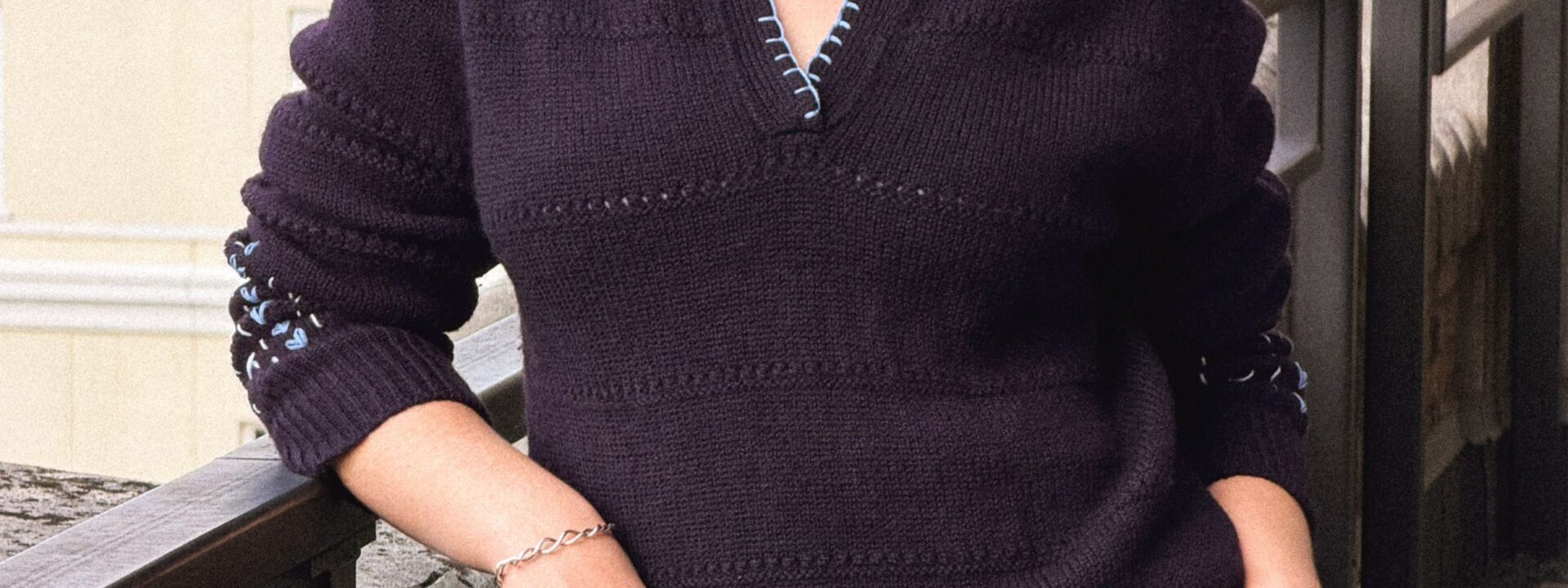
In the end, I decided to dye the jumper navy and add embroidery around the cuffs and collar. We considered more detail on the chest but decided it was too busy, and ideas about adding red were eventually replaced with white and pale blue.
Much of the time, Phini’s job involves managing expectations, says Harvey. “Someone might ask us to dye a polyester dress black, which we can’t do [it’s much harder to achieve darker colors in synthetic materials], or they might want a certain kind of movement the fabric can’t provide. We can always suggest something, but we have to set expectations from the start.”
The barriers of bespoke work
Another challenge is intellectual property, Harvey continues. “We haven’t really had trouble with this since we relaunched, because we’re more involved in the process now, and we’re very protective of our own designers’ work and other people’s,” she says. “But sometimes we have to tell customers: we can use this picture as inspiration, but we can’t make an exact copy. Most of the time, the final product mixes many different inspiration images, so it’s not really an issue.”
When the designers need extra materials, Phini encourages them to use scraps and leftover fabric from previous projects. Since most of them have worked in bridal and luxury for decades, they have plenty of high-quality materials, so Phini rarely needs to source anything new. “It’s never going to be 100% zero-waste, but we do as much as we can,” says Harvey.
The final product. Between the dye and embroidery, this project would have cost £600, almost double what the original jumper cost.
The service certainly comes with a luxury price tag. While my jumper retails for £365, Harvey says the embroidery would have cost £200 and the dye £400 (in this case, the fee was waived). If that seems steep for an everyday jumper, it’s worth noting that most pieces Phini redesigns are wedding dresses. These bridal redesigns start at £600, with simple alterations closer to £200. Dye is especially expensive because bespoke colors need to be sampled on similar fabrics and the color is built up slowly over multiple dye baths, she explains. “The process is very time-intensive. Bespoke dyeing really is an artisanal craft.”
Price was also a sticking point with Loom, says Harvey, as with many upcycling and redesign services. “A lot of the cost goes into the design side, because we take something that exists and turn it into something else, so there isn’t an existing pattern we can use, and every piece is bespoke,” she explains. “With Loom, we often found a mismatch between people loving the idea and not wanting to invest that much money in the project. The luxury positioning of Phini has helped with that. We also only work with really experienced artisans now, whereas with Loom, some of the upcyclers were just starting out. So the price reflects that shift and ensures our designers are paid fairly.”
Grace also used Phini to dye her wedding dress. Bridal services tend to start around £600. Photos: Courtesy of Phini
With such a high price, most customers are priced out, so this isn’t a scalable sustainability solution that will meaningfully reduce waste. But for luxury customers who might otherwise wear something only once or wouldn’t think about sustainability when getting rid of clothes, it could be a useful first step toward extending the life of their garments. “It’s still such early days for redesign and upcycling,” says Harvey. She still dreams of an upcycling service that’s accessible to everyone, but admits that for now, Phini will stay limited to luxury. “The benefit is reaching people who might not have considered sustainability or upcycling before. In the end, the result is the same: we help someone reimagine their clothes and keep those positive memories alive.”
Frequently Asked Questions
FAQs Paying to Have Your Clothes Redesigned Instead of Throwing Them Away
1 What does redesigning clothes actually mean
It means paying a tailor or designer to change an existing garment into something new like turning a long dress into a top or old jeans into a skirt instead of discarding it
2 Why would I pay to redesign clothes instead of just buying new ones
It can save you money on quality pieces give you a oneofakind wardrobe and keep usable clothing out of landfills
3 How much does redesigning typically cost
It varies widely Simple fixes like hemming may cost 1030 while full transformations can run 50200 or more depending on the garment and the tailor
4 Is redesigning cheaper than buying new clothes
Sometimes For basic alterations yes For complex redesigns it can cost more than fast fashion but often less than buying comparable quality new
5 What kinds of clothes can be redesigned
Almost anything jeans dresses shirts coats suits knitwear and even shoes or bags in some cases
6 What are the environmental benefits
It extends a garments life reduces textile waste and cuts the water energy and emissions used to make new clothes
7 Isnt it easier to just donate my old clothes
Donating is good but only a fraction of donated clothes actually get reused Many end up shipped abroad or landfilled Redesigning guarantees your item stays in use
8 Where do I find someone to redesign my clothes
Look for local tailors alteration shops dry cleaners with tailoring services fashion schools or online services that specialize in upcycling
9 How do I know if a garment is worth redesigning
Check the fabric quality condition and fit If the material is sturdy and you love the color or print its usually worth it
10 What if the redesign doesnt turn out how I imagined
Communicate clearly upfront ask for sketches or references and start with a lowrisk item A good tailor will discuss options before cutting
11 Can I redesign clothes myself without sewing skills
Yes for simple projects like nosew hemming or turning a shirt into a tote For structural changes