Tomorrow morning, as New Yorkers across the five boroughs nurse their hangovers and mumble orders for bacon, egg, and cheese sandwiches, they’ll also be welcoming a new mayor. On New Year’s Eve, Zohran K. Mamdani will be sworn into office in the abandoned City Hall subway station—a Gilded Age marvel with vaulted ceilings, tiled arches, and grand chandeliers that make the thought of LED lighting feel like a letdown.
“When Old City Hall Station first opened in 1904—one of New York’s original 28 subway stations—it stood as a monument to a city that dared to be beautiful and to build transformative things for working people,” Mamdani said in a statement. “That ambition doesn’t have to be just a memory from our past, nor does it have to stay buried in the tunnels beneath City Hall. It will be the guiding purpose of the administration lucky enough to serve New Yorkers from the building above.” Beautifully said.
If my TikTok feed is any indication, there’s a wave of millennial optimism in the air, embodied by Mamdani, his bright smile, and his vision of making the city more affordable. He’s a SEN10R (Bronx Science, class of 2010!), and those of us who graduated high school around then were big on hope and change. Among the many changes ahead for the new mayor, one of the more notable is his move from Astoria, Queens, to the historic Gracie Mansion on Manhattan’s Upper East Side. “I don’t care what anyone says,” Mamdani’s predecessor Eric Adams (a terrible mayor but a comedic genius) remarked in a 2022 interview. “There are ghosts in there, man.”
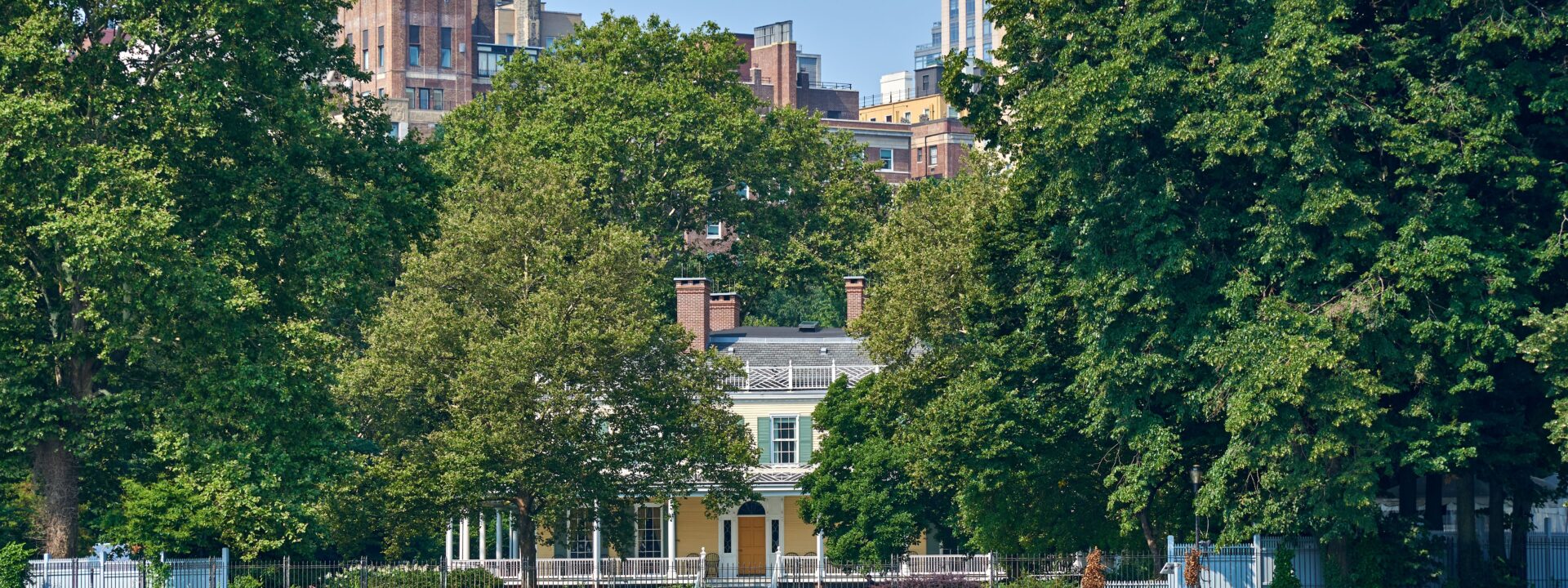
Gracie Mansion, built in 1799, is a sprawling Federal-style house painted butter-yellow, with 11,000 square feet of living space. Located in Manhattan’s Yorkville neighborhood, it has been home to most of New York City’s mayors since World War II and comes with 24-hour security, a ballroom, a lawn, and a vegetable garden reportedly raided by local rabbits. Over its 226-year history, two women have died in the house, and it’s said that Elizabeth Wolcott—the young daughter-in-law of original owner Archibald Gracie, who died of “apoplexy” at 24—haunts the premises. Both Adams and Chirlane McCray, former Mayor Bill de Blasio’s ex-wife, have claimed to hear unexplained squeaks and doors opening and closing.
“Beware of the ghost,” Adams warned Mamdani. “It’s a friendly ghost, as long as you’re doing right by the city. If you’re not, it turns into a poltergeist.”
I hope any ghosts leave the Mamdani family alone—or at least interact in a fun way, like reenacting that classic PSA where Eric Adams shows parents how to search a kid’s room for contraband. But beyond potential paranormal activity or stumbling upon one of Adams’s old ticket stubs from Istanbul, how will the couple live in Gracie Mansion?
It’s exciting to imagine this grand house being occupied by someone genuinely cool—by which I mean Mamdani’s radiant wife, Rama Duwaji. She’s a successful Gen-Z artist whose illustrations and animations regularly appear in major publications, including this one. Much of her work is dedicated to causes she believes in, like Palestinian self-determination. On her Instagram, which has a following roughly the size of Manhattan’s population, she shares art and design that inspire her—from intricate wrought-iron railings to Wretched Flowers’ chainmail tapestries to works by artists like Isamu Noguchi, Farid Belkahia, and Ruth Asawa. Her taste leans toward the modern, the sculptural, and the softly luminous.
Duwaji’s style and artistic practice stand in stark contrast to what previous mayoral families have brought to the mansion. The de Blasios enlisted West Elm to redecorate during their stay, making the historic house look like one of the pods from Love Is Blind; Adams…He claimed all he needed in Gracie Mansion was a mattress on the floor—one that definitely came from New York City proper, not his co-op in Fort Lee, New Jersey. In a photo taken by Vincent Alban for the New York Times, one room features what looks like an unauthorized portrait of Brooke Shields, likely bought from one of those odd West Broadway galleries that sell knockoffs of Beeple and Alec Monopoly. That doesn’t really seem like Rama Duwaji’s style.
Much has been said about Mamdani, a democratic socialist, and Duwaji moving from their rent-stabilized one-bedroom in Astoria, Queens, across the river to the Upper East Side. Andrew Cuomo won the UES by 24 points, and the neighborhood has shown plenty of very public, anti-Mamdani anger on Facebook. It’s much whiter and wealthier than Astoria (though Gracie Mansion’s Yorkville is more laid-back than Madison Avenue). It’s one of the few places in NYC where Mamdani might feel unwelcome—a strange spot for a DSA mayor to end up. Plus, the food won’t be as good as it is in Astoria.
In her first interview as first lady, Duwaji told The Cut she’s looking forward to exploring a new part of the city and living down the street from the Met and the Guggenheim. Maybe she’ll sketch in Carl Schurz Park, eat beneath the artwork on the peppermint-pink walls at Antonucci Café, or shop at the Tiny Dollhouse for a tiny microphone for the new rapping mayor. The acclaimed Palestinian restaurant Al-Badawi recently opened an Upper East Side location, and the staff hopes Mamdani and Duwaji will become regulars. “Wouldn’t it be cool to, like, cater for [Mamdani] and bring that spice that he needs to his life,” a spokesperson told the Times. “He’s a spicy man.”
The Mamdanis are leaving a lot behind. “We will miss much about our home in Astoria,” the mayor-elect said in a statement. “Cooking dinner side by side in our kitchen, sharing a sleepy elevator ride with our neighbors in the evening, hearing music and laughter vibrate through the walls of the apartment.” Bill de Blasio denied the ghost rumors, but he did say living in Gracie Mansion felt isolating and unsettling. I’ve gained new sympathy for his many trips to the Park Slope YMCA.
The spicy man has a lot to handle in the days ahead. But he’s still young—or so I tell myself as I, just a year younger, apply nightly products that burn my aging skin off. He and Rama should throw an 11,000-square-foot house party. Maybe they can even arrange free buses to get everyone home.
Frequently Asked Questions
Of course Here is a list of FAQs about how Zohran Mamdani and Rama Duwaji might adapt to life at Gracie Mansion based on its history
General Beginner Questions
1 What is Gracie Mansion and why does it matter for this question
Gracie Mansion is the official residence of the Mayor of New York City Its not just a home its a public symbol a venue for official events and a place with nearly 200 years of history Adapting to life there means balancing private family needs with very public responsibilities
2 Who are Zohran Mamdani and Rama Duwaji
Zohran Mamdani is a New York State Assemblymember representing parts of Queens Rama Duwaji is a policy expert and urban planner They are a married couple who have been public about their personal life and values
3 How could the history of Gracie Mansion give us hints about their adaptation
Past mayoral families have used the mansion in different wayssome as a fulltime home others more as an office History shows the challenges of privacy public scrutiny and the pressure to maintain a historic building while making it a livable space
Lifestyle Practical Adaptation
4 Whats the biggest lifestyle change they would face moving into Gracie Mansion
The complete loss of private anonymous life Their home would be a public landmark with security scheduled tours and constant public interest in how they use the space
5 How have past mayors families balanced family life with the mansions public role
Families like the Bloombergs and de Blasios used the private residence on the second floor as a true family space while the firstfloor public rooms hosted events They often set strict boundaries like designating certain areas or times as familyonly
6 Could they make changes to the mansion to fit their lifestyle
Yes but with limits Mayoral families have often redecorated the private living quarters to their taste However as a historic cityowned property significant structural changes to the public areas would require approval and are generally avoided to preserve its character
7 What are some practical daily challenges of living there
Constant security presence the need to schedule personal time around official events held in your own home and the management of a large old house