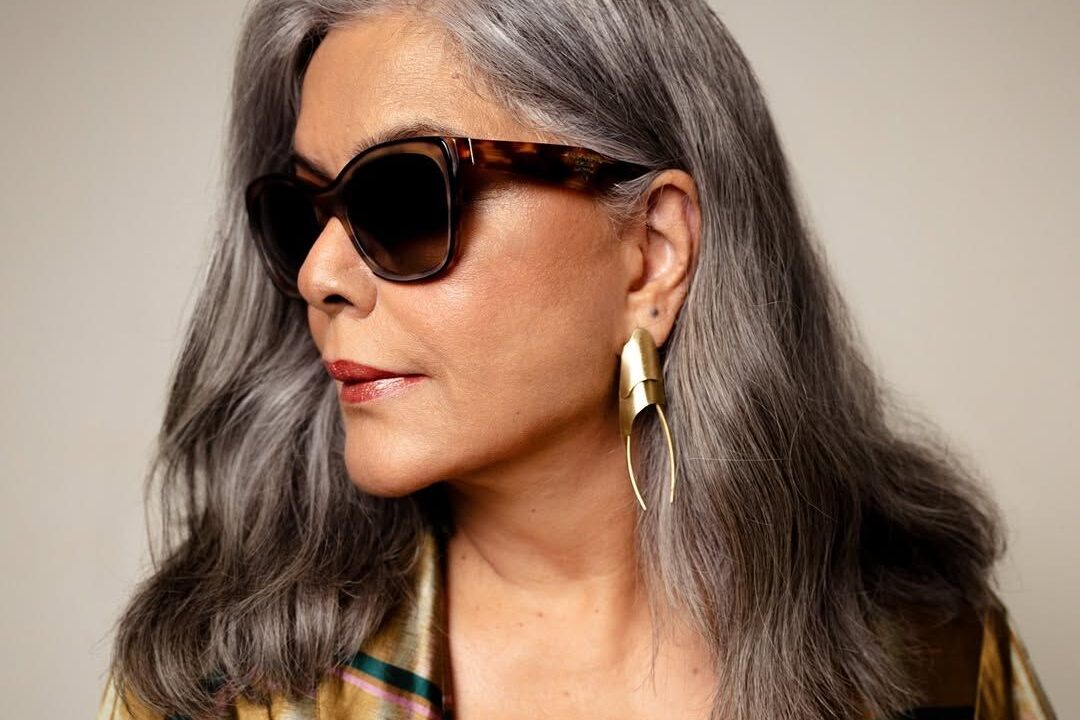
The beauty world has long been known for pushing a single ideal: the same body type, the same long, glossy hair, and skin that appears unnaturally smooth and untouched by time. But it seems we are finally moving past that era—call it an anti-AI shift—and for many, hair is at the forefront of this change.
More women are saying goodbye to harsh dyes and instead blending their grays with their natural hair color. “Gray blending changes the focus from covering up to enhancing what you already have,” says hairstylist Vipul Chudasama. “Now, clients are less likely to ask, ‘How do I hide this?’ and more likely to ask, ‘How can I make this look natural and beautiful?’”
“Gray hair has traditionally been seen as a ‘problem’ women needed to fix, often with full-coverage dye that masked every silver strand,” says Sonia Presswala of Looks Salon. “Gray blending works by integrating silver strands with highlights, lowlights, or tonal glosses, so they blend seamlessly with the colored sections.”
Presswala notes that most clients who actively embrace their natural gray are in their 40s and 50s, often women weary of the constant root-touch-up routine. But Florian Hurel, who owns a salon under his name, says even women in their 20s and 30s are joining the shift. “For many, it comes from a place of confidence and a slightly rebellious attitude,” he explains. “They don’t want to be locked into the cycle of constant coloring or using chemicals on their hair so early in life.”
How to gray blend
For those transitioning from dyed hair to natural gray, the goal is to soften the line between the previously colored hair and the new growth. Gray hair can look unnatural when there’s a harsh line between the old color and new growth, or when the tone appears dull rather than reflective. “Gray blending requires careful color placement,” says Swati Gupta of Bodycraft Salon. “Stylists often add white-toned highlights, soft lowlights, or translucent gray tones to create depth and avoid a flat look. The aim is to let the grays blend naturally with the rest of the hair.”
The process is often more complex than it seems. “It’s rarely an overnight change,” Gupta adds. “Sometimes hair needs to be lightened several shades to match the gray tone, which isn’t always easy or recommended. That’s why gradual blending techniques are often used, allowing hair to grow out naturally while reducing contrast.”
Have a beauty or wellness trend you’re curious about? We want to know! Email Vogue’s senior beauty & wellness editor at beauty@vogue.com.
Frequently Asked Questions
FAQs Gray Blending
What is gray blending
Gray blending is a hair coloring technique that seamlessly blends your natural gray or white hairs with your natural or dyed hair color Instead of full coverage it creates a soft dimensional and naturallooking transition
How is it different from just letting my hair go fully gray
Letting it go gray naturally often involves a stark noticeable line of demarcation as it grows out Gray blending softens that line and integrates the grays from the start making the growout process much more graceful and less harsh
What are the main benefits of gray blending
Low Maintenance It significantly extends the time between salon visits
Natural Look It avoids a solid flat color and mimics the multidimensional look of natural hair
Softer GrowOut Theres no harsh root line so regrowth is less obvious
Versatility It can be tailored to any base color from brunette to blonde
I have dark hair Can I still do gray blending
Absolutely For dark hair techniques like balayage babylights or lowlights using shades of caramel ash brown or soft black are used to blend with the grays creating a salt and pepper or silver streak effect that looks intentional
What techniques do stylists use for gray blending
Common techniques include balayage foilyage babylights and lowlights
Will it damage my hair
When done professionally its generally less damaging than a full singleprocess color because it doesnt require coloring every strand from root to tip However any lightening process involves chemicals so a consultation with a skilled colorist is key
How do I maintain grayblended hair at home
Use ColorSafe Purple Shampoo Purple or blue shampoos neutralize yellow or brassy tones in the lightened pieces keeping the graysilver shades cool and bright
Hydrate Use moisturizing masks and leavein conditioners as gray hair can be coarser and drier