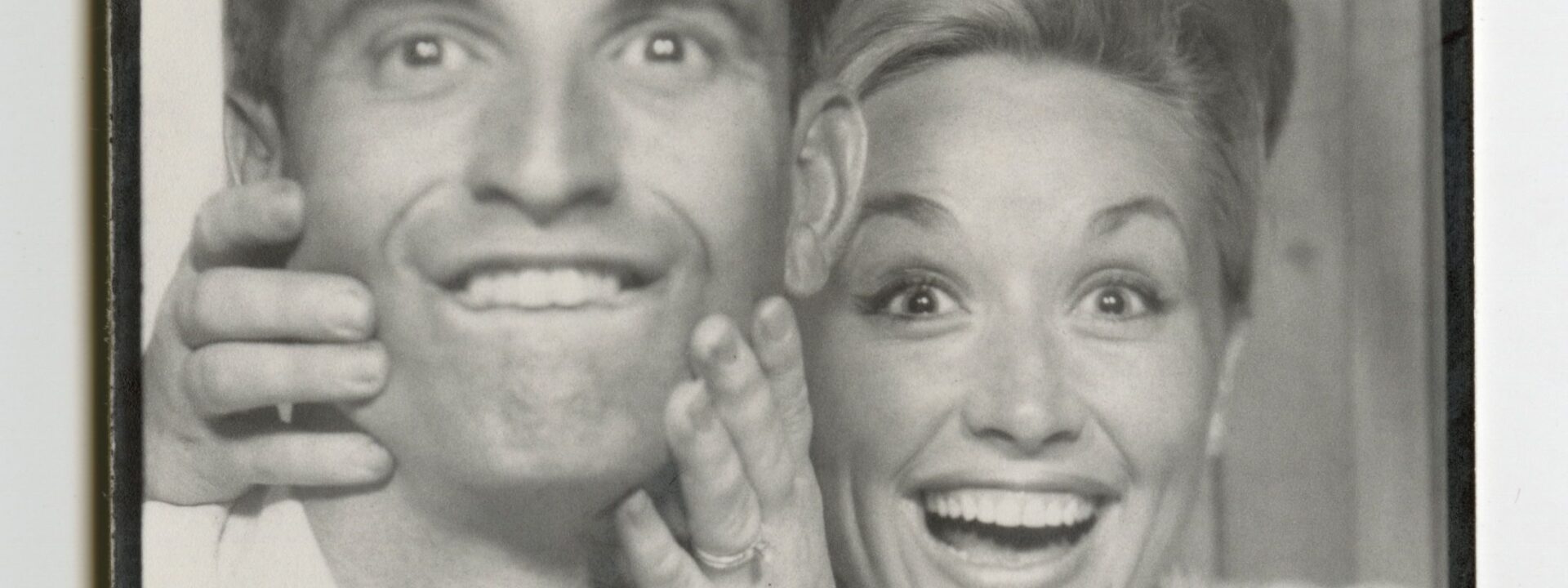
As a little girl growing up in Tennessee, Rebecca Seaver’s playground was a fashion lover’s dream. During visits to her aunt Dolly’s house, she’d head straight for the closet—her favorite room—and marvel at the sea of sequins, rhinestones, beaded trims, and rows and rows of high heels before her. Decades later, in her capacity as director of the Dolly Parton Archive (the official archive dedicated to preserving Parton’s legacy), Seaver often returned to that closet. Among the things she discovered there was a small, worn military trunk belonging to Parton’s husband, Carl Dean, from his time in the National Guard. Though Seaver didn’t think much of the trunk when she first brought it back to the archive, in 2024, her archive manager was sorting through the storage when Seaver heard her let out a scream. “I was sitting at my desk, and I thought it must be a mouse or a bug, but when I ran back there to see what was going on, she had a dress laid out on her lap.” For years, Parton’s wedding dress was presumed to be lost. But suddenly, there it was: a simple white A-line garment in a trunk full of photos and other mementos, perfectly frozen in time from 1966. Read MoreDolly Parton Isn’t Going AnywhereBy Raven Smith Seaver quickly got in touch with her aunt and told her she had something important for her to verify. “I went over and put a little garment box up on the kitchen counter, and she just immediately grabbed it by the little straps, put it right up to her body, and just squealed her sweet little Dolly squeal,” Seaver recalls. “She hadn’t seen it since that day.” Parton knew exactly what she wanted to do with it. At the time, Seaver was already at work on their next big project: Dolly’s Life of Many Colors Museum. Set to be the largest exhibition of Parton’s work and personal effects to date, the museum covers every decade of the singer’s legendary life, taking visitors on an immersive journey from her Tennessee mountain home to Nashville, Hollywood, and the world. “The first thing she said was: ‘This has to go on display at the new museum,’” Seaver says. As the executive director of the museum, she worked closely with her aunt and Steven Summers, Parton’s longtime stylist and creative director, to craft the displays. “We created a beautiful case that looks just like the Ringgold Chapel where they got married,” she continues. “Theirs is one of the great American love stories, so it’s an absolute honor to be able to share it with everybody.” Photo: Kate Russell, Courtesy of Dolly Parton’s Life of Many Colors Museum Housed on the third floor of Parton’s SongTeller Hotel in downtown Nashville, the museum officially opens its doors on September 29. To celebrate the grand opening, Seaver spoke exclusively with Vogue about the exhibit and her aunt’s enduring legacy. Vogue: Tell me a little bit about Dolly’s wedding dress. What was it like to stumble onto such a special item? Rebecca Seaver: Well, not only did we find her dress, but we found the veil that she wore that day. We found the Bible that she carried instead of a flower bouquet, and we also found this really beautiful letter from the pastor who married them. At the time, her record label was afraid that if she got married, she would become a wife and stay at home. But Dolly did what she wanted to do. [Laughs.] She got married in Ringgold, Georgia, just across the state line, so it wouldn’t be in any of the newspapers in Tennessee. And so the letter we found basically said, “You’re not members of my church, so I haven’t had time to counsel you about marriage. But here are some pieces of advice I would like to give you for a happy, long-lasting marriage.” Photo: Courtesy Dolly Parton’s Life of Many Colors Museum There was also a special photo strip you found, right? Yes. So when we found Carl’s trunk, or the “time capsule,” as we call it, there were lots of pictures iThere’s a photo strip that no one has ever seen before. Dolly hadn’t seen it since it was taken, so she was completely stunned when we found it. It perfectly captures their relationship. People haven’t seen many photos of Carl, and they don’t know much about him beyond what Dolly has said over the years. So seeing this goofy side of him, and how happy she looks—her smile has never been brighter than in this photo—is so sweet.
How did you first get involved with the Dolly Archive?
My favorite place in Dolly’s house was the closet. I loved playing there, and being a nosy kid, I knew everything inside because I went through it all. Judy [Ogle, Dolly’s childhood friend] was like an aunt to me, and she always made a point to save both little and big things. She and Dolly’s sisters—my mom and my aunt Rachel—didn’t think of themselves as an archive team; they were just taking care of their sister and best friend. I started working with Judy and Steve Summers, and at some point I decided we needed to preserve all the wonderful things we had—not just physically, but digitally too.
The museum is set to be the largest exhibit of Dolly’s life anywhere. With a career as expansive as hers, how do you even begin to lay it all out?
Dolly was very specific about the story of her life, and she wanted to make sure it was told with integrity and heart, so the museum is set up in two parts. The first part is an immersive walkthrough of her life. You start the night she was born in a wintery cabin, and people will walk in and hear from her about her family. Then you’ll see moments like her and Carl meeting when she first got to Nashville—that was one of the most important moments in her life. From there, we tell the stories we knew fans would want to see.
One of the really unique design choices is the use of recordings, or “Dolly-grams,” that guide people through the spaces.
When we first started talking about the idea of Dolly being the tour guide, Steve Summers and I said she would be the conductor for the symphony. We wanted her to be the person leading it. I think that’s one of the most important and exciting things about this museum: Dolly comes to life in every exhibit and tells people about that era of her life. We’re so fortunate that we were able to have that time with her to not just record those moments, but also with the archive, to sit down with her and ask, “What do you want to show people?”
Footage of Parton recording the “Dolly-grams” that recur throughout the museum.
What’s an item she was particularly excited to showcase?
Well, we’ve never shown the outfit she wore on the cover of Jolene because it needed some love. But we’ve given it that love, and Dolly was really excited about that. I wanted to make sure all of her favorites would be on display for this opening, but there will be lots of surprises too. We also plan to always rotate the collection of artifacts. So when people come back to see us in a couple of years, there will be new things on the floor for them to experience.
Dolly had such a distinct point of view on everything from her songwriting to her sense of style. What was it like working with her to bring the museum to life?
She had a lot of insight into how she wanted the space to feel. She wanted it to be bright and open and airy, and she wanted there to be moments of reflection. When we were going through and picking things out, my aunt Rachel and I would send everything to her so she could approve it. That’s the thing I’ll miss the most—being able to have that guidance from her. No matter what the project was, Dolly was very involved. She was always just a phone call or a fax away. [Laughs.] We went through many shades of pink to find our perfect blush andShe loved bashful colors and was very excited about the crystal light fixtures. It breaks my heart that she never got to walk through it.
There are parts of the museum that you have your own special connection to as well, including the section that reimagines Dolly’s tour bus. What are your memories of being on the “Iron Butterfly”?
Oh, I always say that Dolly’s favorite pastime was traveling, and being on the tour bus was one of her favorite places to be. When we were kids, she would take us on tour with her, or she would plan little road trips for us to go out to California with her. Me and my cousin Rocky would travel with her a lot, and whether it was a road trip that was five days long or five hours, we had fun. We had tea parties in her bunk, and I would play in her costumes and with her makeup. Those are the sweetest moments of my childhood.
There are so many details placed throughout the exhibits that people might miss at first glance. In the Tennessee Mountain Home area, there’s a sack of cornmeal on the porch as a nod to how her parents paid the doctor who delivered her in 1946. What’s one of your favorite details?
Oh, inside the cabin, we have her mother telling the story of the “Coat of Many Colors” in her own words.
Oh, wow. How did that come to be?
Well, when Dolly released her “Dolly Dolls” in the ’70s, they came out with a little 45 record inside the box with Avie Lee [Parton] telling her story. My grandmother had such a distinct and special Appalachian voice that I wanted people to hear, so we asked our design team to take that recording and play it through a radio we have in the exhibit. I think that’s one of the most unique parts of the whole cabin area, and I love that Avie Lee and Dolly are in there together forever, telling that story.
There are also some recordings of Dolly workshopping songs that people can hear.
Yeah, so in the OwePar office, which was her very first publishing company, we have her desk and some artifacts like her first RCA recording contract, and a reel-to-reel tape recorder machine. You can hit the button and it plays little clips of her songwriting tapes, where she was working out songs. That’s just a little sneak peek that you have to find and know that it’s there.
Scattered throughout the museum are also these spiritual moments that speak to Dolly’s faith. What can you tell me about the meaning behind them?
Well, we wanted to make sure that faith, family, and heart were there throughout the entire museum. I know how important her relationship to God was. She was never the type of person to put her own beliefs on people, but she wanted to be kind of a beacon of light and hope for folks that needed that. I knew that the moments that she had with God were some of the most important of her life, and so I felt like we needed to tell that story without being overbearing. We designed these moments that I call “God light” moments. She used to talk about standing in God’s light a lot, and I wanted to have a physical representation of that so that people could kind of feel it for a second for themselves, even if it is just us making it happen with a little bit of magic.
Photo: Courtesy Rebecca Seaver
While you’ve been working toward this museum opening, you’ve also been navigating the loss of your aunt. Has this process brought you any joy in a time that’s been quite difficult?
Oh, I appreciate that so much because it is difficult. But I have said that I am practicing grief with gratitude. I’m so fortunate that I got to spend so much time with her, and I’m so lucky that we had that connection. I’m sorry to get emotional, but being in the museum and telling her story, even through this, it’s almost easier because I feel so close to her there. That’s my hope for people that are also grieving the loss: that they can go there and feel close to her.
Has the outpouring of tributes from people who were touched by her artistry underscored the purpose of thWhat does the museum mean to you? I think it’s so important for people to know about her and her life as part of American culture. Since she passed, it’s become so clear to me that she’s a great American folk hero we can all truly believe in. It’s not a made-up story or fantasy. It really is her. As her family, I’m so proud of that. But I think people who grew up with her music or her movies or whatever it may be get to be proud of it too, because we were all part of it, you know? It’s bittersweet. Read More: A Dolly Parton Quote to Live By By Margaux Anbouba. There’s a virtual performance section of the museum, which is her last officially recorded concert. What was the intention behind that? With the first half of the museum being a walkthrough of her life story, we wanted it to lead up to a crescendo moment. Because we have the bus exhibit, we felt it was the perfect time to create this VIP backstage experience for our guests, so they could feel like they were at a Dolly concert. They walk through the bus to the dressing room, and then, in the backstage hallway, there’s our last “God light” moment, because she would always pray before every show. She was so excited to record the concert because performing was one of her favorite things to do in life, so when we talked about it, I think it was pretty obvious which songs we wanted to include. You can definitely expect to hear the hits, but we also wanted it to be a kind of small, intimate experience, so it was really special to put that together with her and see her come to life. Now that the museum is set to open, what stands out to you the most about the process? At the time, when we were shooting the performance or the “Dolly-grams,” we didn’t know that we were going to lose her. But she’s just so vital that it’s hard to feel like she’s gone, because she does live beautifully up there, telling her story and performing. It’s nice because I walked one of my little cousins through there the other day, and he said he can’t wait to come back and see “Gigi.” That’s what it’s for. This conversation has been edited and condensed.
Frequently Asked Questions
FAQs A Special Look Inside Dolly Partons New Museum in Nashville
1 What is Dolly Partons new museum in Nashville
Its a museum dedicated to Dolly Partons life and career featuring her costumes instruments photos and personal items It opened in Nashville as a tribute to her music and legacy
2 Where exactly is the museum located
Its in downtown Nashville close to other big attractions like the Country Music Hall of Fame and Broadways honkytonk bars
3 When did it open
It opened recently following years of planning Check the official website for exact opening dates and hours since they can change
4 Do I need tickets in advance
Yes buying tickets online ahead of time is strongly recommended Time slots often sell out especially on weekends and holidays
5 How much do tickets cost
Prices vary by age and ticket type Adults usually pay around 3040 with discounts for kids and seniors Check the official site for current prices
6 What can I see inside
Youll find Dollys iconic outfits guitars handwritten lyrics awards and recreated spaces from her life plus interactive exhibits
7 How long does a visit take
Most people spend about 15 to 2 hours Big fans might stay longer to read everything and watch the video displays
8 Is the museum good for kids
Yes its familyfriendly Kids often enjoy the sparkly costumes music and handson exhibits Very young children may get bored though
9 Is the museum accessible for wheelchairs and strollers
Yes its designed to be accessible with elevators and wide paths You can usually bring strollers but check the museums rules first
10 Can I take photos inside
Usually yes for personal use but flash and tripods are often banned Some special exhibits may not allow photos at all
11 Is there a gift shop
Yes theres a gift shop with Dollythemed souvenirs like Tshirts books vinyl and collectibles
12 Whats the best time to visit to avoid crowds
Weekday mornings are usually the quietest Avoid weekends holidays and times when big Nashville events are